The Evolution of Summer Pest Prevention: How Modern Approaches Are Transforming Home Comfort and Wellness
At Living Bright Interiors, we talk a lot about how a space makes you feel, whether a room regulates your nervous system, invites rest, or quietly signals safety to everyone who walks through the door. But intentional design has a blind spot if the environment underneath the aesthetics isn't actually protected. A gorgeous sunroom loses its calming effect fast when ants march across the windowsill, and the sensory-friendly bedroom you curated for a neurodivergent client can be undone by a mosquito problem that disrupts sleep all summer long. Pest prevention and interior wellness are more connected than most homeowners realize.
That connection is exactly why it's worth paying attention to how pest control itself has changed. The industry that used to mean a once-a-year spray and a shrug now looks radically different, driven by smarter science, new consumer expectations, and a warming climate that's rewriting the rules of what "summer pest season" even means. For readers who care about the full sensory experience of a home, from the fabric on the sofa to the air quality in the kitchen, understanding these shifts matters just as much as picking the right paint color.
From Reactive to Preventive: The Industry Shift Away from One-Time Treatments
A decade ago, most homeowners called an exterminator only after spotting a problem, a single treatment meant to knock down whatever had already moved in. That reactive model is fading fast. Pest management companies now build their business around scheduled, preventive visits designed to intercept infestations before they start, and homeowners are responding: the U.S. pest control market grew from $22.7 billion in 2022 and is projected to reach $29.1 billion by 2026, a clear signal that demand for ongoing professional management is outpacing the old call-when-it's-bad approach. This shift mirrors what's happened in home maintenance generally, where routine HVAC checkups and gutter cleanings replaced waiting for something to break.
For homeowners in warmer climates, this preventive mindset is especially critical, since pest pressure builds earlier and lasts longer each year. Coastal and subtropical regions in particular have become testing grounds for new prevention protocols, and a quick guide to summer pest control in Fort Lauderdale lays out how local humidity, heavy rainfall, and year-round warmth combine to create near-constant pest activity, requiring a rhythm of prevention rather than a single seasonal spray. What's changed is the framing: pest control is now treated like preventive healthcare for the house itself, not damage control after the fact.
Integrated Pest Management (IPM) and the Rise of Eco-Conscious Prevention
Perhaps the biggest philosophical shift is the move toward Integrated Pest Management, a strategy that combines habitat modification, targeted treatments, and ongoing monitoring instead of relying on broad chemical applications. The results back up the enthusiasm: a public housing study found that IPM approaches produced 40 to 60 percent greater cockroach reduction at the six-month mark compared to traditional chemical-only treatments. That's a meaningful gap, and it's part of why homeowners increasingly ask their pest control providers about IPM by name rather than assuming a spray is a spray.
This shift dovetails with a broader consumer trend toward sustainability that's visible across home industries, from low-VOC paints to biodegradable cleaning products. Pest control is no exception, with botanical-based treatments and reduced-chemical protocols gaining real traction as homeowners weigh effectiveness against what's actually being introduced into their living spaces. It's the same instinct that drives someone to ask what's in their upholstery foam or their air freshener, and it's reshaping what people expect from a pest control contract.
Technology and Data-Driven Monitoring: Smart Tools Transforming Summer Protection
Modern pest prevention increasingly leans on sensors, remote monitoring, and formulations engineered for longevity rather than immediate but short-lived knockdown. Microencapsulated treatments now extend protection for 30 to 90 days per application, a dramatic improvement over the 2 to 7 days typical of older natural remedies, while termite baiting stations can now provide continuous protection for 12 months or more without repeated manual intervention. These aren't marginal upgrades, they represent a fundamental change in how long a single treatment can be trusted to actually work.
Smart monitoring systems, some connected to apps that alert homeowners or technicians to activity spikes, are also becoming standard in higher-end pest management programs. This mirrors the smart-home trend already familiar to design-conscious homeowners who've added connected thermostats, lighting, and security systems as part of curating a responsive, comfortable environment. The instinct is the same: use data to catch small problems before they become expensive or disruptive ones, whether that's a temperature swing or a termite colony establishing itself in a wall cavity.
Creating a Pest-Resistant Home: Practical Prevention Strategies for Summer Wellness
Warmer temperatures, rising humidity, and longer daylight hours are converging to make 2026 a particularly active summer for pests. According to this article, these conditions create ideal breeding and foraging environments for cold-blooded insects and arachnids, which makes early preventive action essential rather than optional. The National Pest Management Association's seasonal forecast similarly points to increased mosquito, ant, tick, and cockroach activity across most U.S. regions this year, reinforcing that homeowners can't rely on last year's habits to stay ahead of this year's pressure.
For homeowners layering pest prevention into an already thoughtfully designed home, small habits matter: sealing gaps where indoor and outdoor materials meet, managing standing water near patios and gardens, and choosing furniture placement that doesn't create hidden, undisturbed corners where pests thrive. These practical steps pair naturally with design choices covered in our style guide, since airflow, material selection, and furniture arrangement all influence how inviting a space is to unwanted guests as much as to the people who live there.
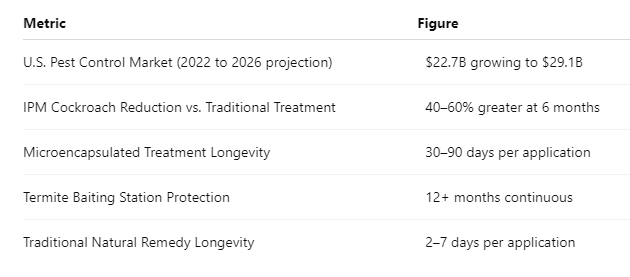
The throughline across all of these shifts, preventive scheduling, IPM adoption, smarter formulations, and data-driven monitoring, is that pest control has matured into something closer to home wellness infrastructure. That's a mindset shift worth embracing for anyone who's invested real thought into how their home looks, feels, and functions, because no amount of curated design fully lands in a space that isn't also protected from what's crawling or flying in from outside.