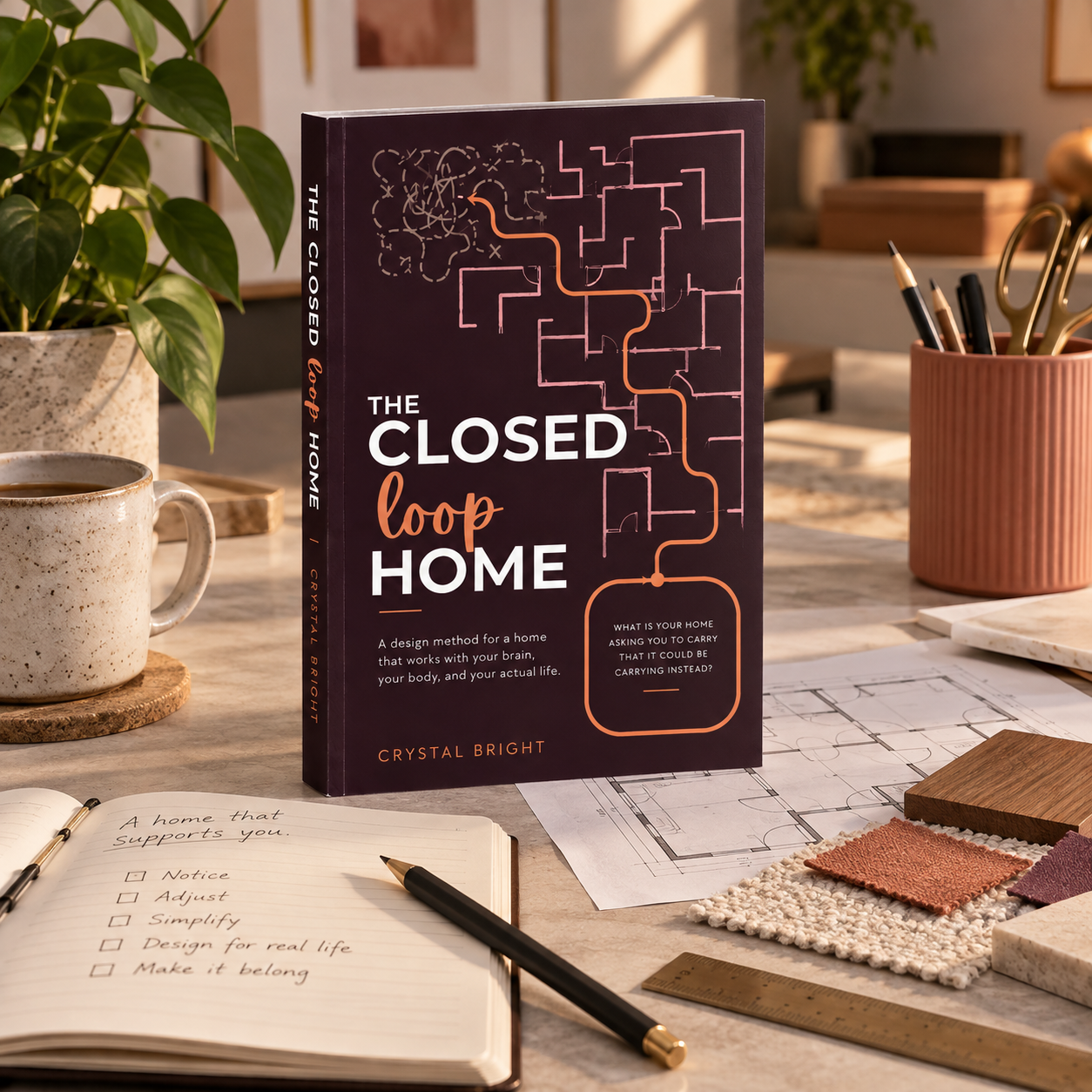
The Closed Loop Home: Design a Home That Supports Your Neurodivergent Brain—even on Low-Energy Days

$24.99
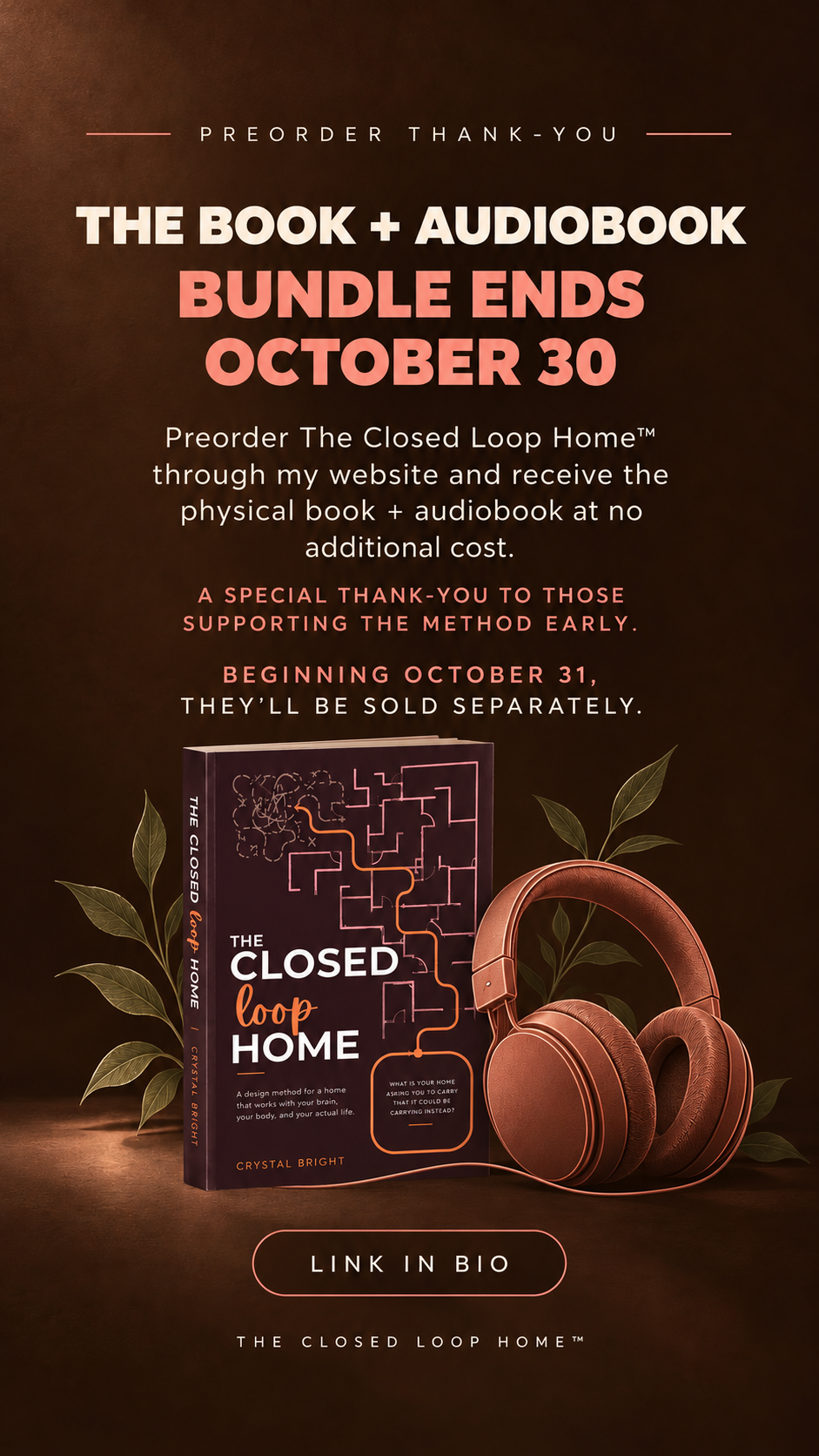
AUDIOBOOK DOWNLOAD INCLUDED IN PREORDER UNTIL 10.30

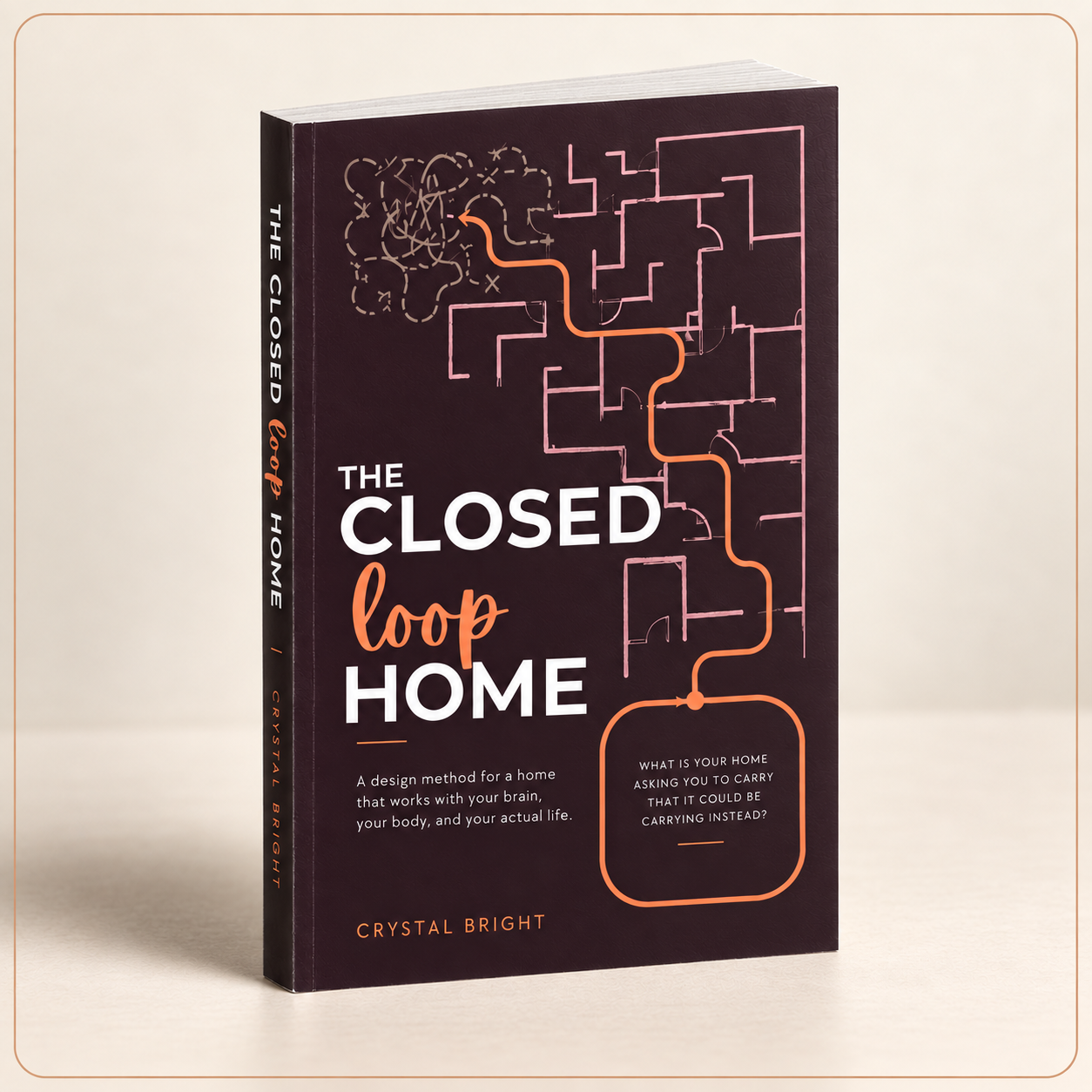
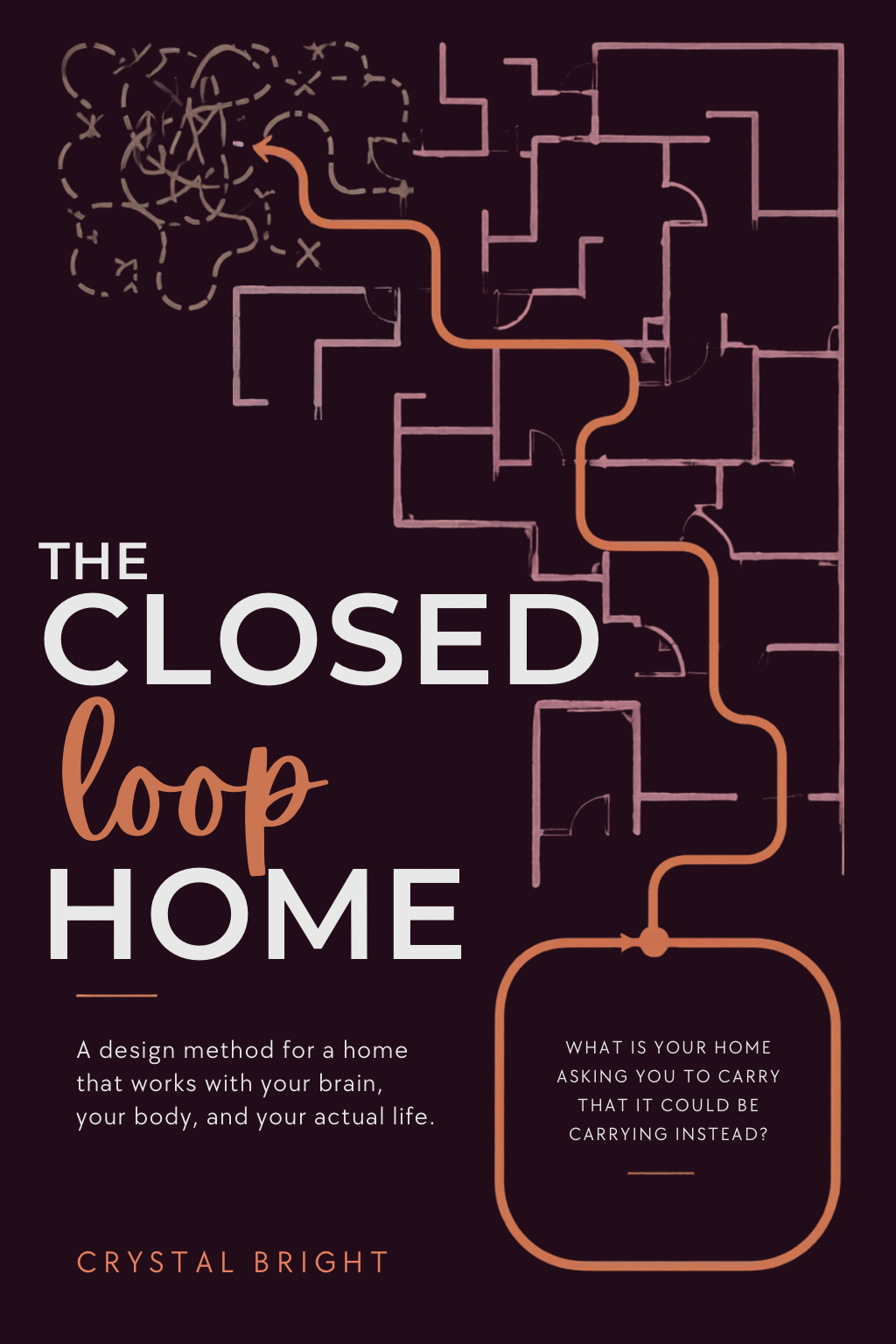
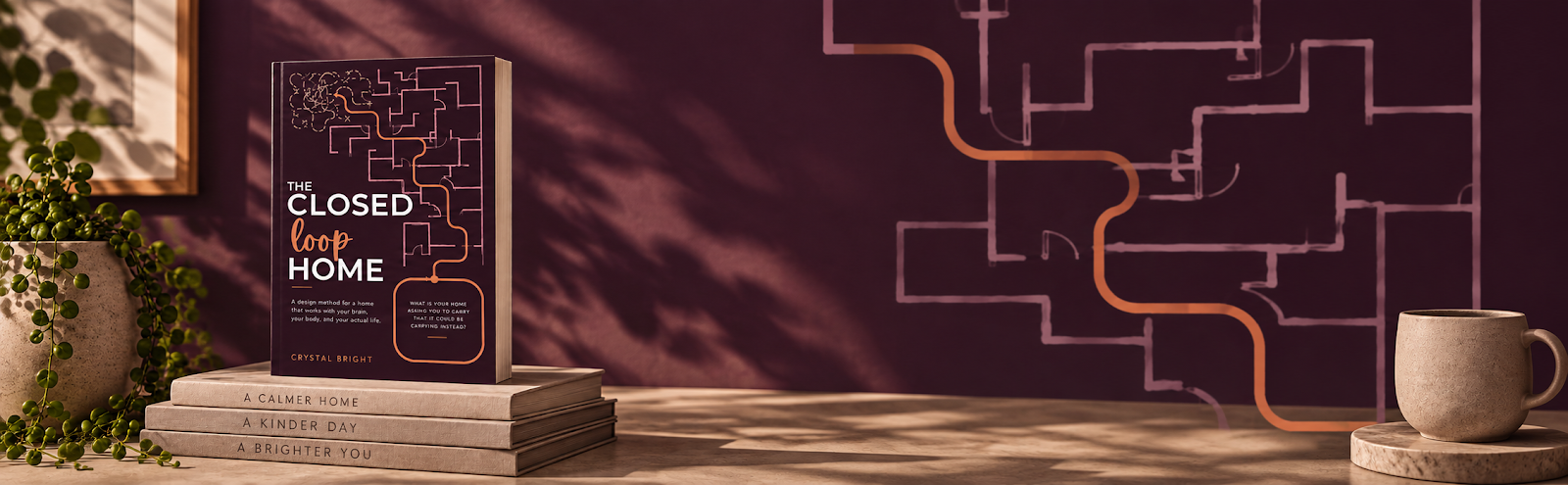
A practical design method for a home that works with your brain, your body, and your actual life.

The Closed Loop Home teaches you how to identify the friction hidden inside everyday routines and redesign your environment around real behavior, sensory needs, memory, transitions, and changing capacity.

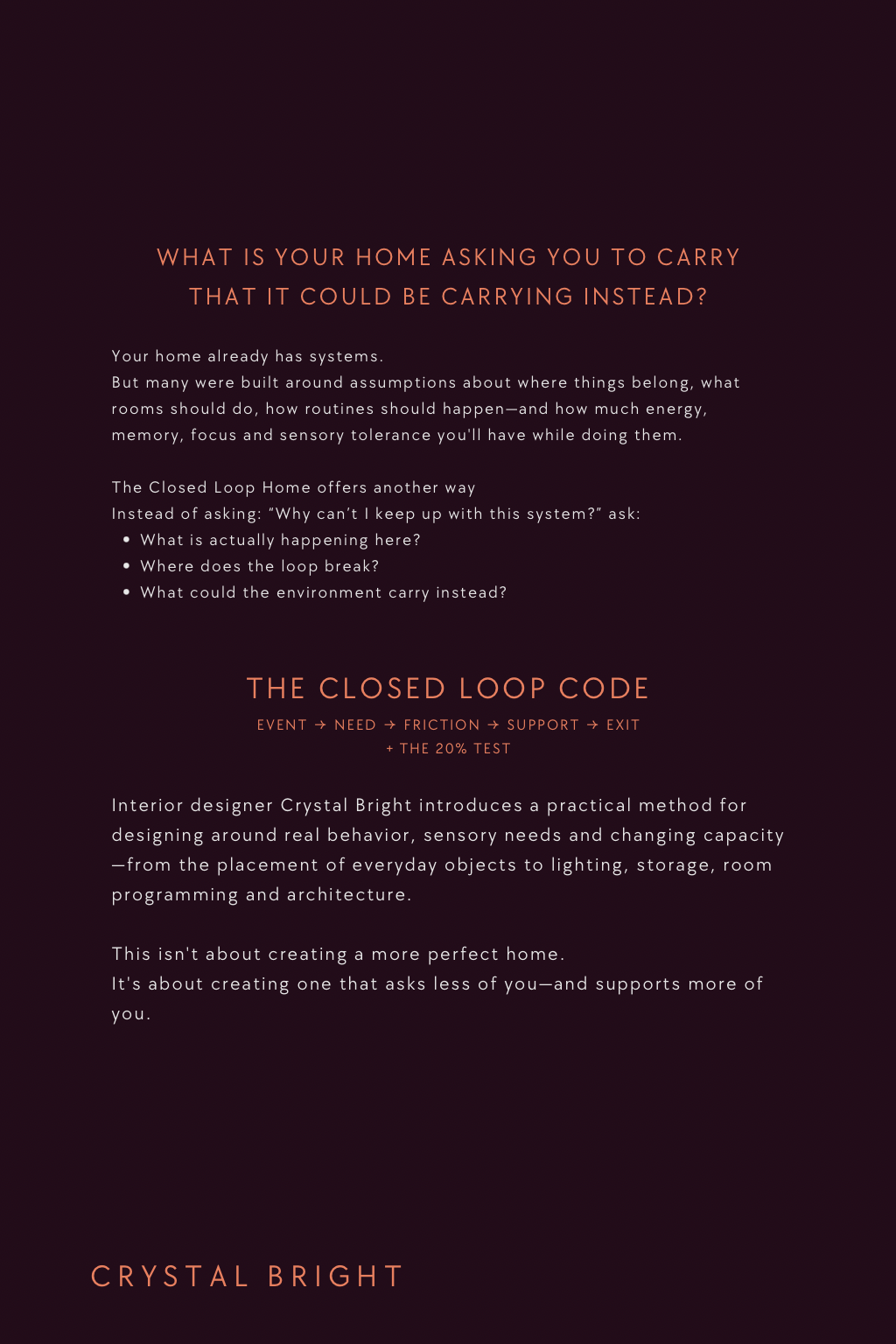
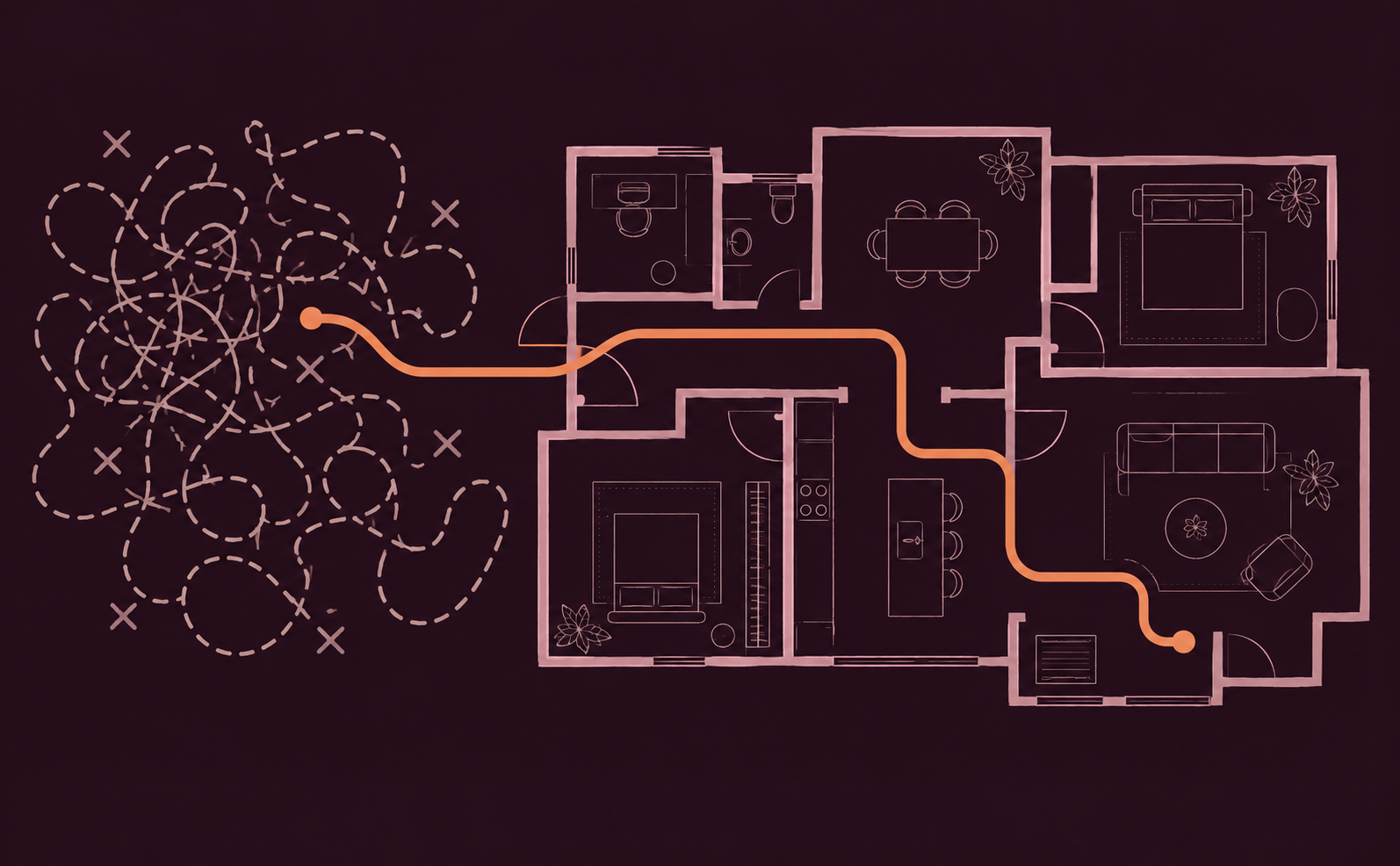
At the center of the book is the Closed Loop Code:

EVENT → NEED → FRICTION → SUPPORT → EXIT

followed by one final question:

Does it still work on a 20% day?

Inside, you’ll learn how to create a home that asks less of you—and carries more.

DOWNLOADABLE AUDIOBOOK INCLUDED

Link will be delivered on the release date 10.31

AUDIOBOOK DOWNLOAD INCLUDED IN PREORDER UNTIL 10.30

A practical design method for a home that works with your brain, your body, and your actual life.

The Closed Loop Home teaches you how to identify the friction hidden inside everyday routines and redesign your environment around real behavior, sensory needs, memory, transitions, and changing capacity.

At the center of the book is the Closed Loop Code:

EVENT → NEED → FRICTION → SUPPORT → EXIT

followed by one final question:

Does it still work on a 20% day?

Inside, you’ll learn how to create a home that asks less of you—and carries more.

DOWNLOADABLE AUDIOBOOK INCLUDED

Link will be delivered on the release date 10.31

THE CLOSED LOOP HOME
WHAT IF YOUR HOME
ASKED LESS OF YOU?
A home can be beautiful and still ask too much of the person living there.
The Closed Loop Home is a practical design method for finding the friction hidden inside everyday routines—and redesigning your environment so it can carry more of the remembering, deciding, transitioning, recovering, and resetting required by real life.
The Closed Loop Home by Crystal Bright
START HERE
THE FRICTION YOU
KEEP LIVING WITH.
Repeated behavior is design information. Before correcting what keeps happening, look at what your home may be asking you to supply.
01
The pile that keeps coming back
Its location may be telling you where the routine actually ends.
02
The thing you keep getting up to retrieve
A repeated trip, search, reach, or transition can become part of the real cost of a task.
03
The room you keep avoiding
Where you naturally sit, work, recover, or leave can reveal what the room is missing.
04
The system that collapses on hard days
A supportive home needs a usable path even when your capacity drops.
THE METHOD
THE CLOSED LOOP CODE
EVENT
What is actually happening?
→
NEED
What must be possible here?
→
FRICTION
Where does continuing become expensive?
→
SUPPORT
What can the environment carry?
→
EXIT
What does the solution leave behind?
THEN ASK
DOES IT STILL WORK AT 20%?
The 20% Test asks whether the support still works when energy, attention, time, or sensory capacity is low.
The Closed Loop Code illustrated as a path through a home
TINY FRICTION. BIG COST.
SOMETIMES THE BREAK IS
ONE STEP.
An empty paper-towel holder can contain far more work than an empty roll.
Wet hands → Go upstairs → Find the stool → Reach the towels → Return downstairs → Wash again → Restart dinner
THE CLOSED LOOP
The towel lives beside the sink.
The friction did not become easier to tolerate. It disappeared from that part of the routine.
DESIGN FOR REAL LIFE
SMALL CHANGES.
REPEATED RELIEF.
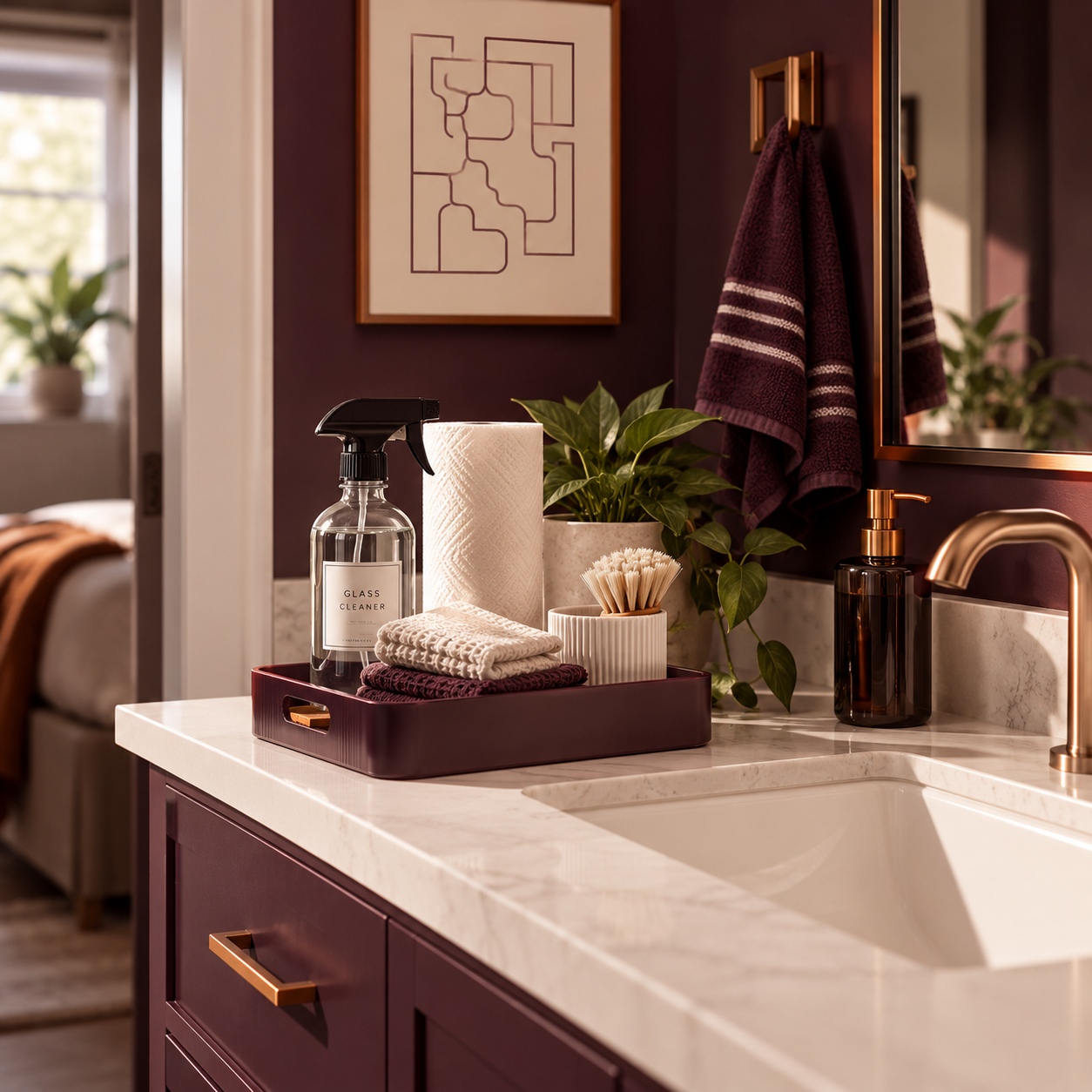
Cleaning supplies kept at the point of need
Put support where the need happens.
A cleaner upstairs. A charger at the chair. A landing surface where groceries first arrive.
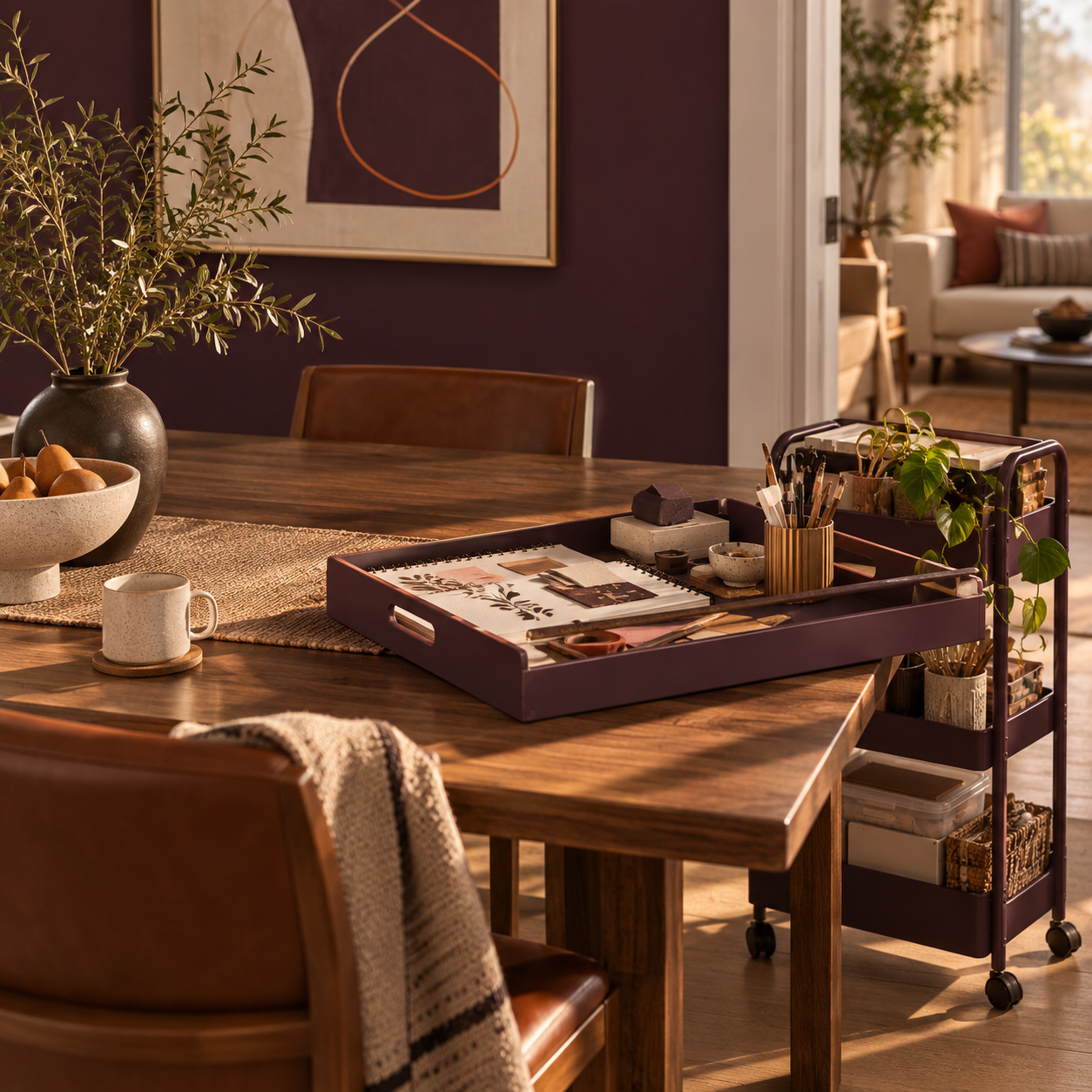
Project tray and rolling cart for unfinished work
Give unfinished things a safe state.
A project can pause without taking over the room or forcing you to reconstruct your thinking later.
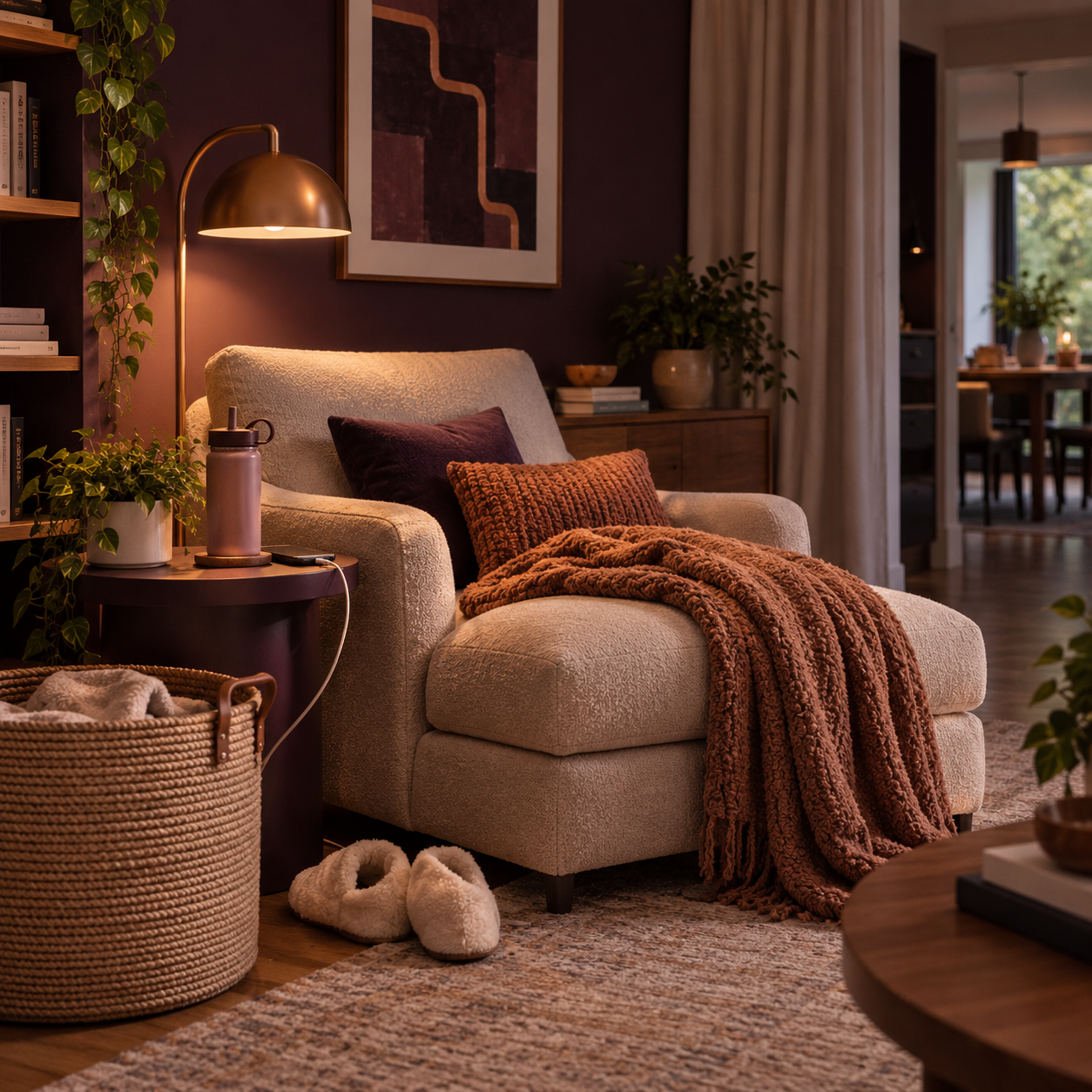
Comfortable low-capacity recovery space
Design for the 20% day.
Low-capacity living can still preserve comfort, access, dignity, and beauty.
PERSON BEFORE PRESCRIPTION
THERE IS NO UNIVERSAL
ADHD KITCHEN.
THERE IS NO UNIVERSAL
AUTISM BEDROOM.
One person may need objects visible in order to remember them. Another may need visual quiet. One person may seek silence. Another may regulate through sound.
The Closed Loop Home teaches you to follow your own behavior, sensory needs, routines, and changing capacity—and design from there.
INSIDE THE BOOK
A METHOD YOU CAN USE
IN YOUR OWN HOME.
✓ The Closed Loop Code
✓ The 20% Test
✓ Put support where the need happens
✓ Design for predictable misses
✓ Visibility as a setting
✓ Sensory and environmental controls
✓ Boundaries, transitions, and recovery
✓ Build support in before the walls exist
✓ Reader practices for applying the method yourself
The Closed Loop Home with plans and design materials
THE CLOSED LOOP HOME
YOUR HOME DOES NOT NEED TO RESEMBLE ANYBODY ELSE'S PROOF OF ADULTHOOD.
It needs to support the people who live there.
GET THE BOOK