The Water Stain on Your Ceiling: Who Pays in a Condo or HOA Community
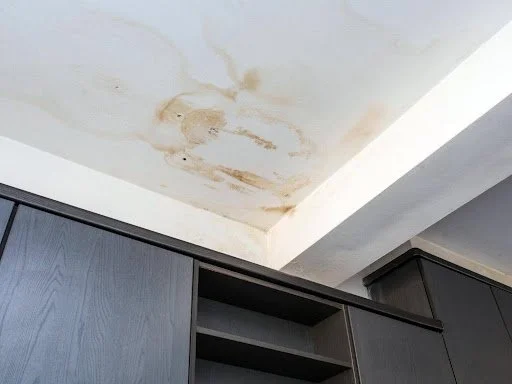
A brown ring appears on the ceiling of a second-floor bedroom. It is not large, it does not seem to be growing, and the natural instinct is to repaint it and move on.
That instinct costs people a great deal of money. In a detached house it is your problem either way, so the only question is when you deal with it. In a condominium or an HOA community, the same stain may be someone else's financial responsibility entirely, and painting over it can quietly forfeit that.
The Distinction Everything Turns On
In shared-ownership communities there are two categories of property, and the line between them determines who pays.
Common elements are the components the association is responsible for. Depending on the governing documents, that typically includes the roof, exterior walls, and often the pipes and structural components running between units. Your unit is what you own, generally described as the interior surfaces inward.
The complication is that water damage rarely respects this boundary. A roof leak, which is almost always a common element issue, produces a stain on a ceiling, which is almost always inside your unit. The source and the symptom sit on opposite sides of the line.
Why Documenting It Early Matters
If you repaint before anyone from the association has seen it, you have removed the evidence that the damage occurred and made it considerably harder to establish where the water came from.
The correct sequence is unexciting. Photograph it with something in frame for scale and a timestamp if you can. Report it to the association or the management company in writing, not by phone, so a dated record exists. Ask for the source to be investigated rather than simply asking for the ceiling to be repaired.
That last distinction is the one that matters. A repainted ceiling with an unresolved roof leak stains again within a year, and by then the conversation is starting over.
What the Governing Documents Actually Say
Responsibility is not a matter of general principle. It is written into your declaration and it varies by community.
Some declarations put all maintenance of a unit's interior on the owner regardless of the cause. Others distinguish between damage originating in a common element and damage originating within the unit. Many address insurance deductibles separately, specifying who absorbs the deductible when the association's policy responds.
Reading the relevant section before a dispute arises is far easier than reading it during one. Any competent management company will send you the current documents on request, and a firm handling associations across San Antonio and Austin like Lifetime HOA Management will also be able to tell you which section actually governs your situation, which saves considerable time compared with working it out from a fifty-page declaration on your own.
None of this is legal advice, and Texas HOA matters turn heavily on the specific documents. Anyone facing a significant claim or an unresolved dispute should consult an attorney who works in this area.
The Reason Speed Matters More Than Money
Here is the part that is genuinely urgent rather than merely annoying, and it is why the repaint-and-forget approach is the wrong one.
The CDC's guidance on mold is direct about the timeline: dry everything within 24 to 48 hours if you can. Mold grows where there is moisture, including around leaks in roofs, windows, and pipes, and it will grow on drywall, insulation, carpet, fabric, and upholstery, all of which are behind or beneath a stained ceiling.
The agency also makes a point worth repeating in a disputed-responsibility situation: you do not need to know the type of mold, and CDC does not recommend testing, because health effects vary between people and there are no established standards for acceptable amounts. If you can see it or smell it, remove it and fix the moisture source.
While the association and the owner are working out who pays, the water is still there. A week of argument is a week of growth, and the remediation bill grows with it.
Health Considerations Worth Knowing
Exposure affects people very differently. CDC notes that some people experience nothing at all, while others get a stuffy nose, sore throat, coughing or wheezing, burning eyes, or a skin rash. People with asthma or a mold allergy may react severely.
The agency also advises that certain people should not take part in cleanup at all: those with allergies, immune suppression, underlying lung disease, or chronic respiratory conditions such as asthma or COPD. If that describes someone in the household, this is a job to hand to someone else regardless of who is paying.
This is general information rather than medical advice. Anyone with health concerns they think may relate to mold exposure should speak with a physician.
The Interiors Consequence Nobody Budgets For
From a design and finishes perspective, water damage is rarely a one-surface problem, and this is where costs surprise people.
Drywall repair means texture matching, and texture matching on a ceiling is notoriously difficult to make invisible. Paint touch-up on a ceiling almost never blends, which means repainting the full plane rather than the patch. If the water traveled, flooring may have cupped, and refinishing part of a hardwood floor produces a visible seam.
If the damage extends into a wall cavity, insulation typically needs replacing regardless of appearance, because wet insulation loses its function and holds moisture against framing.
Budget for the surface rather than the spot. It is the single most common underestimate in this category.
Preventing the Repeat
Once the source is fixed, a few habits reduce the odds of a second round.
Keep indoor humidity down, which CDC puts at no higher than 50 percent throughout the day. In Texas that usually means running air conditioning or a dehumidifier through the humid months rather than only when it feels uncomfortable.
Run bathroom exhaust fans during and for a while after showers, and check that they vent outside rather than into an attic, which is a surprisingly common construction shortcut and a reliable way to grow mold above a ceiling.
And report small things early. The stain that appears in March and is dealt with in March is a maintenance item. The same stain reported in September is a claim.
What to Do Tomorrow
If there is a mark on your ceiling right now: photograph it, email the management company, ask for the source to be investigated, and pull up the maintenance and insurance sections of your declaration while you wait.
Four steps, one afternoon, and it puts you in a considerably better position than the version where you visit the paint store first.