Spring Pest Prevention: When to Safeguard Your Home's Interior for Peace of Mind

At Living Bright Interiors, we talk a lot about intentional spaces, the kind of rooms that regulate your nervous system instead of quietly working against it. But even the most thoughtfully curated interior, with its calming palette and sensory-friendly textures, can't deliver peace of mind if you're lying awake wondering what's crawling behind the baseboards. Spring is when that anxiety tends to spike, and for good reason. As temperatures climb and moisture returns to the soil, pests that have been dormant all winter start looking for a way into the very spaces you've worked so hard to make feel safe.
This is exactly why timing matters more than most homeowners realize. Waiting until you spot an actual bug on your kitchen counter means you've already missed the ideal prevention window. Understanding 4 types of bugs to watch out for in spring gives you a head start on identifying threats before they establish colonies inside your walls, attics, or crawl spaces. Think of it as the pest-control equivalent of choosing the right underlayment before you install flooring, the unglamorous work that protects everything visible on top of it.
Why Spring Is Your Critical Prevention Window: Seasonal Timing & Pest Biology
Pest activity isn't random. It follows biological triggers tied closely to soil temperature, humidity, and daylight hours. Termite swarms typically emerge after the first sustained warm rain of the season, ants reactivate their colonies once nighttime temperatures stay above freezing, and ticks become active at a consistent 50 degrees Fahrenheit, according to seasonal pest data. That means the narrow stretch between late winter and early spring, when most homeowners are focused on redecorating or deep cleaning, is precisely when pests are making their move toward your home's interior.
According to Spring & Summer Pest Surge Predicted - What You Need to Know, extreme weather swings, from record snowfalls to unseasonably warm temperatures, have created ideal breeding conditions for spring and summer pest surges, with experts predicting earlier and more frequent pest encounters this year. That unpredictability is the real challenge. A calendar date won't tell you when to act, but your local weather pattern will. Homeowners who track the first consistent stretch of 50-degree days rather than waiting for a specific month tend to catch infestations before they take hold.
The 4 Spring Pests to Watch & When They Peak
Termites are arguably the most financially damaging spring pest, with repair costs averaging around $3,000 per affected home and total U.S. property damage now estimated at more than $6.8 billion annually when adjusted for inflation. Their swarming season typically peaks in the weeks following the first significant spring rain, when winged reproductives leave established colonies to start new ones. Ants follow closely behind; roughly half of U.S. households report an ant problem each year, and colonies become most visible as soil warms and food sources move indoors.
Mosquitoes and carpenter ants round out the seasonal watchlist, each activating under slightly different conditions but converging on the same window of opportunity: early spring, before homeowners have started their outdoor maintenance routines. Carpenter ants, in particular, target moisture-damaged wood, which makes gutters, window frames, and any area with lingering winter moisture especially vulnerable. Recognizing these patterns early lets you address structural vulnerabilities before pests find them first, rather than reacting after damage is already visible inside your living spaces.
March–May Action Plan: What to Do Now vs. What to Defer Until Summer
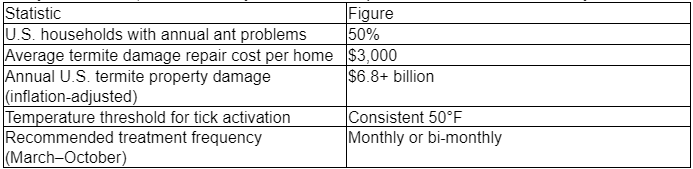
Early March is the time for inspection, not treatment. Walk your home's perimeter, check crawl spaces for moisture, and seal any visible gaps around utility lines or foundation cracks. This is also the moment to schedule a professional termite inspection, since swarms often begin before visible damage appears, and catching activity at this stage is far less costly than remediation later. Interior-focused homeowners should pay particular attention to areas where humidity collects, like bathrooms and laundry rooms, since these spots mirror the outdoor conditions pests are seeking.
By April and May, treatment becomes more urgent than inspection alone. Pest professionals generally recommend monthly or bi-monthly applications from March through October, a cadence that aligns with breeding cycles rather than a fixed seasonal calendar. Tasks like mulch replacement, exterior caulking touch-ups, and full mosquito treatments can reasonably wait until early summer, but foundational barrier treatments and termite baiting systems should be in place before May ends. Deferring these until pests are already visible inside your home almost always costs more, both financially and in the disruption to the calm environment you've built.
Creating Your Year-Round Interior Defense Strategy
Pest prevention shouldn't be a spring-only project any more than good interior design should be limited to a single season of decorating. The same intentionality that goes into choosing materials and layouts that support your wellbeing, as explored in closed loop home design principles, applies equally to protecting the systems and structures behind those beautiful finishes. A home that regulates your senses well also needs to be genuinely secure from the pests that could compromise it.
As spring transitions into summer, shift your focus from initial treatments to monitoring and maintenance, then reinforce your defenses again in early fall before pests seek winter shelter indoors. This rhythm, inspect in late winter, treat through spring and summer, reinforce in fall, creates a closed loop of protection that mirrors the intentional design choices already shaping your home's interior. Peace of mind, after all, comes from knowing every layer of your home, visible and hidden, has been thoughtfully considered.