Patterned Sofas: The Grand‑Millennial Revival of 2026
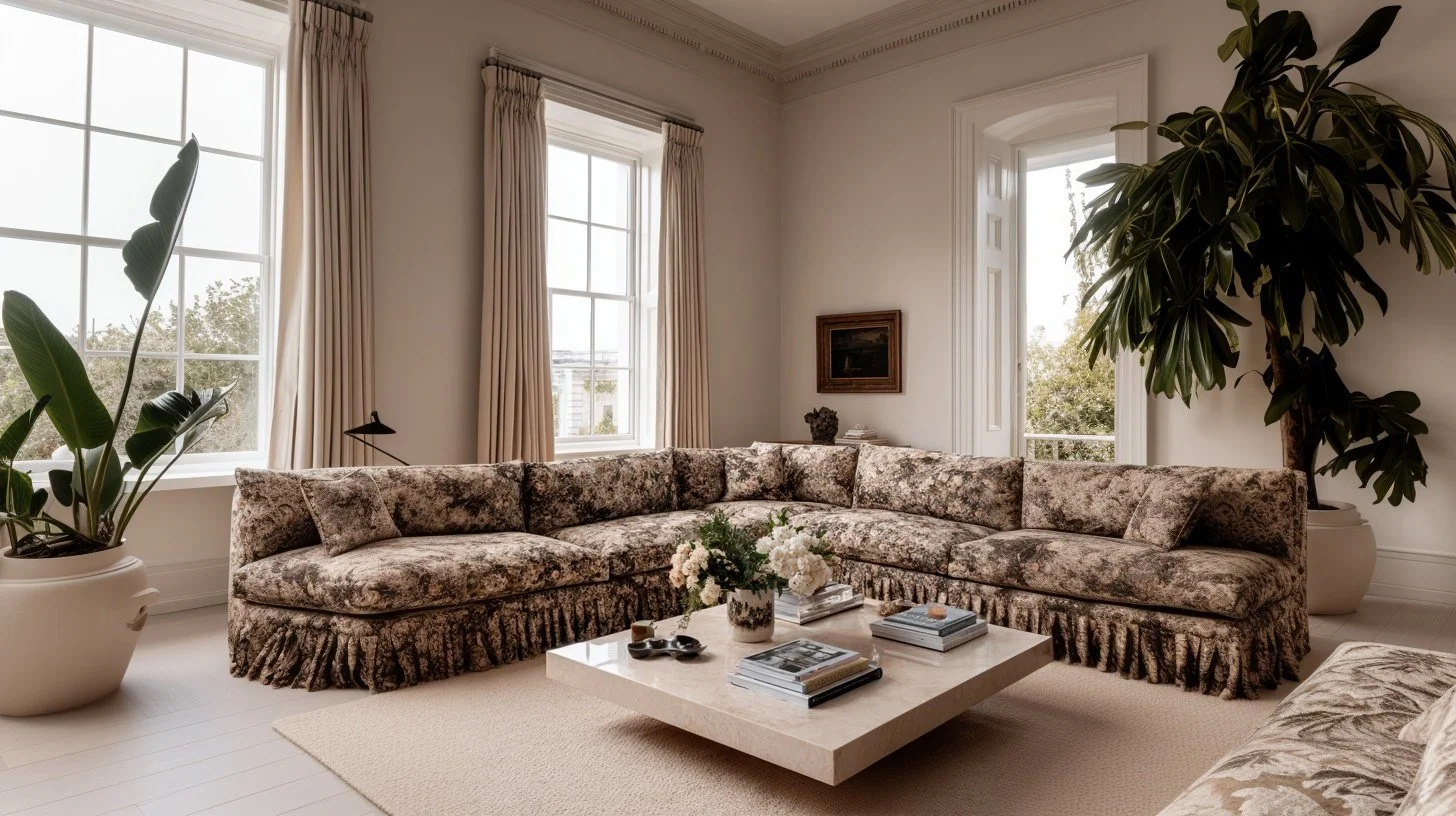
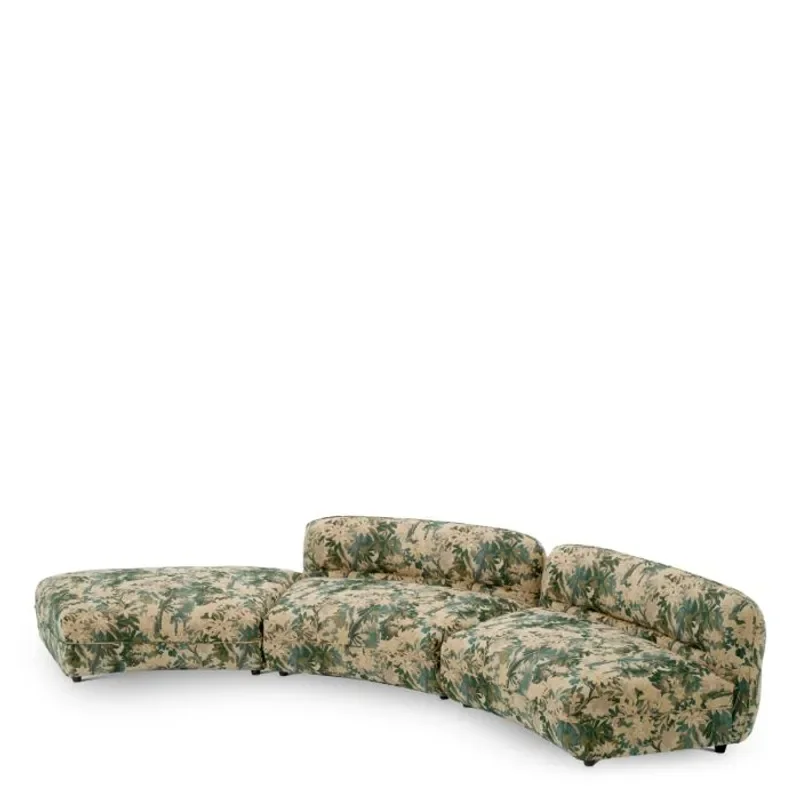
At the Spring High Point Market last weekend I noticed a pattern (literally) – major showrooms from Eichholtz to Rowe and Sunpan were showing sofas and sectionals covered in botanical tapestry prints. This wasn’t just a few accent chairs; entire sectionals were upholstered in chintz‑like patterns reminiscent of vintage tapestries. This grand‑millennial, or “grandma‑chic,” look is one of the most talked‑about furniture trends of 2026 and signals a big shift from the beige minimalism that dominated the last decade.
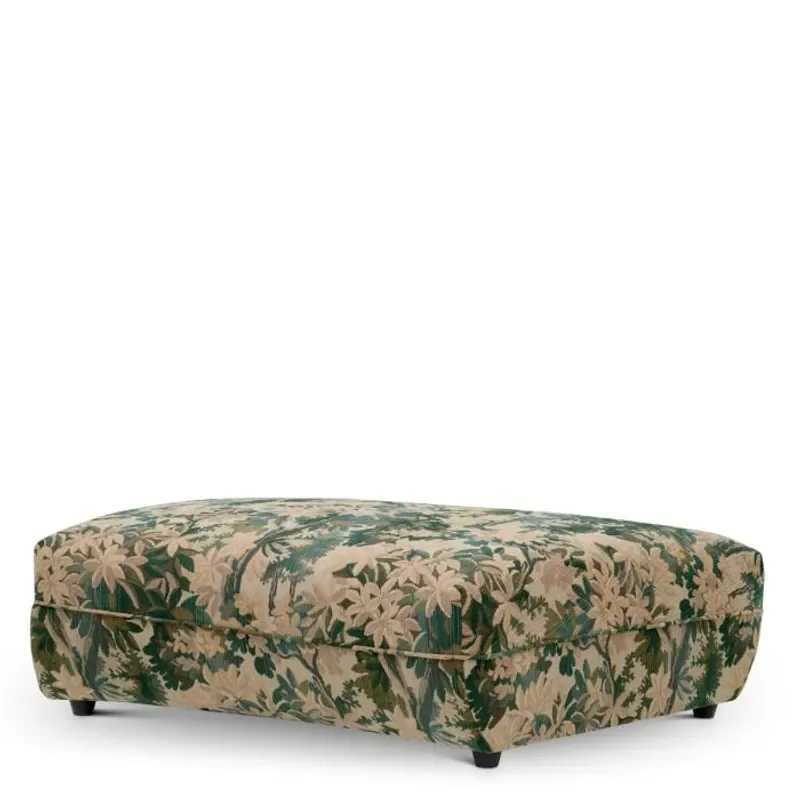
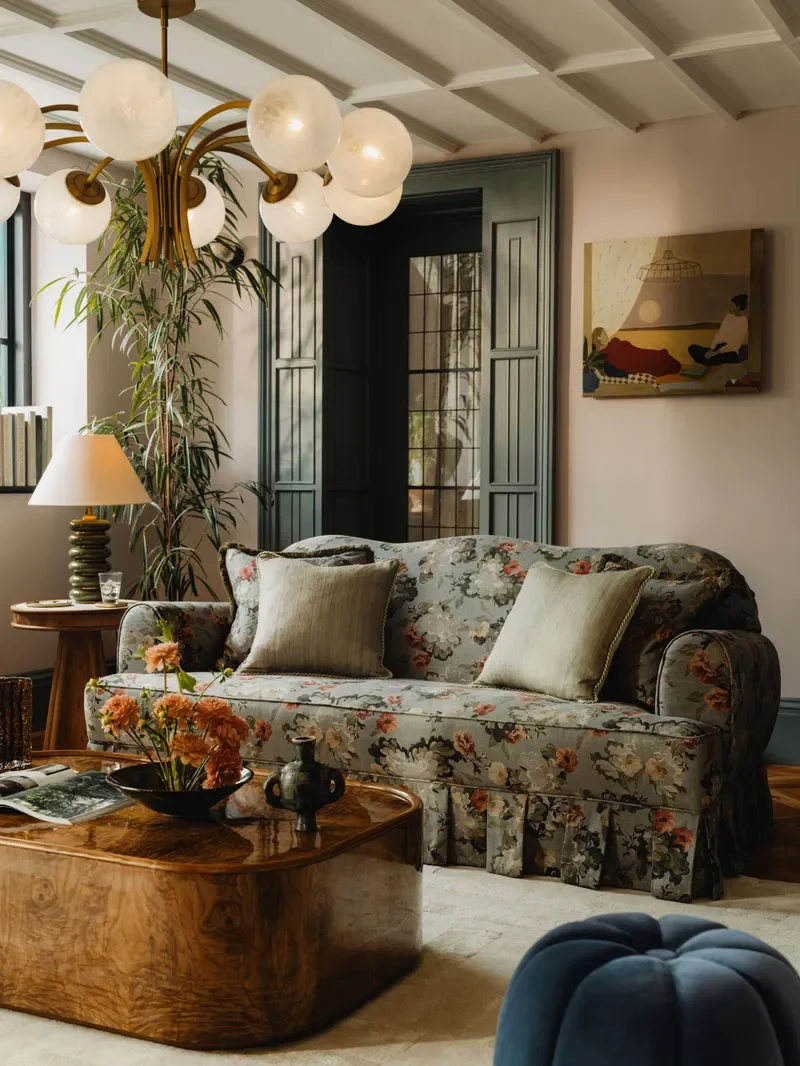
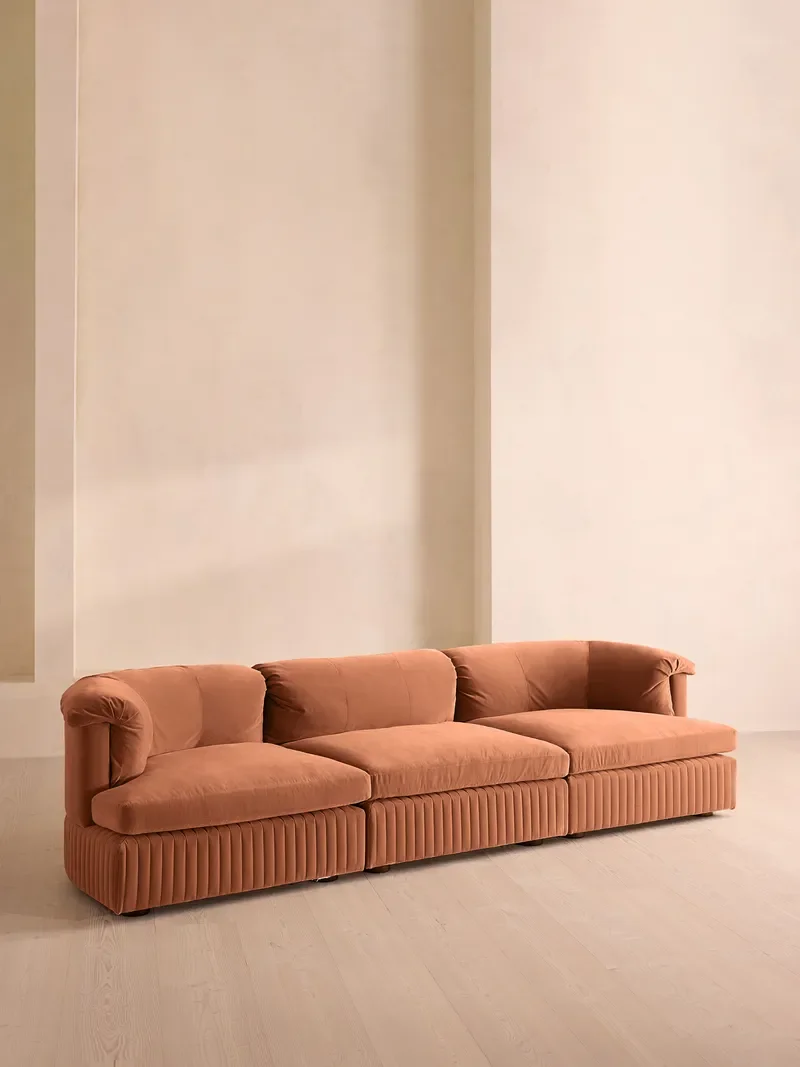
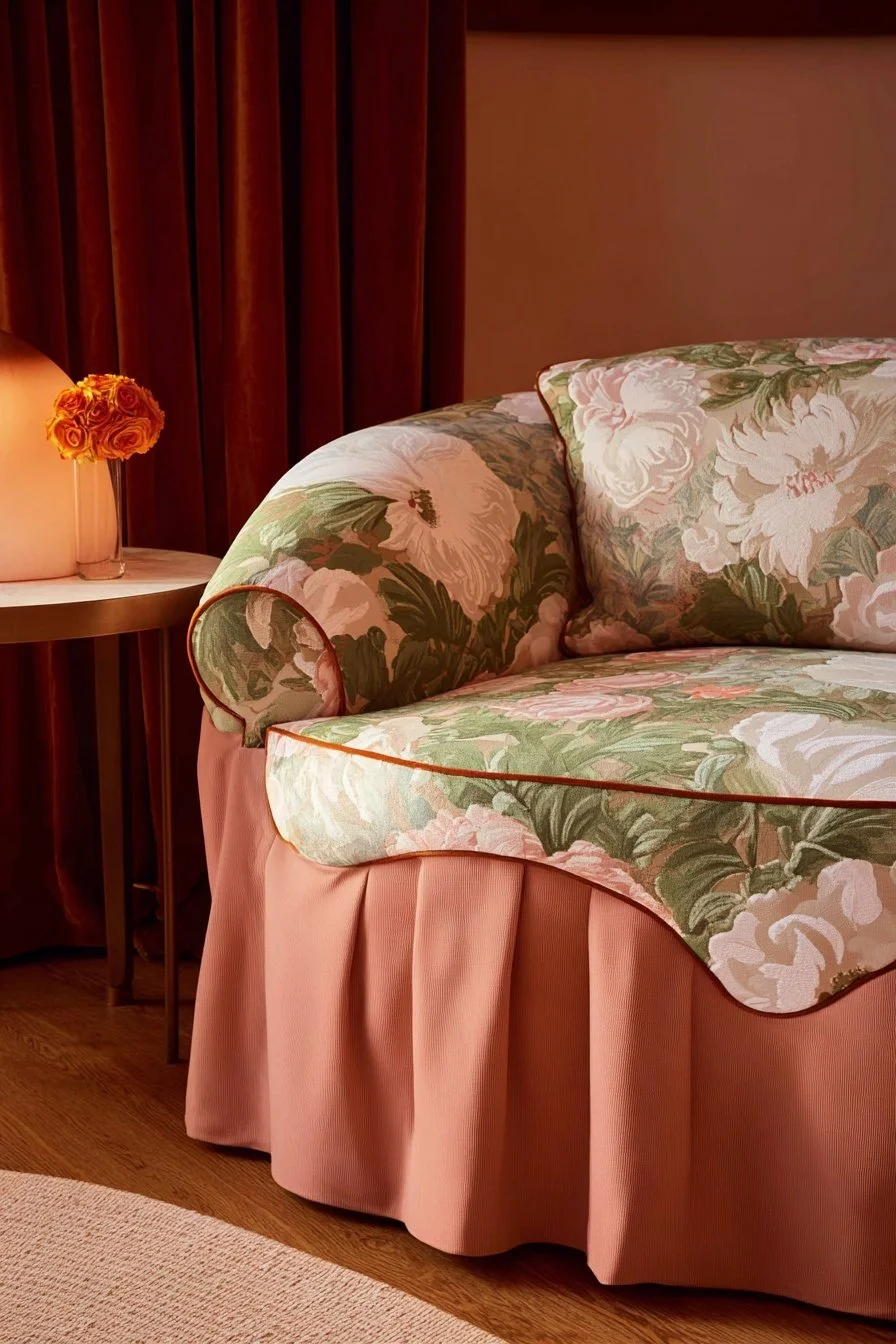
Patterned sofas were everywhere — but what made the trend impossible to ignore was how they were styled. Full sectionals, ottomans, and lounge seating weren’t just covered in botanical tapestry patterns… many of them were fully skirted, bringing back a softness and volume we haven’t seen since the 1980s.
A brief history of patterned upholstery
Chintz fabrics were originally imported from India in the 1600s; the East India Company brought polychrome woodblock‑printed cotton to Europe. Europeans soon mastered the printing techniques and used cylinder and flatscreen processes to create monochromatic scenes (Toile de Jouy), small “ditzy” florals and lushly drawn botanical patterns. The 1980s saw a maximalist revival of chintz with designers like Mario Buatta (nicknamed the “Prince of Chintz”) creating floral‑filled rooms. These pattern‑on‑pattern interiors eventually gave way to mid‑century‑inspired minimalism.
Interest in chintz never fully disappeared. Its roots in historic prints, from Versailles‑era verdure to Lady Diana’s romantic Laura Ashley dresses, mean the look cycles in and out of fashion. As modern design became increasingly neutral, pattern‑lovers kept the style alive through vintage textiles and upholstery. Designers surveyed by Apartment Therapy’s State of Home Design report predict that “vintage textiles” – including tapestries, rugs, quilts and upholstered furniture – will continue to be sought after.
Why patterned sofas are back in 2026
Designers link the popularity of these patterned sofas to several wider movements. First, maximalism and “pattern play” are replacing the beige minimalism of the 2010s; vintage textiles are popular because they are versatile and can be used on everything from rugs to upholstered furniture. Many people have embraced so‑called “grandma hobbies” such as needlepoint and quilting, which has fuelled interest in vintage fabrics. Reupholstering furniture in vintage patterns has become “all the rage”.
Second, there is a push against sterile, staged interiors. Who What Wear notes that after years of “quiet‑luxury” minimalism, colour and vibrancy are returning; people are embracing bolder patterns and expressive materials as a way of separating their homes from the workplace. The same article observes that homeowners are “leaning away from overly safe or neutral schemes” and instead want spaces that feel personal and character‑driven. Travel Tomorrow frames this as a desire for rooms that feel lived‑in: the cocooning trend celebrates warm textures and floral, tapestry‑covered sofas because they provide comfort and escapism. Sustainability also plays a role; reusing vintage fabrics and embracing tactile materials like velvet and linen aligns with an eco‑conscious mindset.
Third, pattern drenching – the art of layering multiple prints – has become mainstream. Forbes’ spring trend report quotes designer Scott Francis, who is “excited to see pattern returning in a meaningful way” after years of minimalism. He explains that pattern drenching doesn’t require using one print everywhere; florals can be mixed with stripes or antique rugs, and “textiles that speak to each other rather than match perfectly” create a cohesive yet eclectic look. This layered approach gives homeowners permission to upholster a statement sofa in a bold tapestry and then add complementary patterns through pillows, curtains and rugs.
Finally, pop culture has helped normalise the look. Media coverage of Kendall Jenner’s mountain home highlighted her custom sectional upholstered in Lee Jofa’s Hollyhock Handblock print. Interior Daily notes that Jenner and designer Heidi Caillier rejected minimalist aesthetics and created a pattern‑rich retreat featuring bold florals, vibrant tiles and graphic patterns. Jenner credited Caillier with expanding her approach to pattern, resulting in a home that feels whimsical, lived‑in and timeless. When celebrities embrace pattern, their followers feel more confident making similar choices.
Observations from the Spring High Point Market
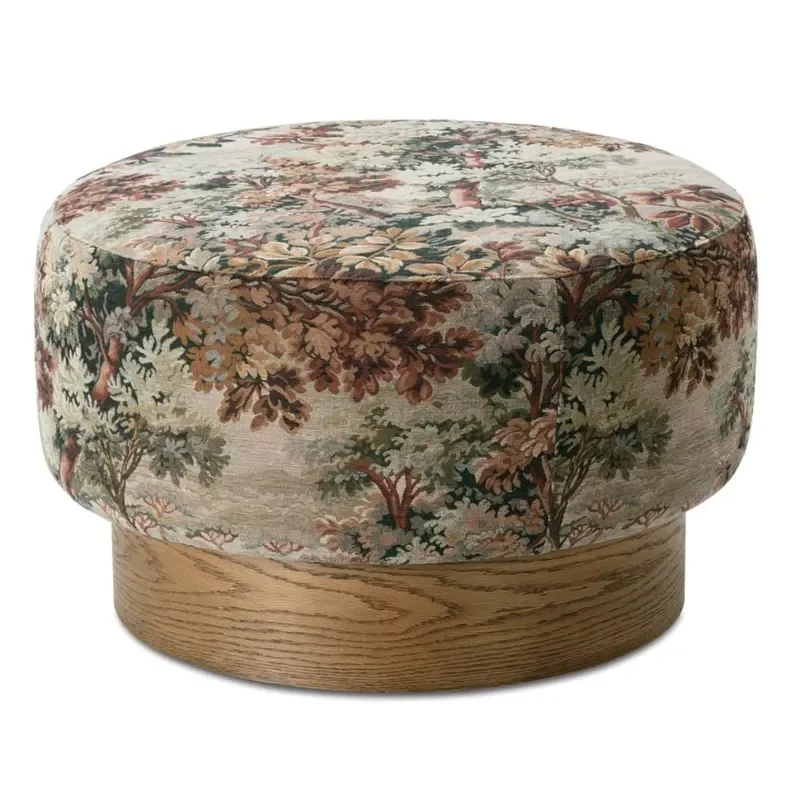
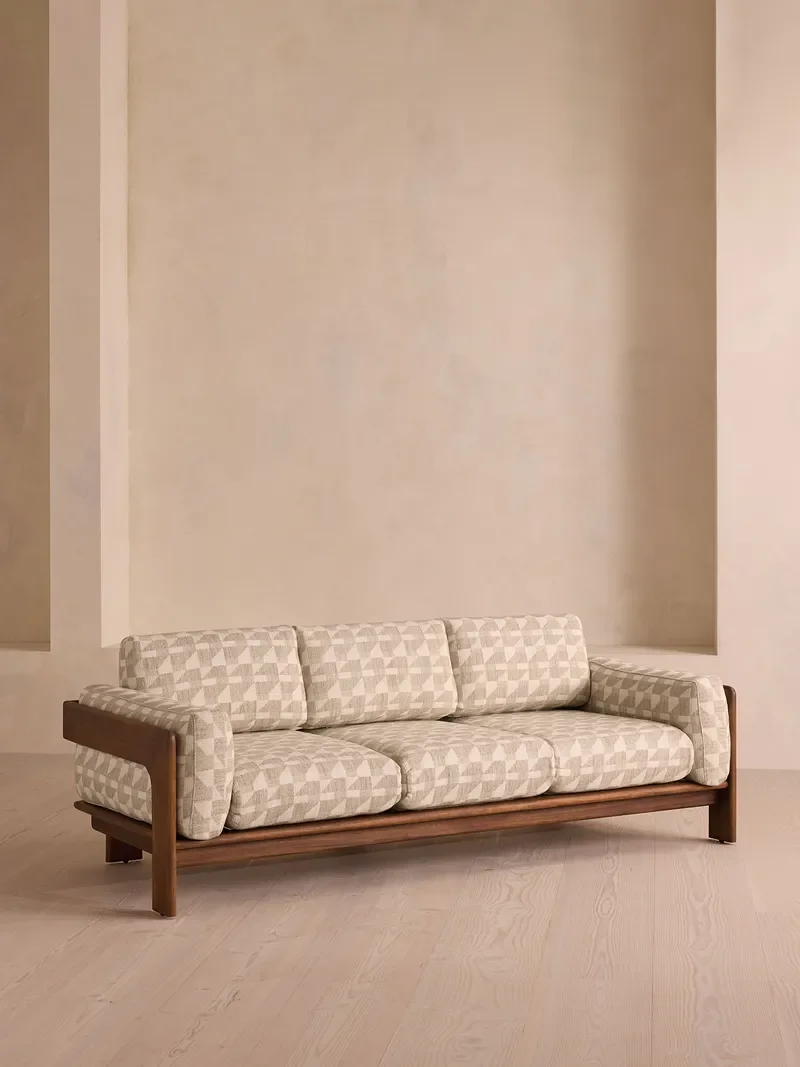
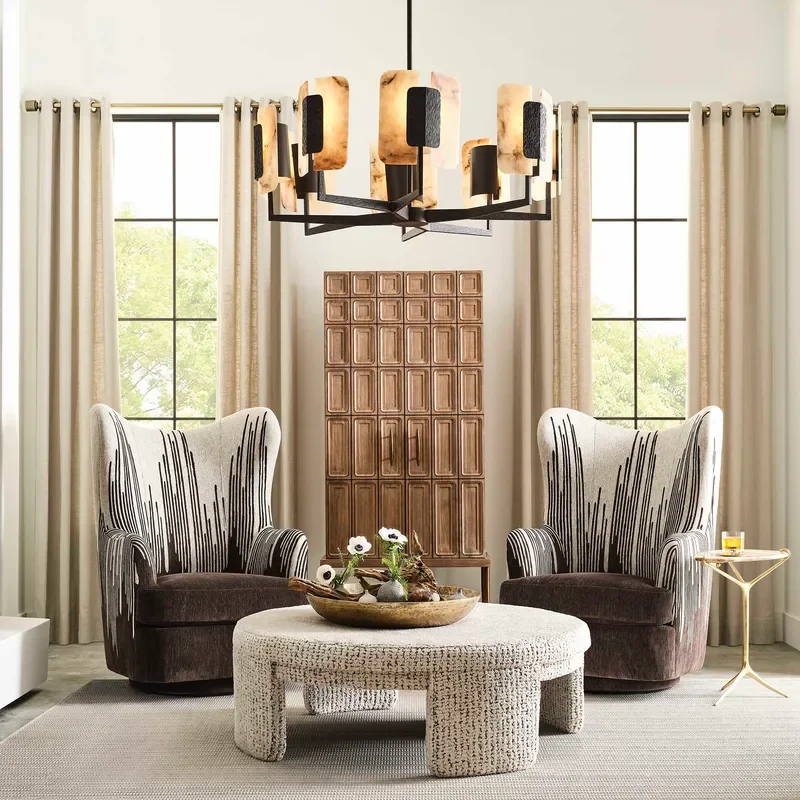
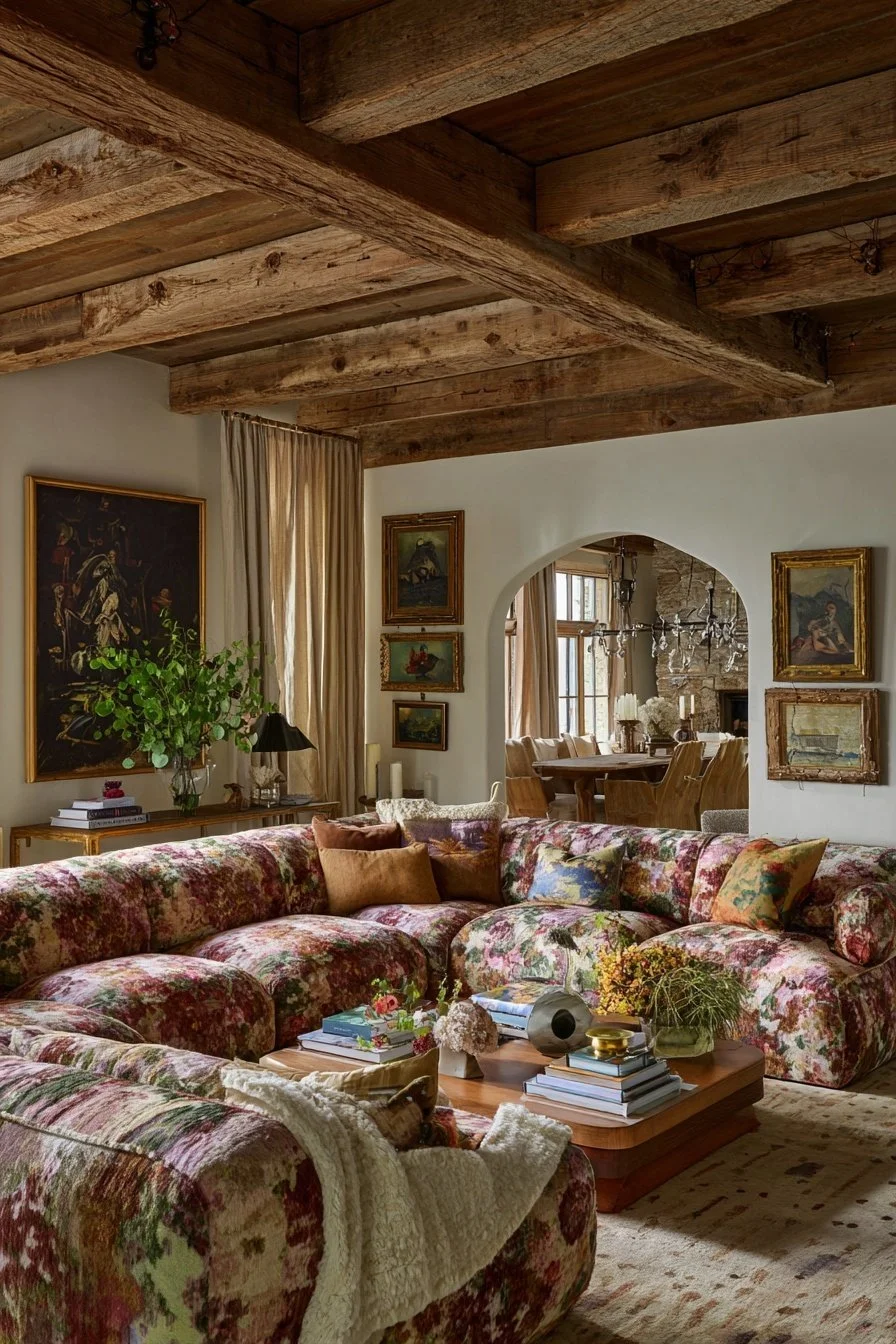
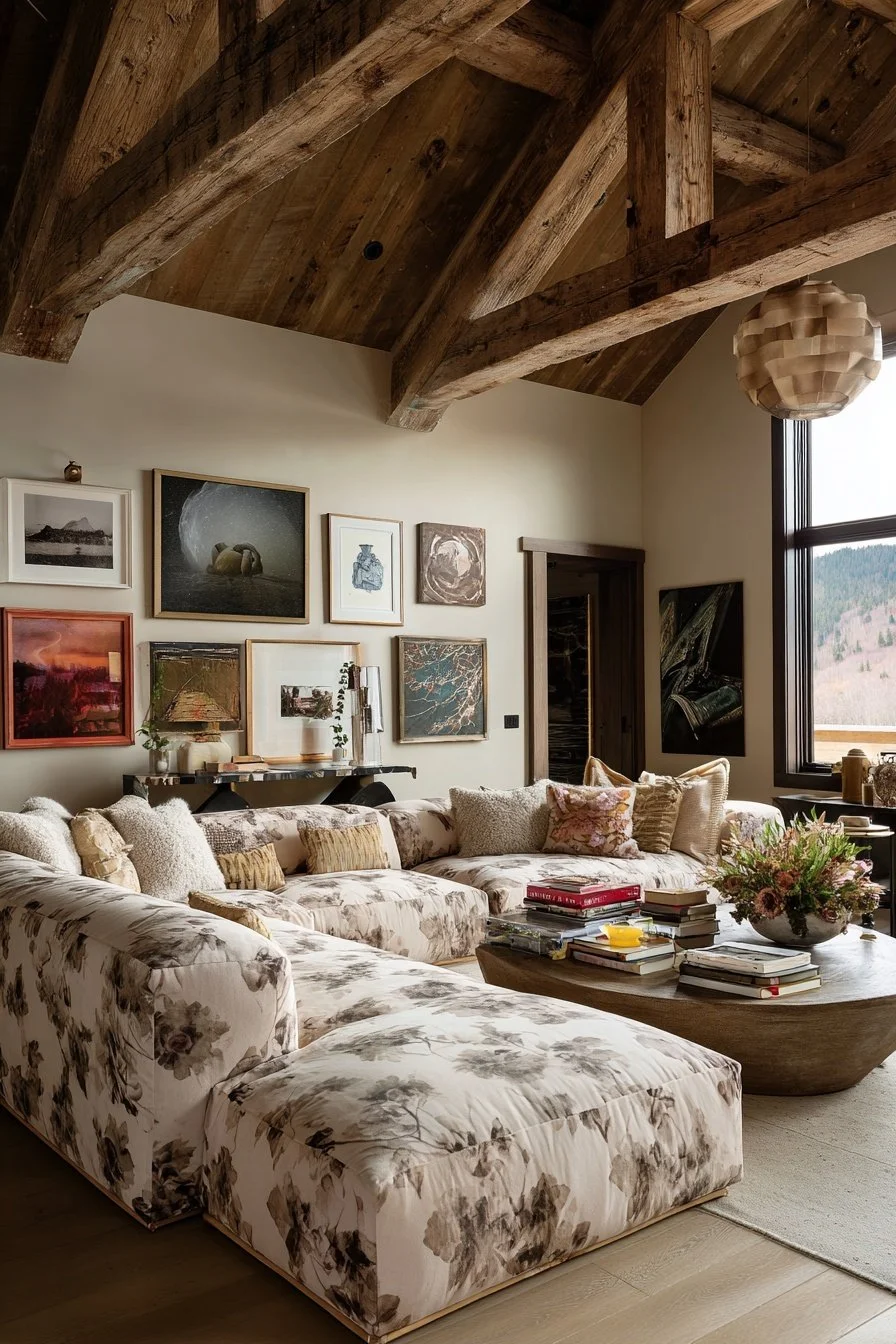
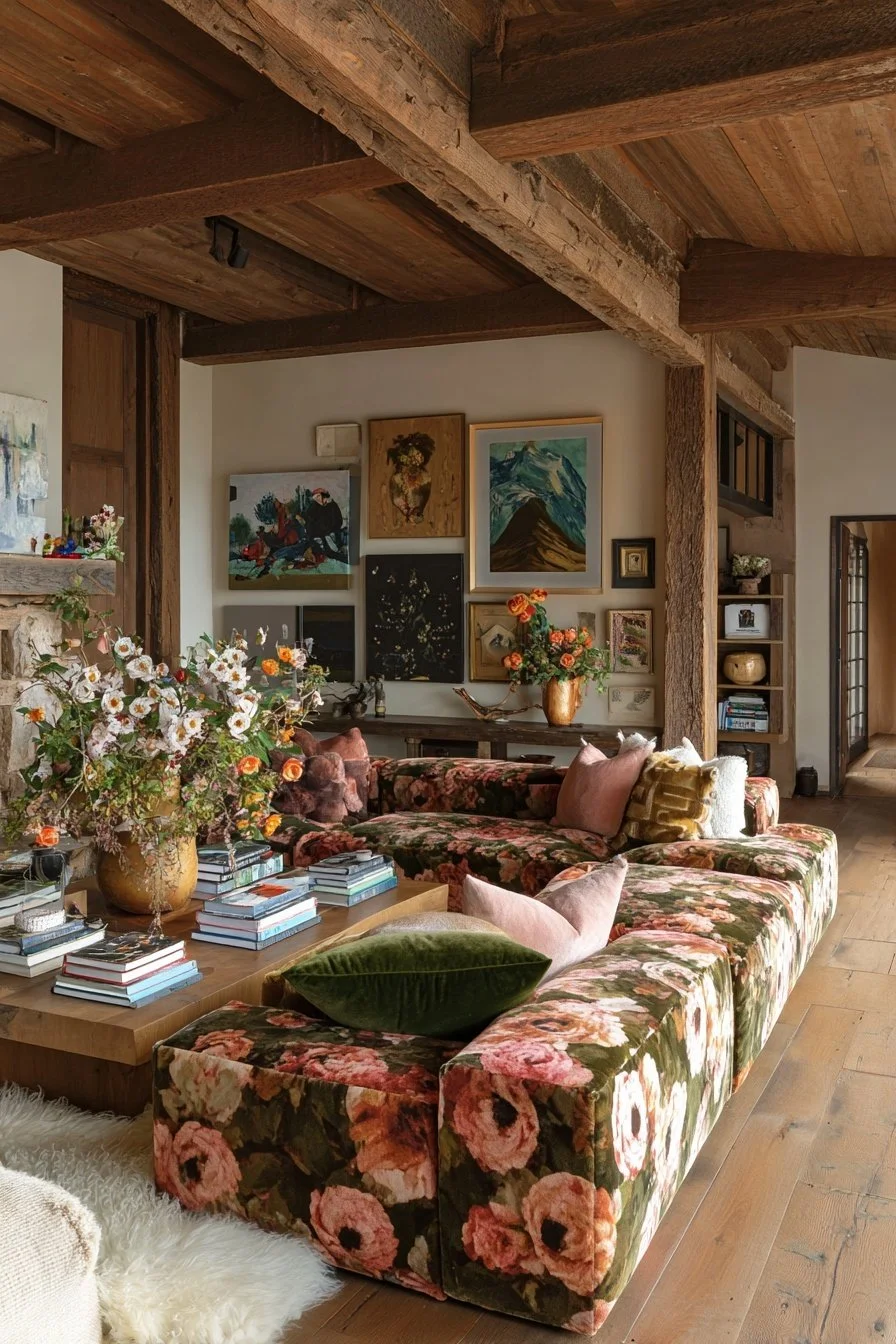
Across the market’s showrooms, large sectionals and sofas upholstered in botanical tapestry prints dominated the conversation. At Eichholtz, a modular sectional was covered in a rich, old‑world pattern combining olive green, faded rose and cream. Rowe, TOV, Craftmaster and Sunpan all showed similar motifs, often on generous, deep‑seated frames that encourage lounging. The scale of the prints and the willingness to upholster entire sectionals – rather than just accent chairs – signalled that this look isn’t a fringe trend but a central part of furniture design in 2026.
Examples
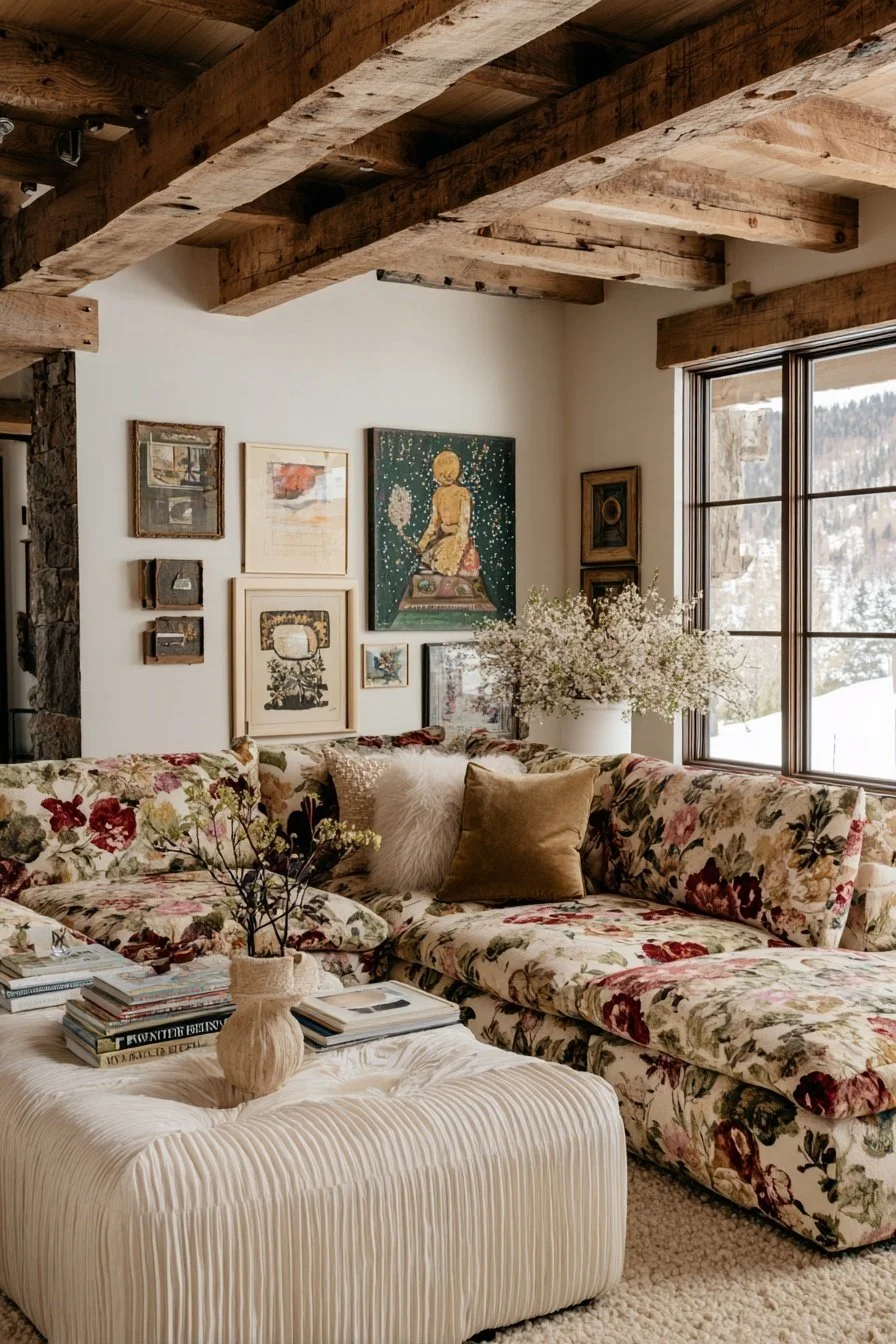
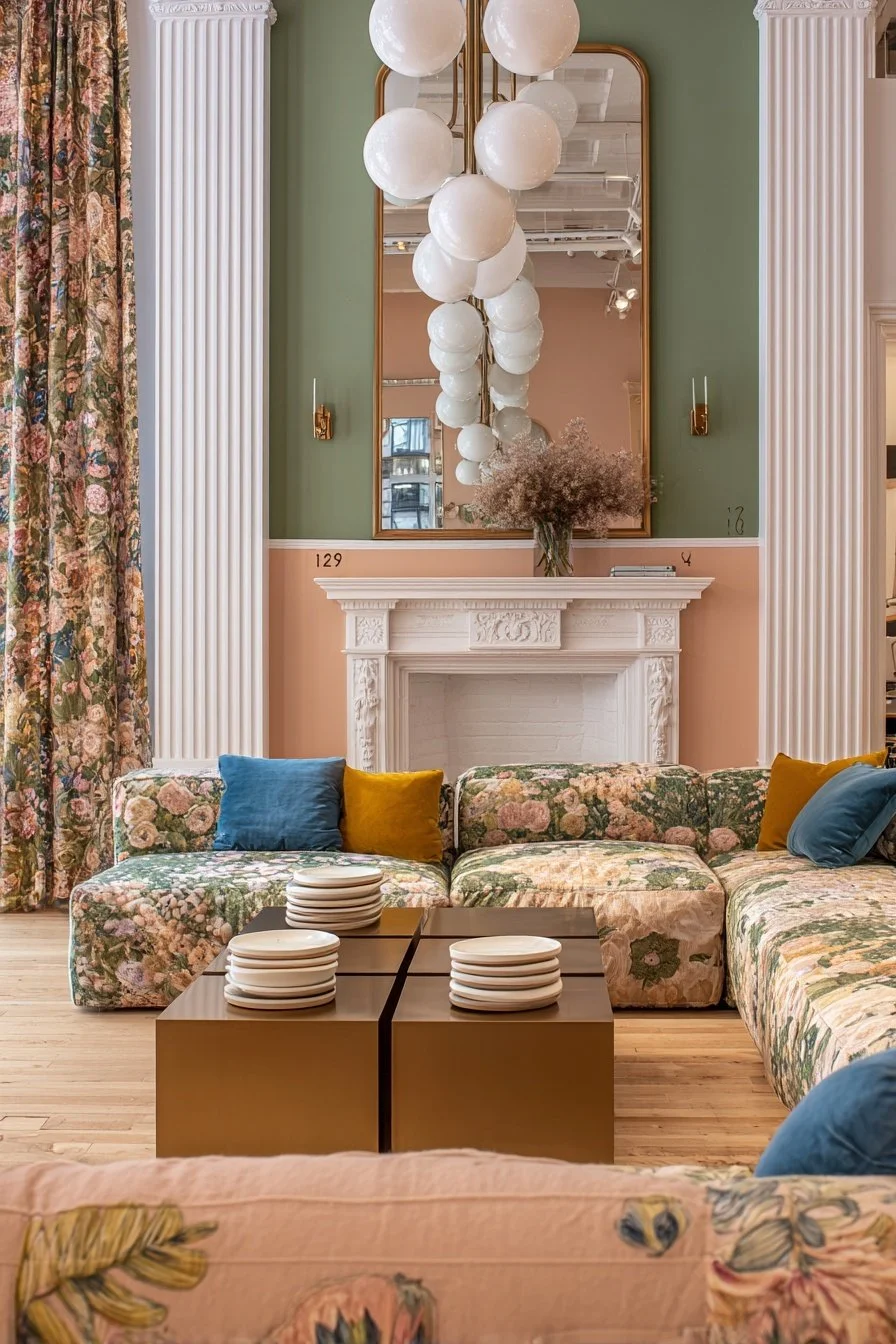
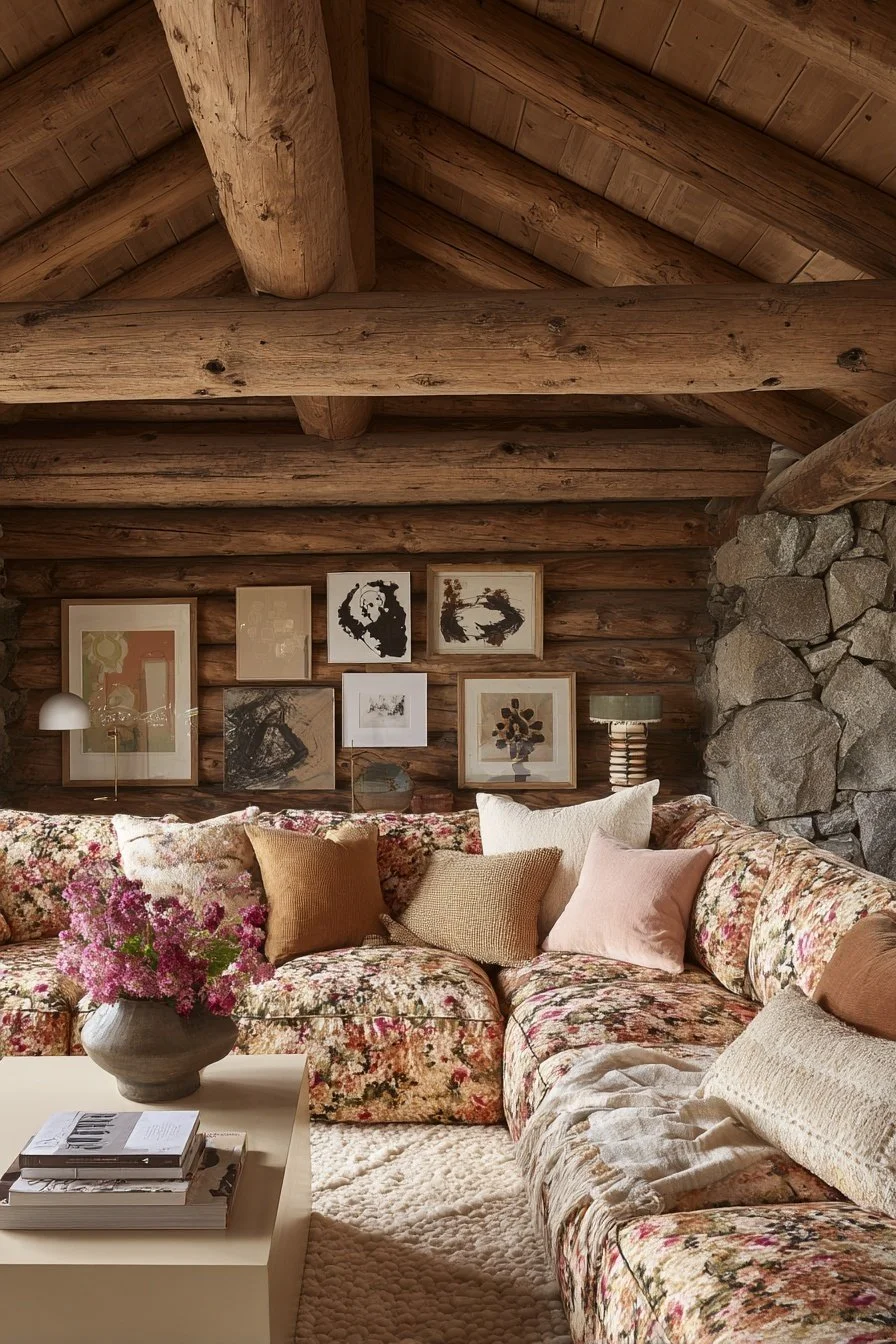
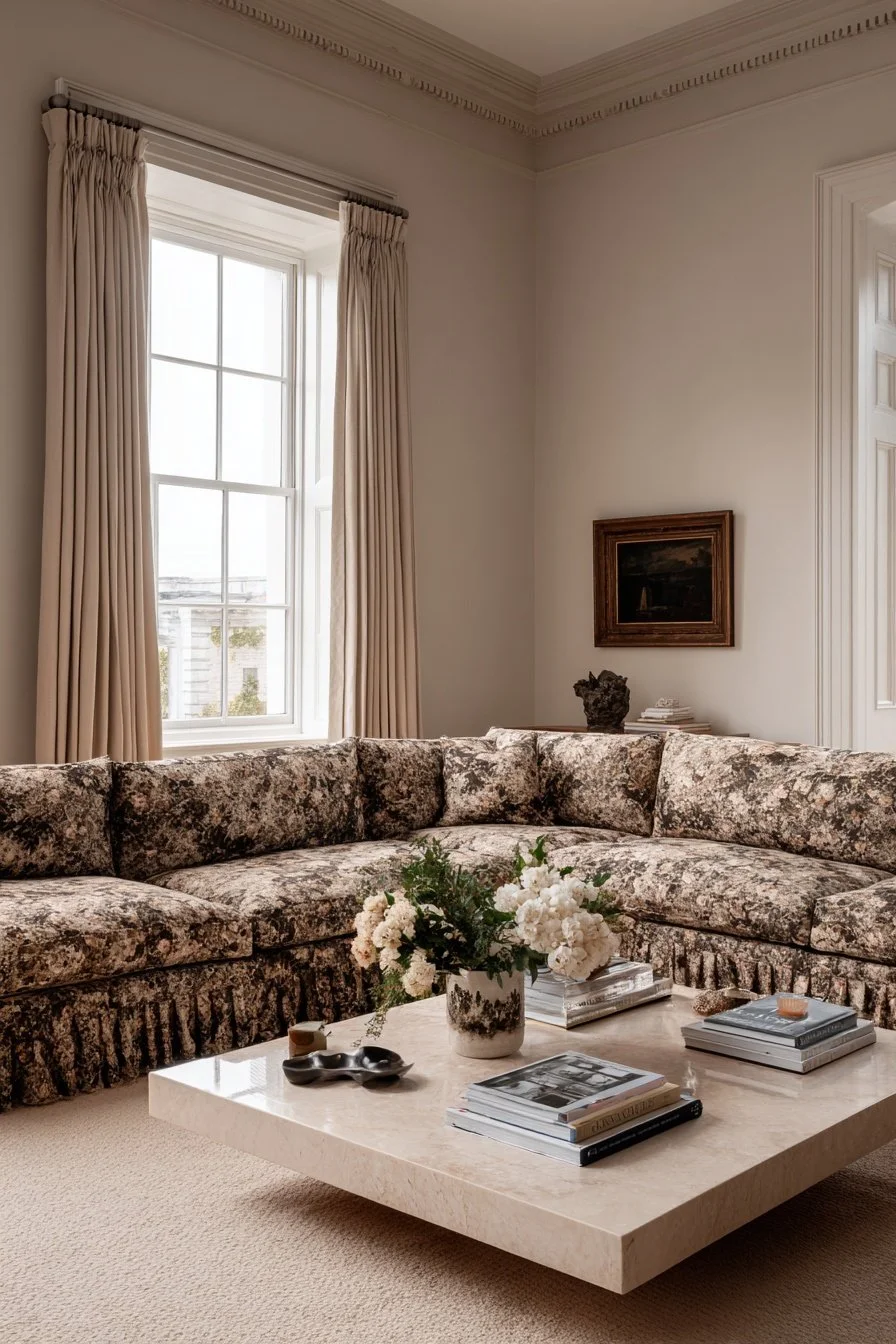
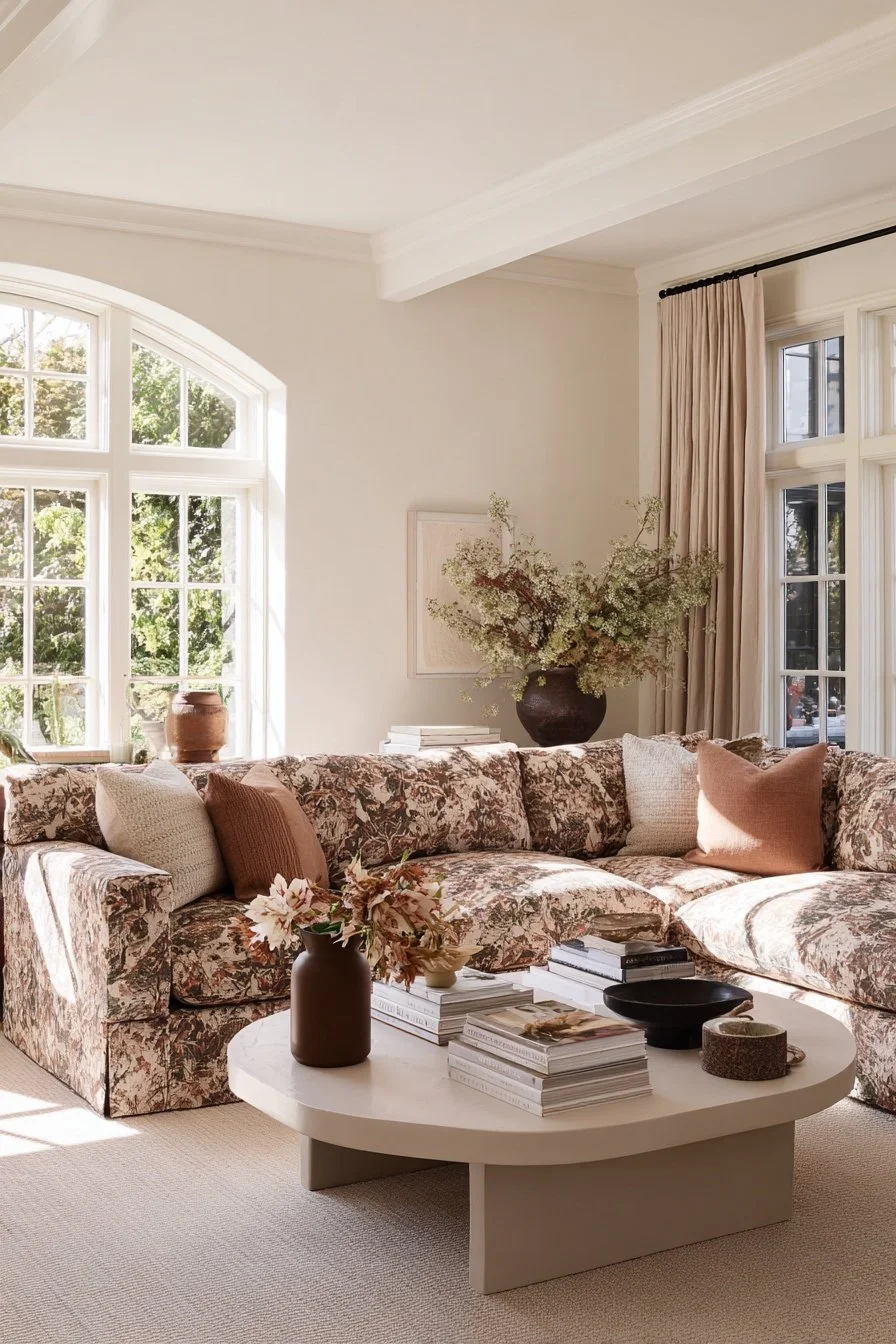
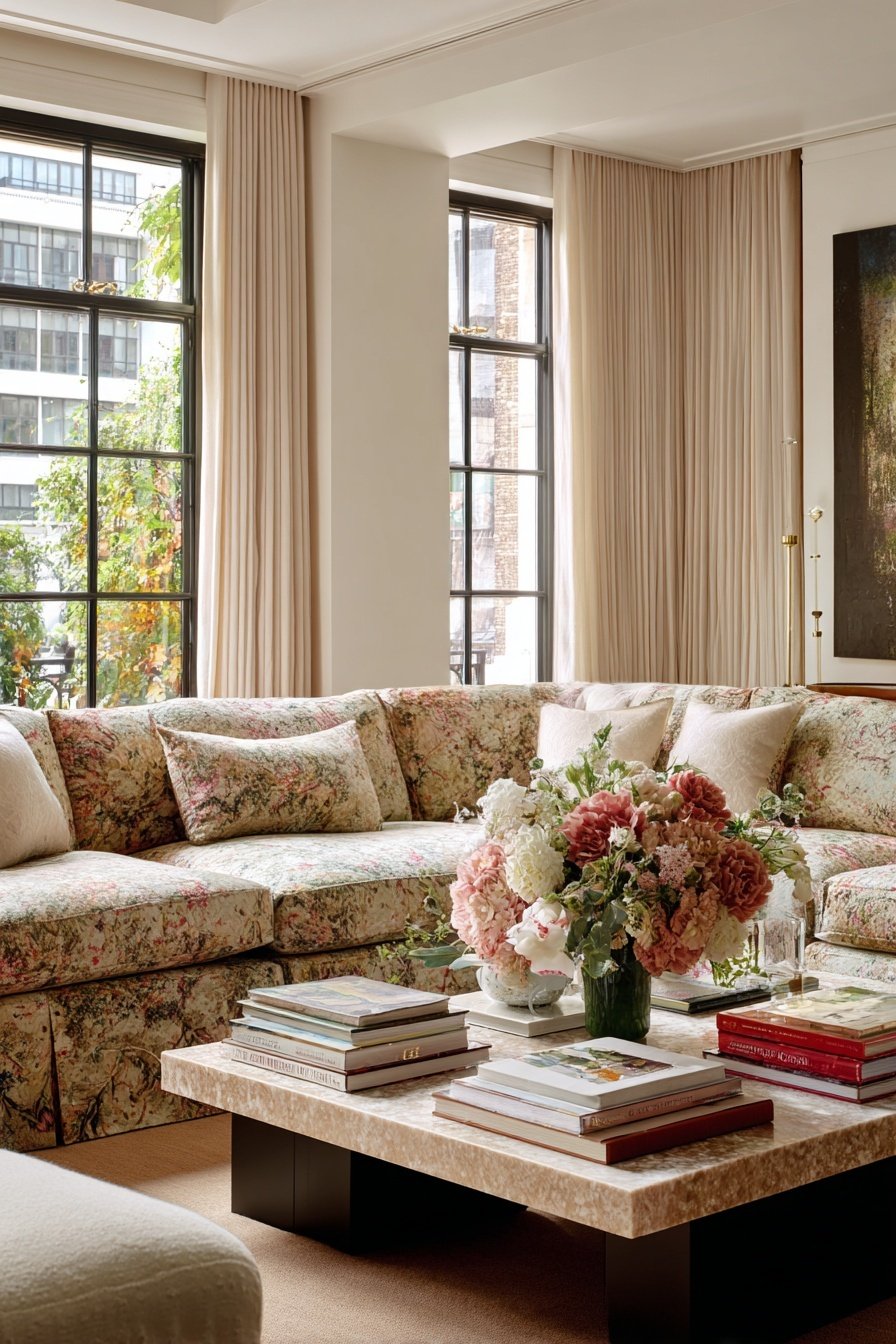
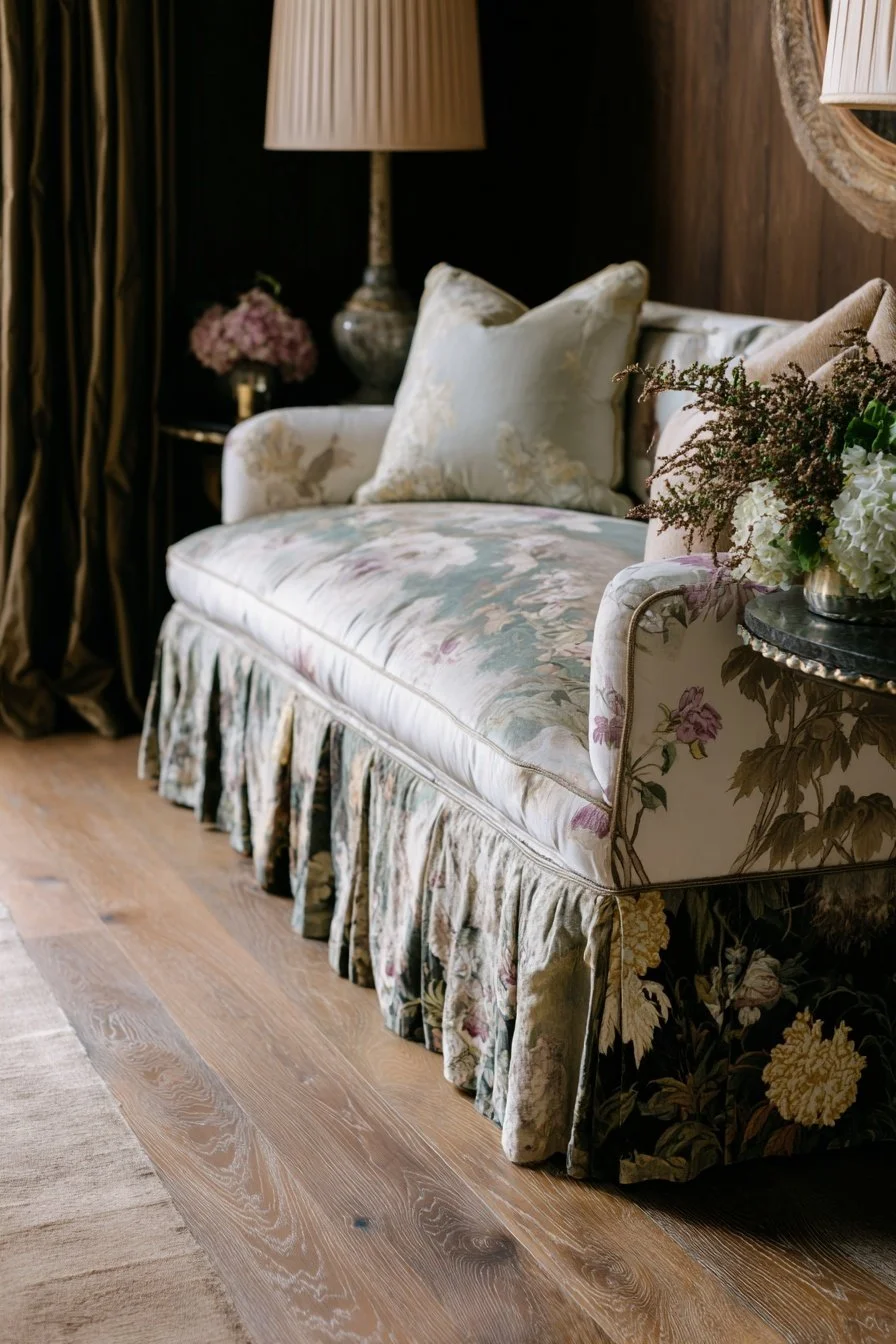
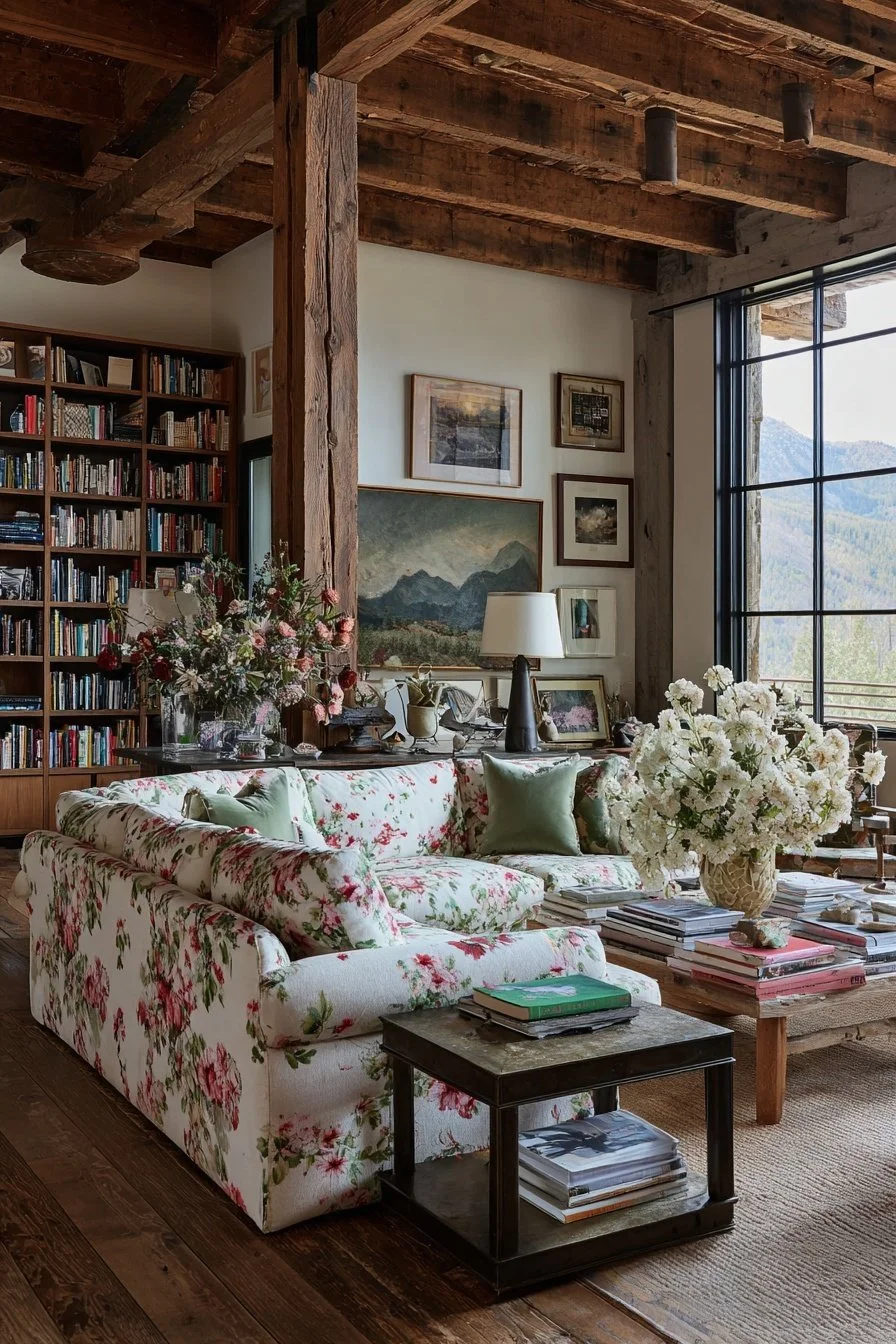
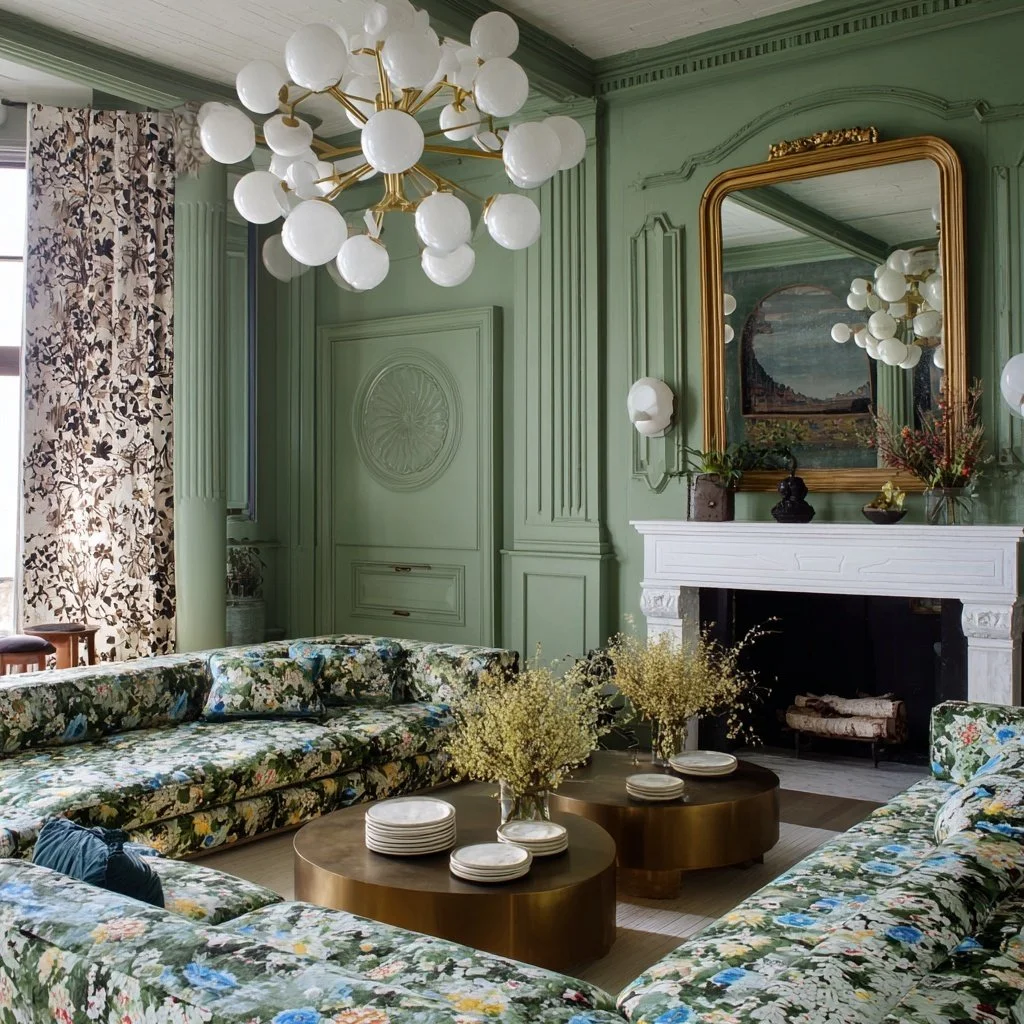
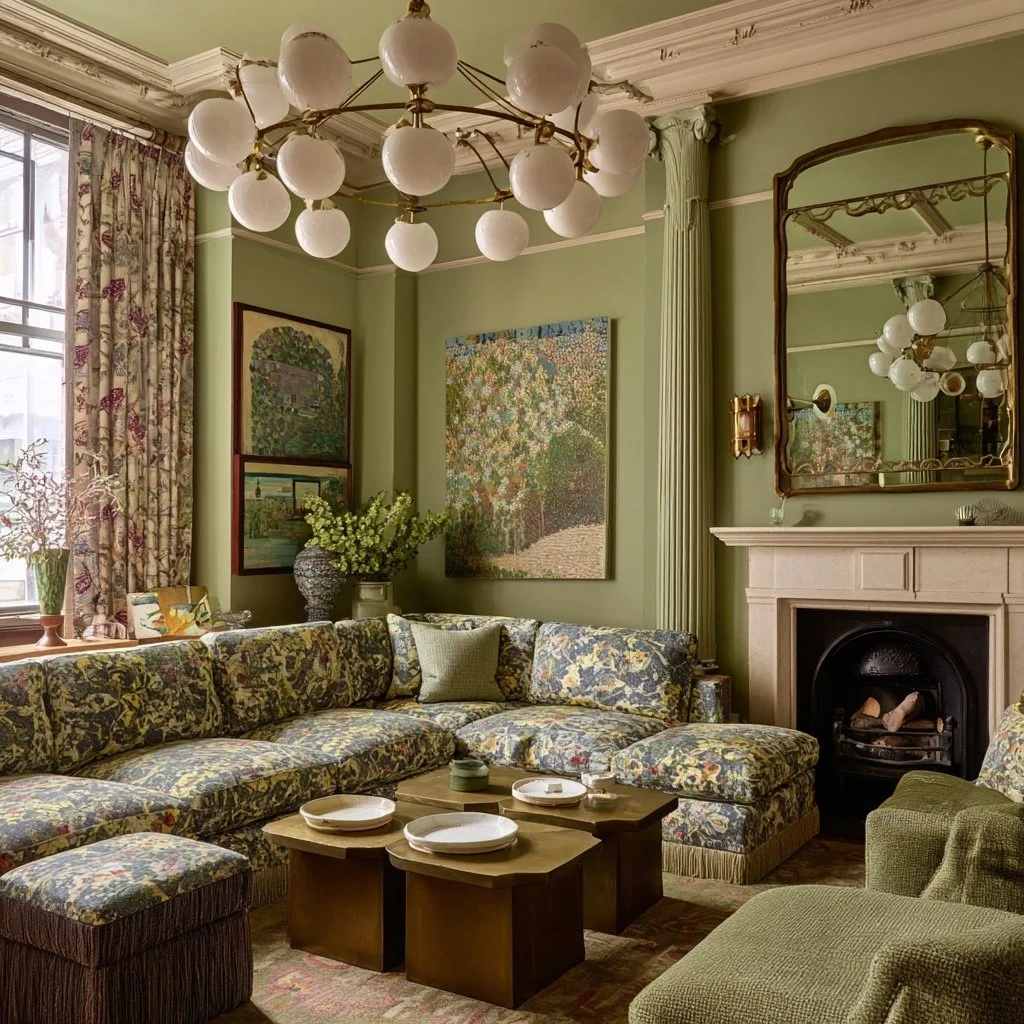
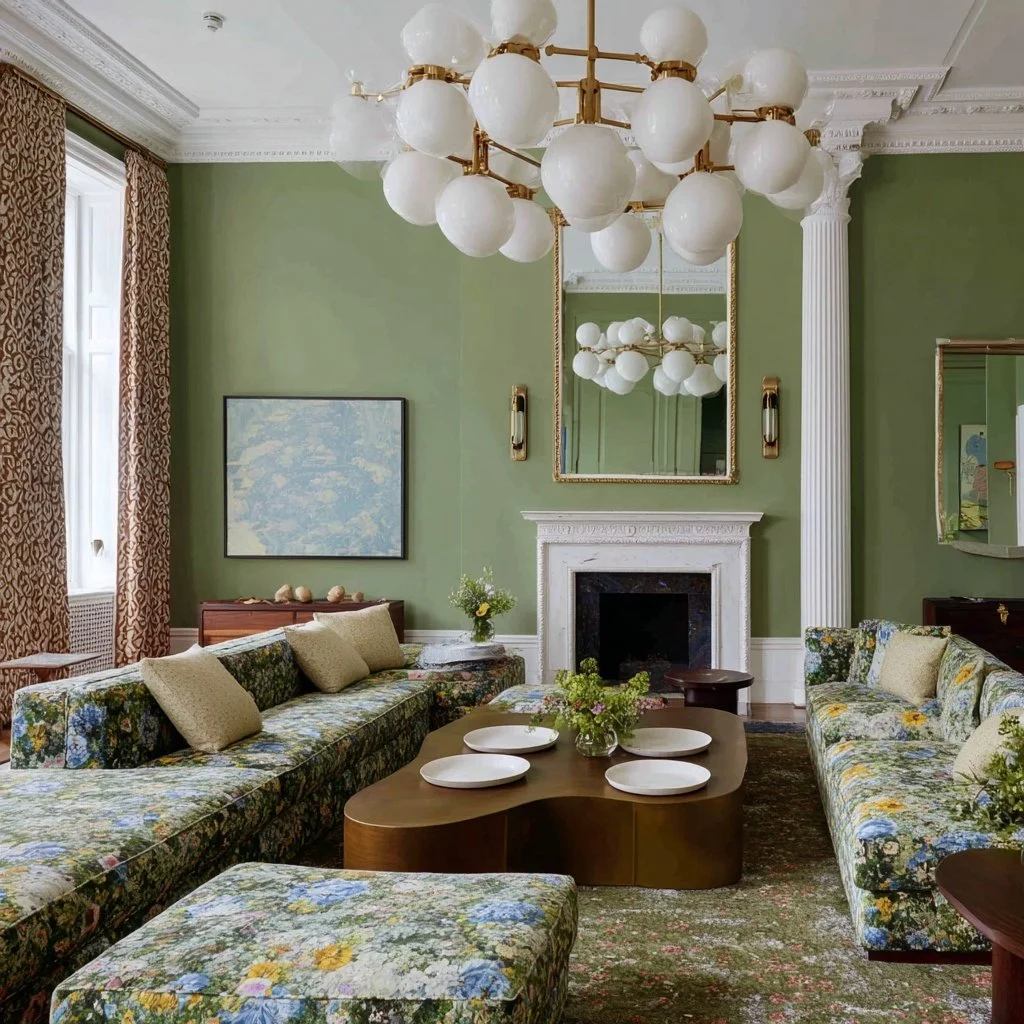
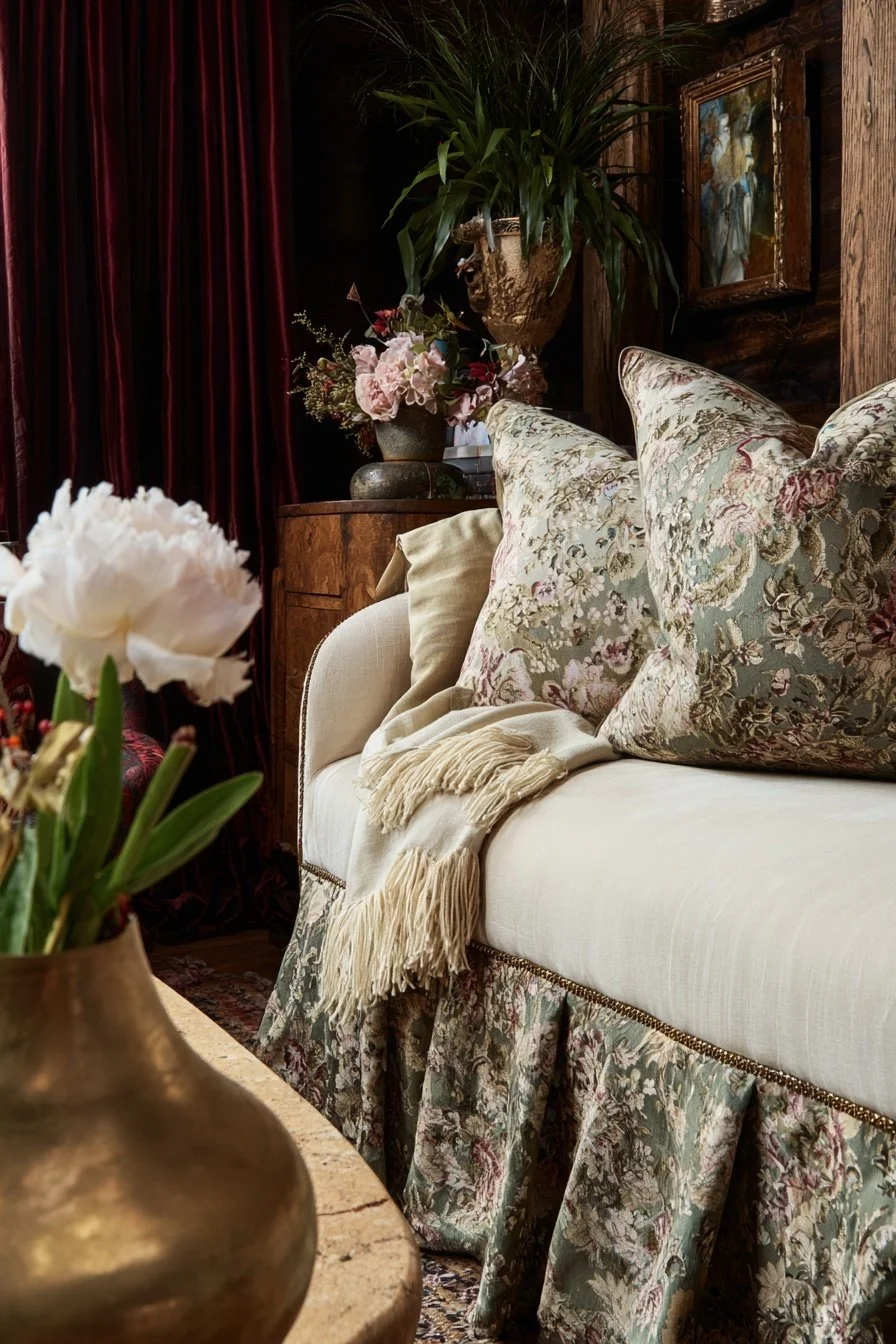
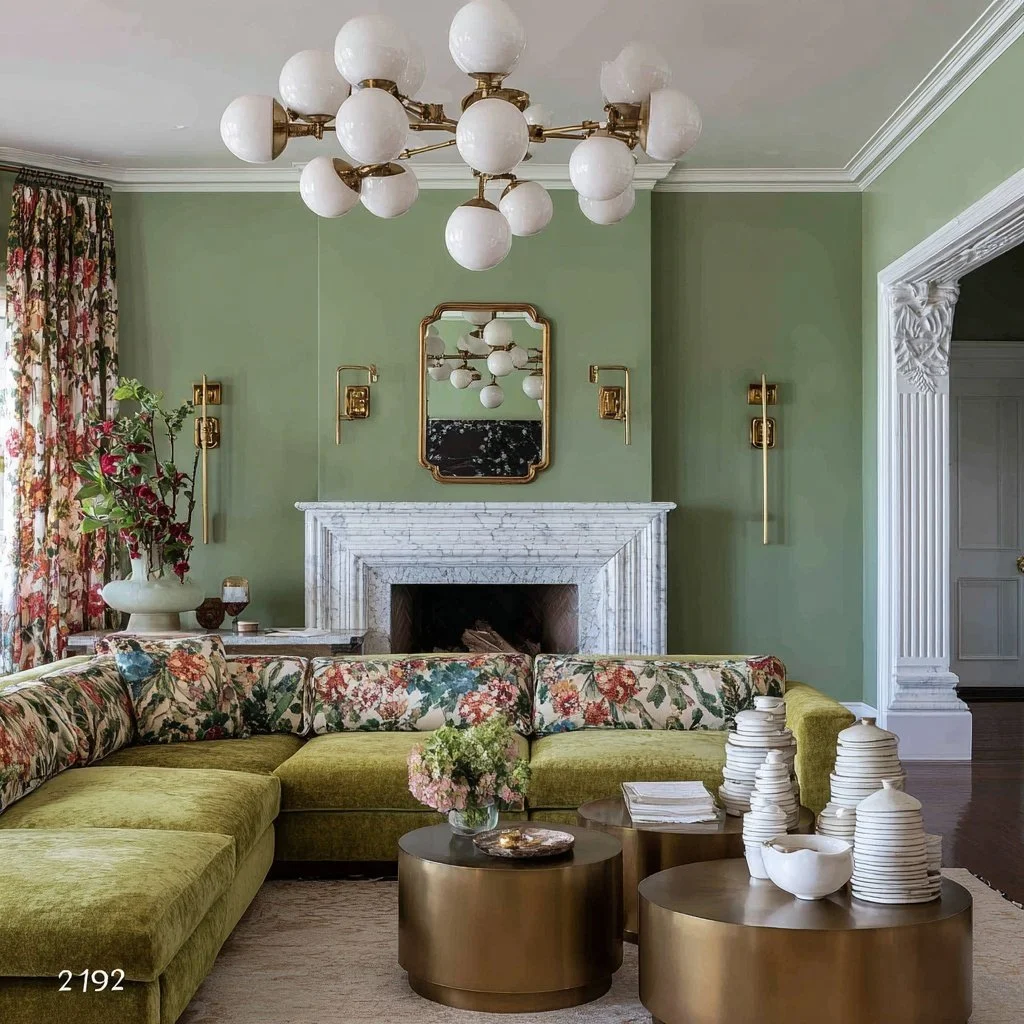
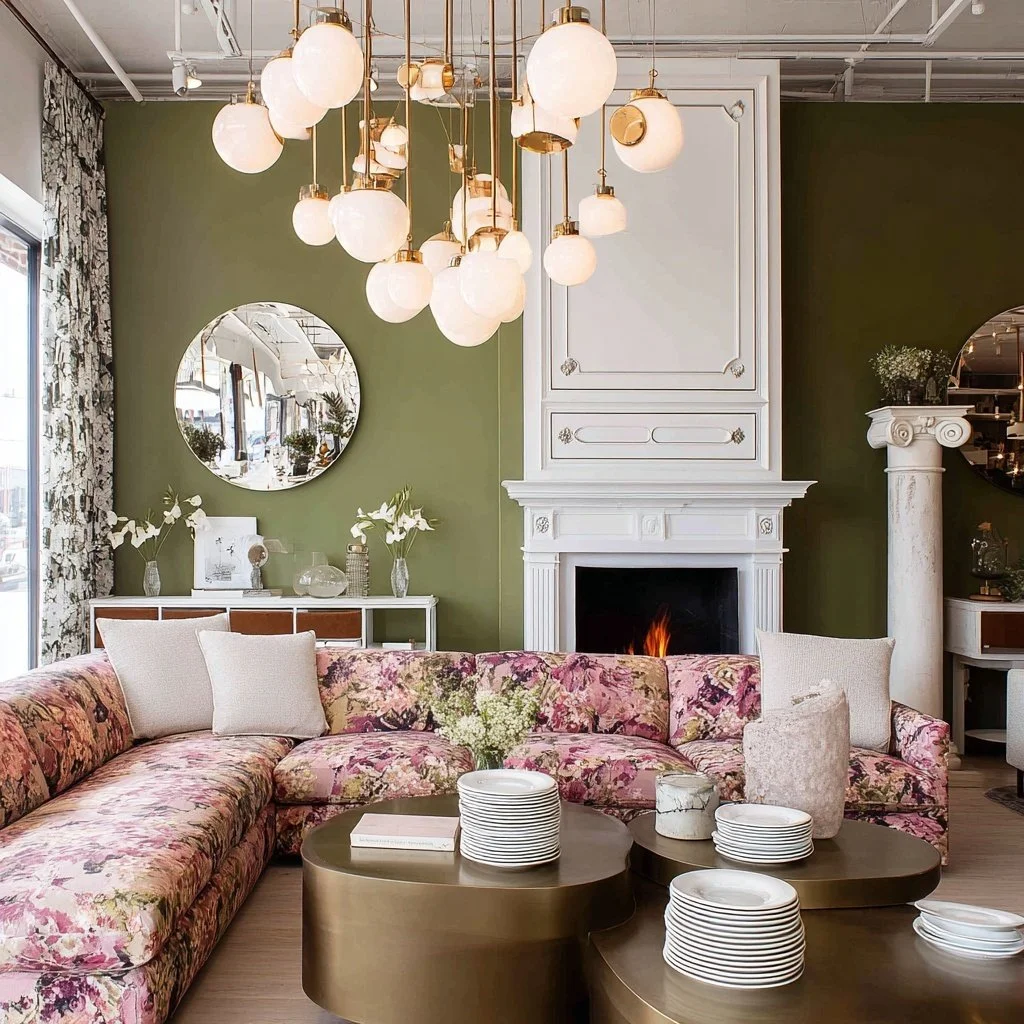
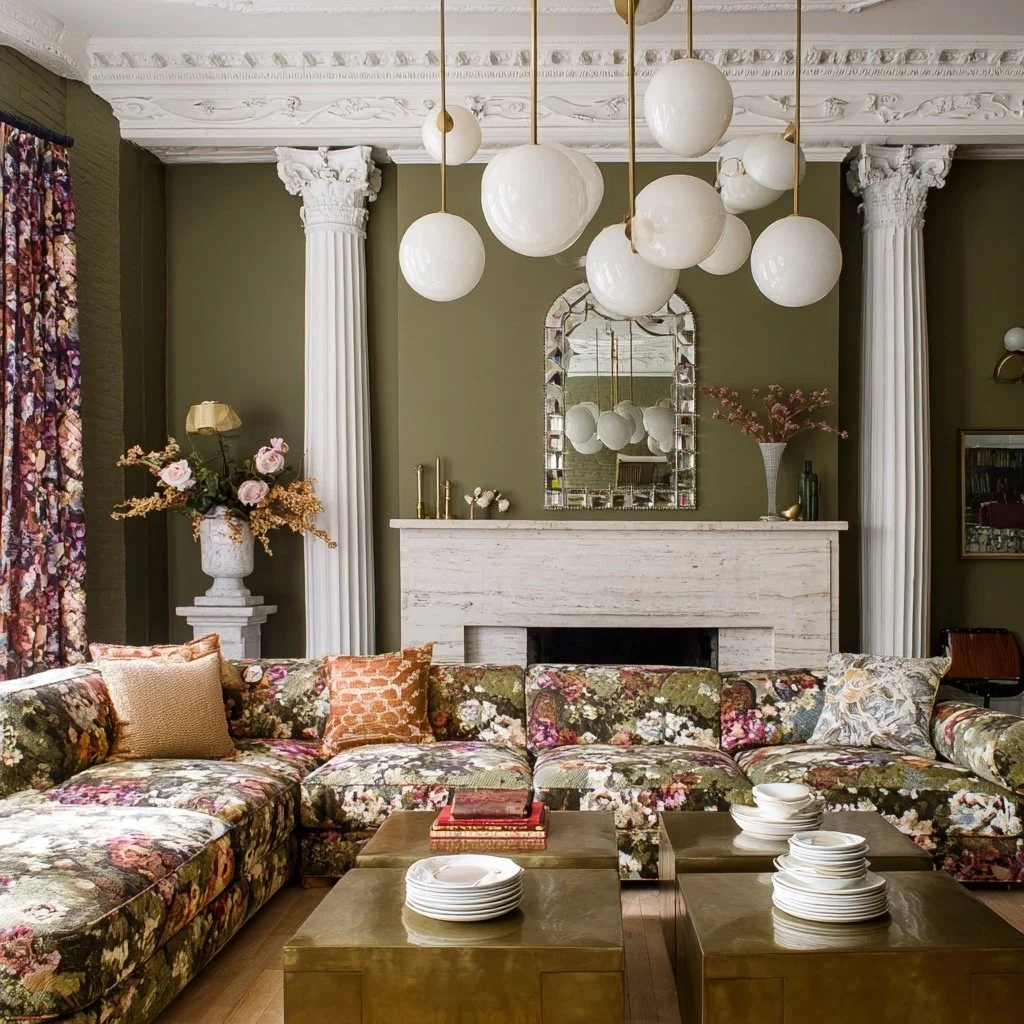
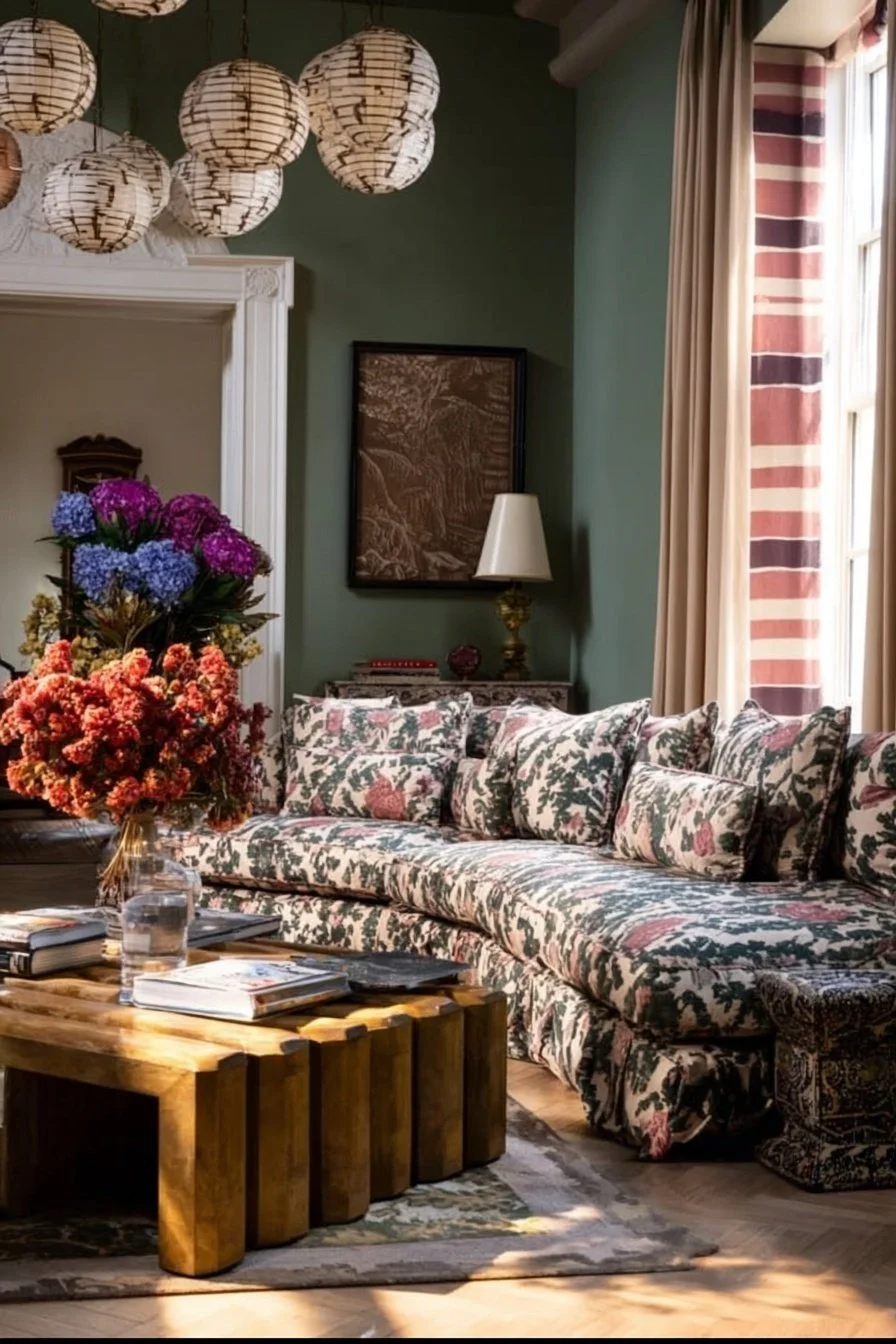
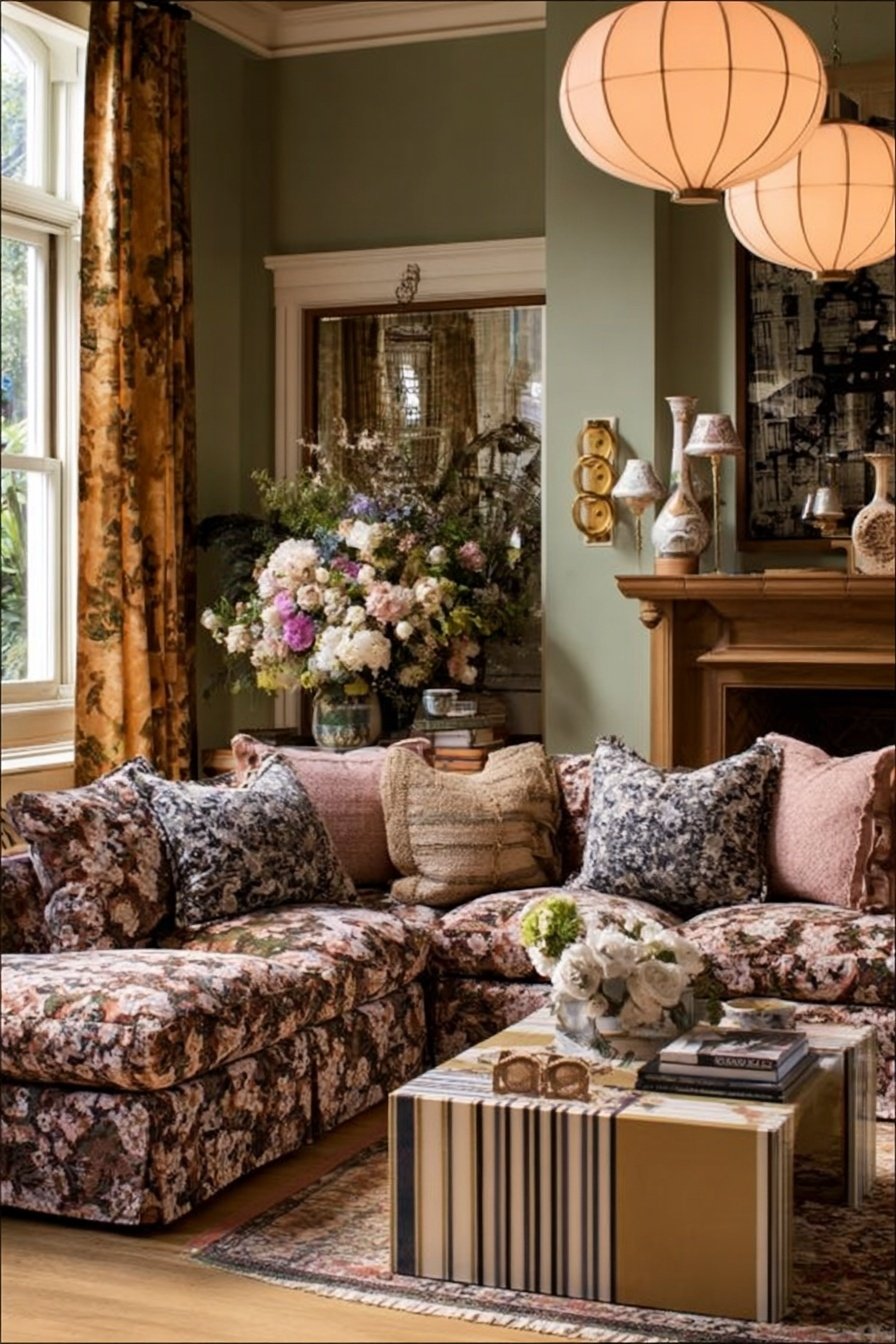
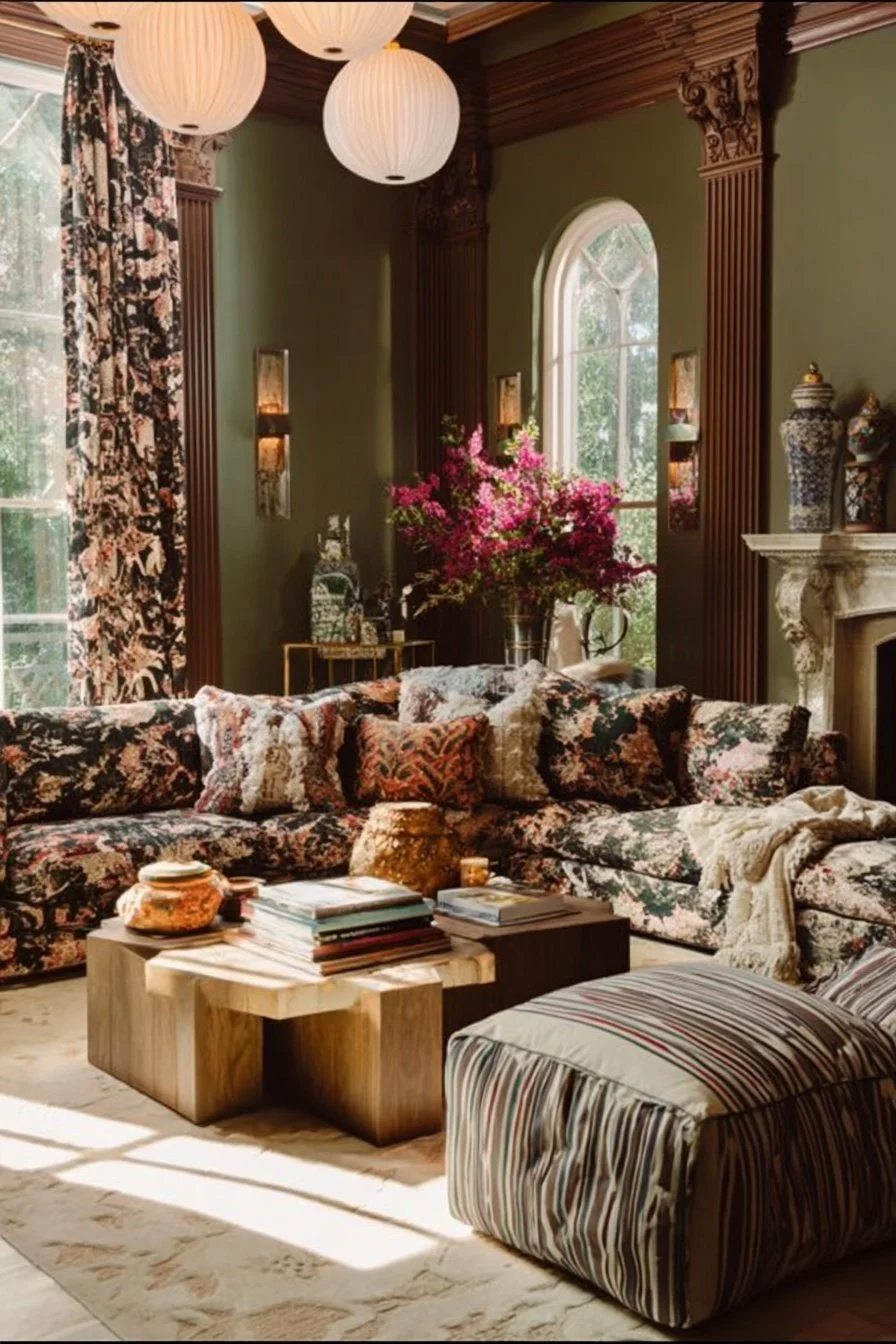
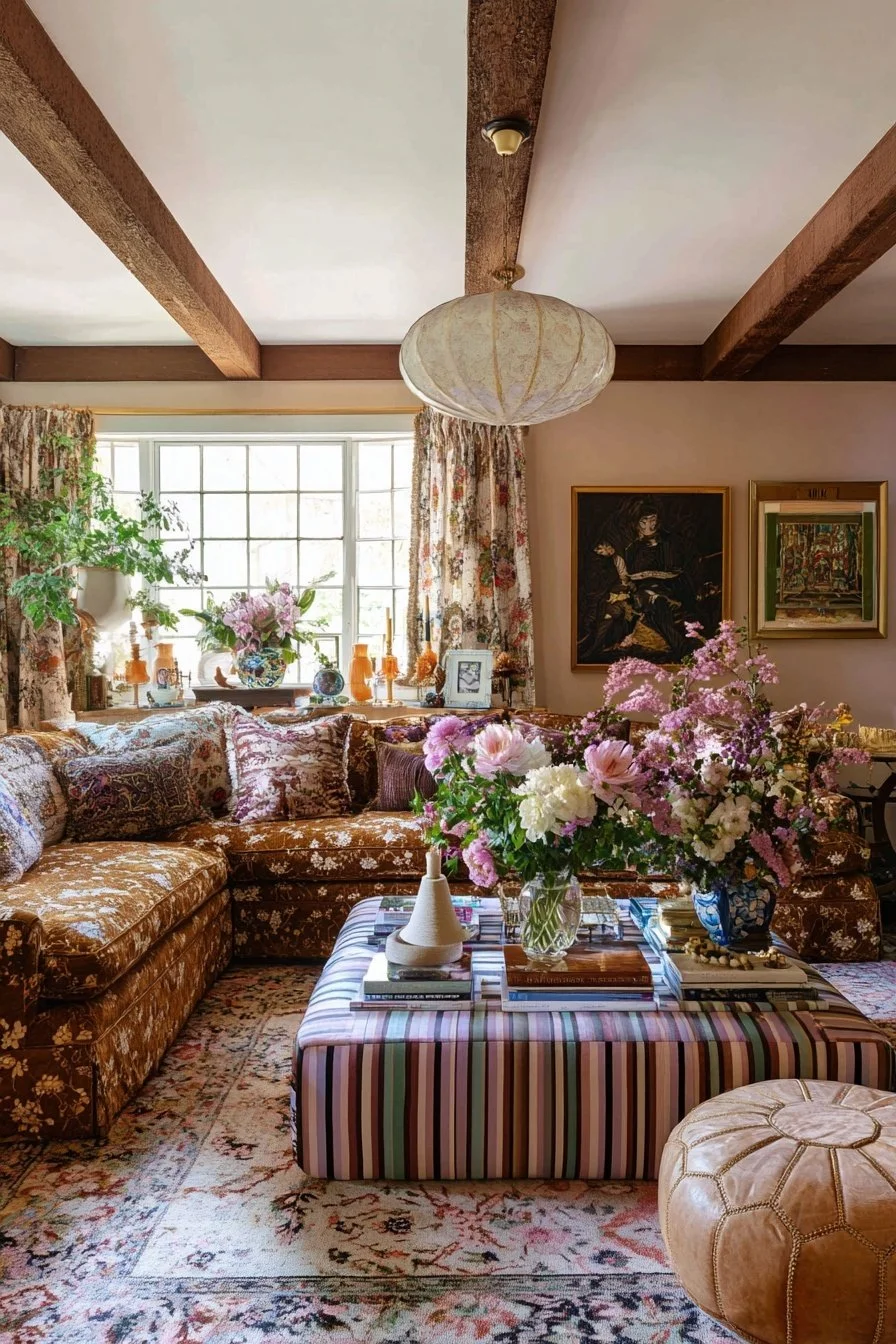
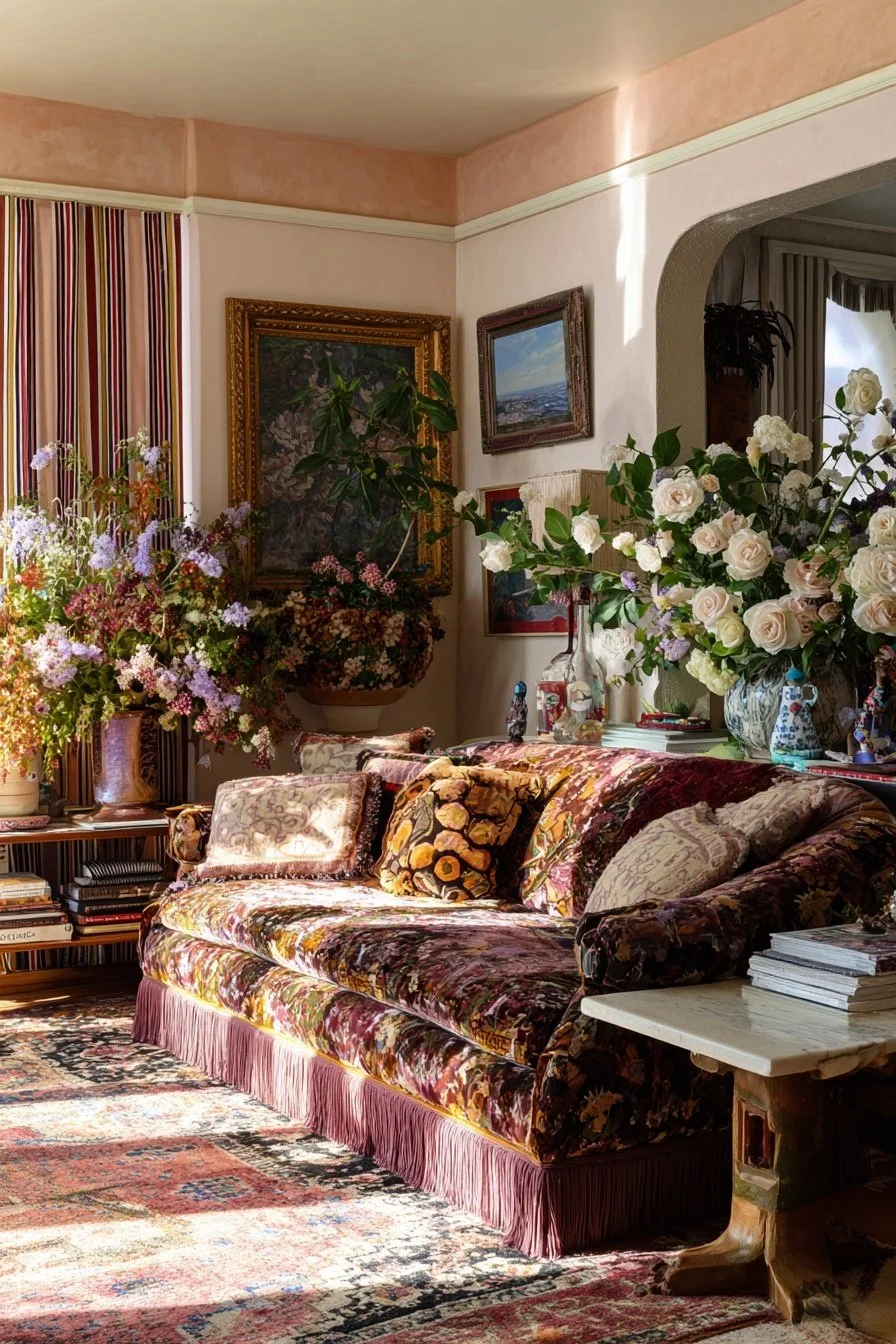
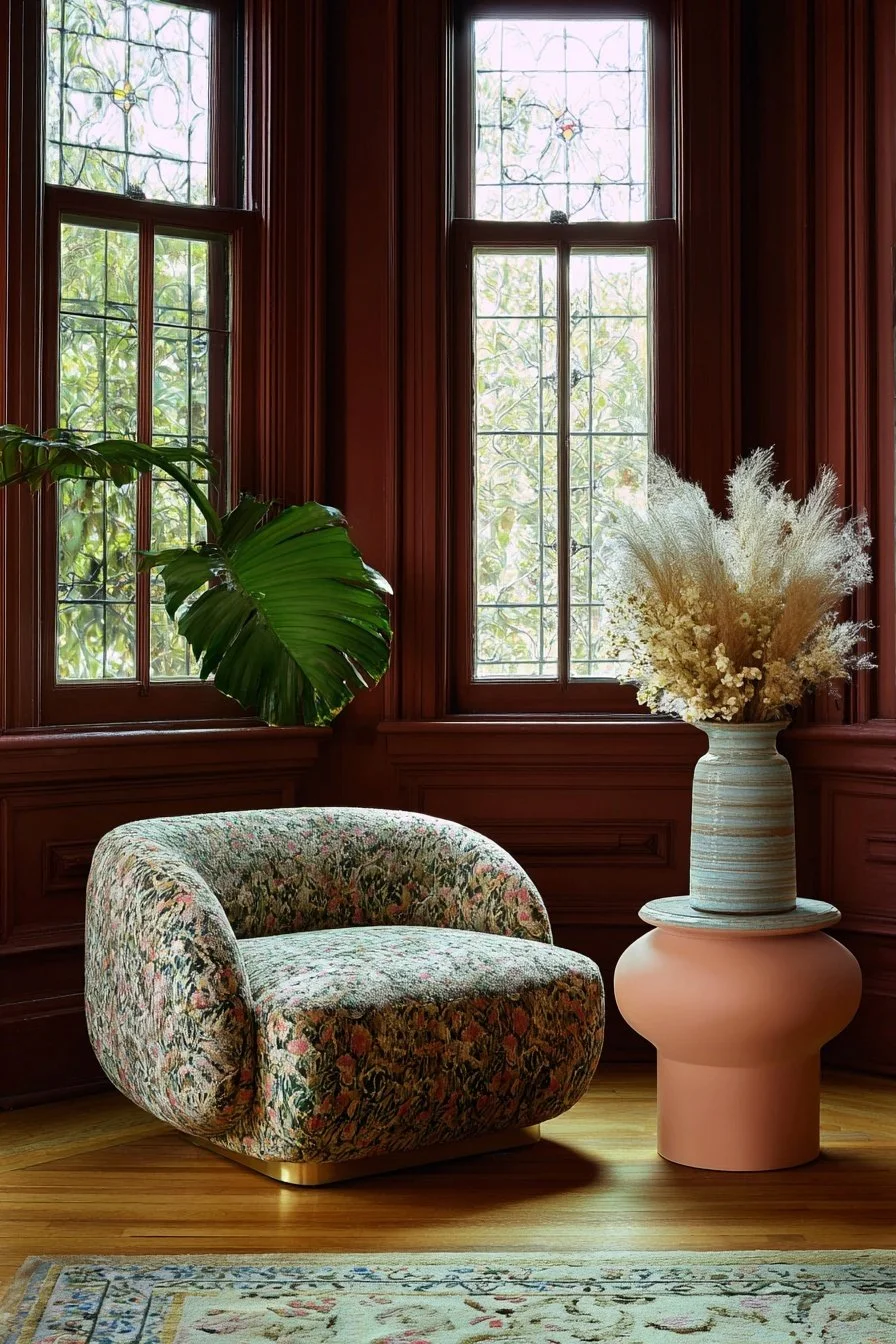
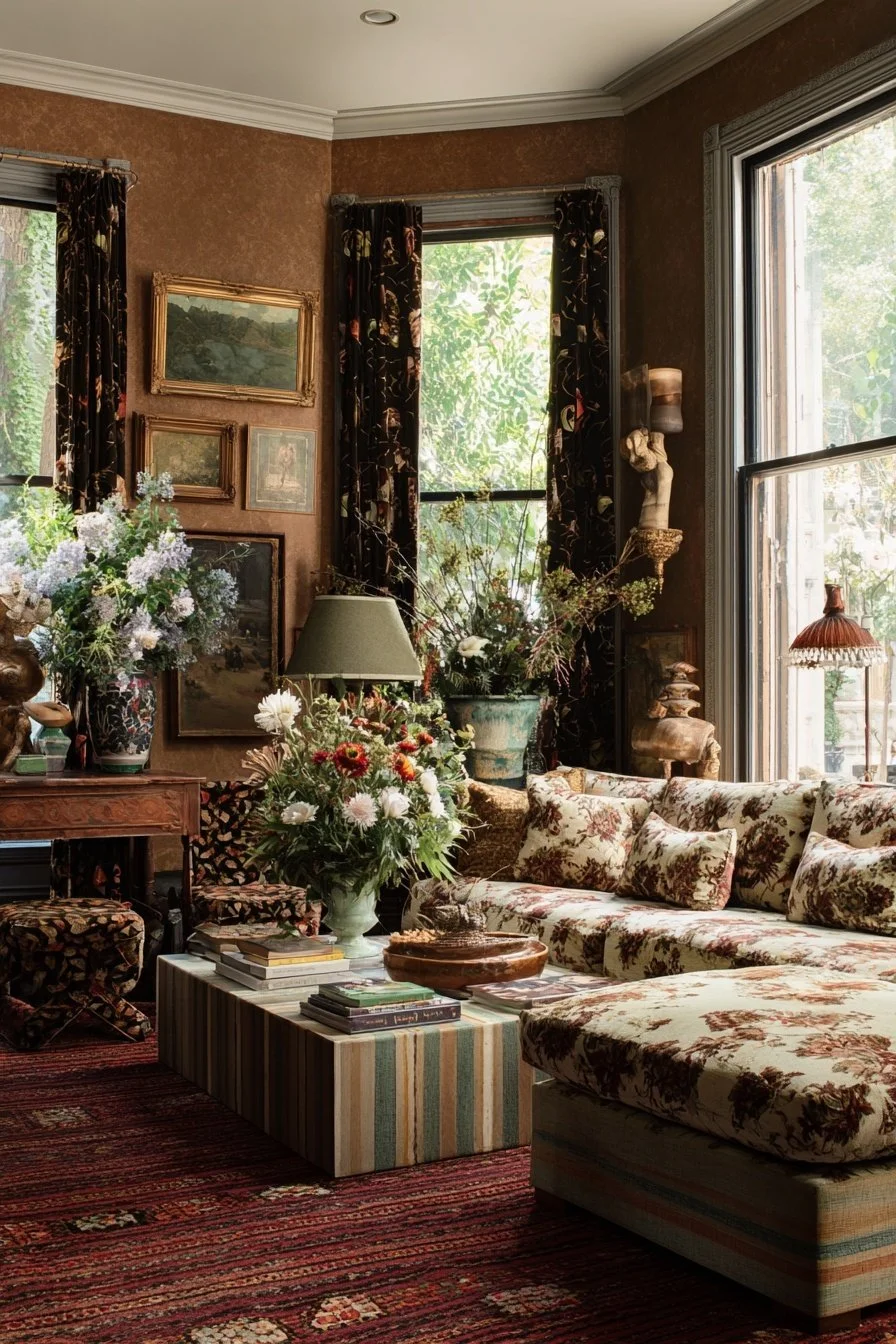
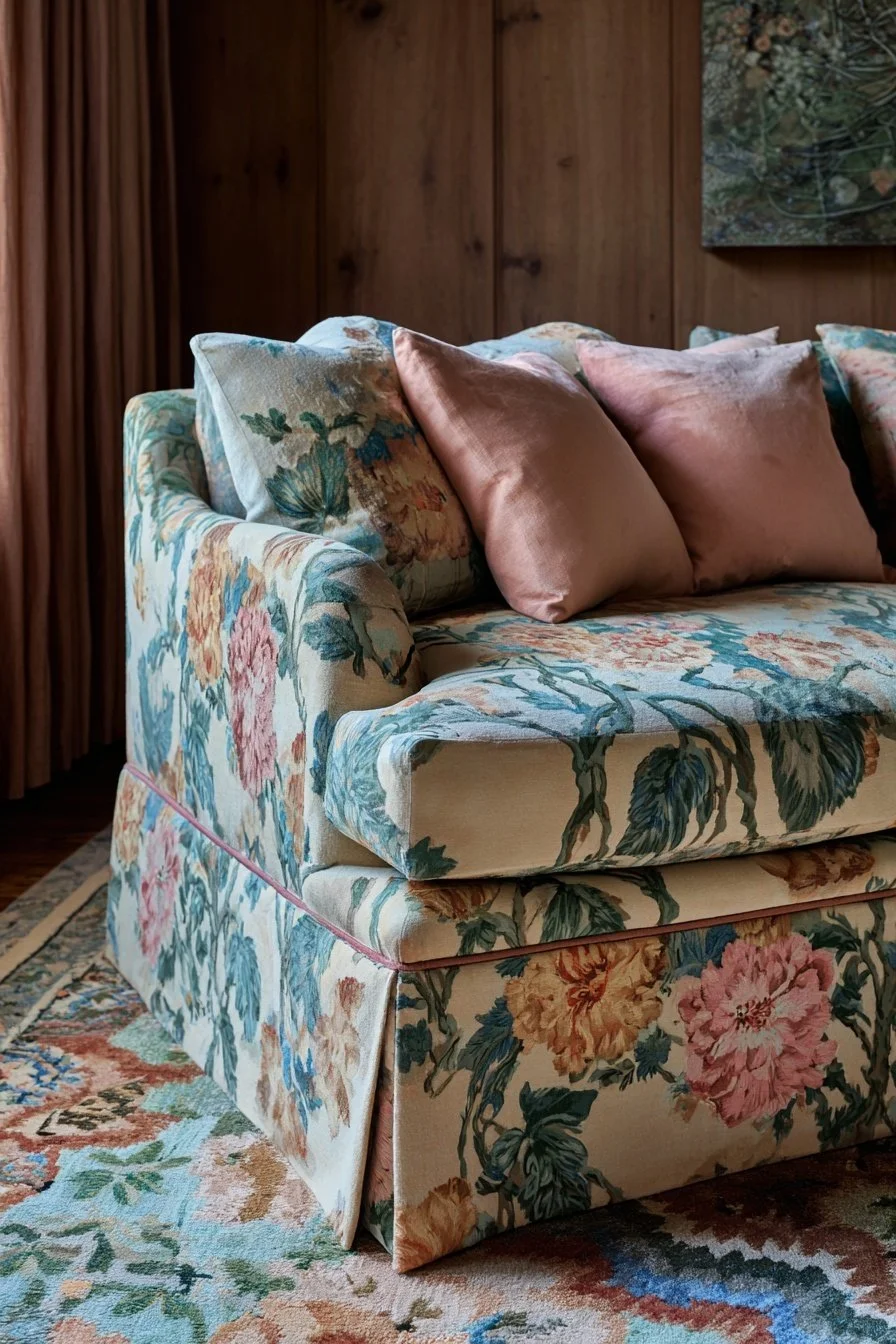
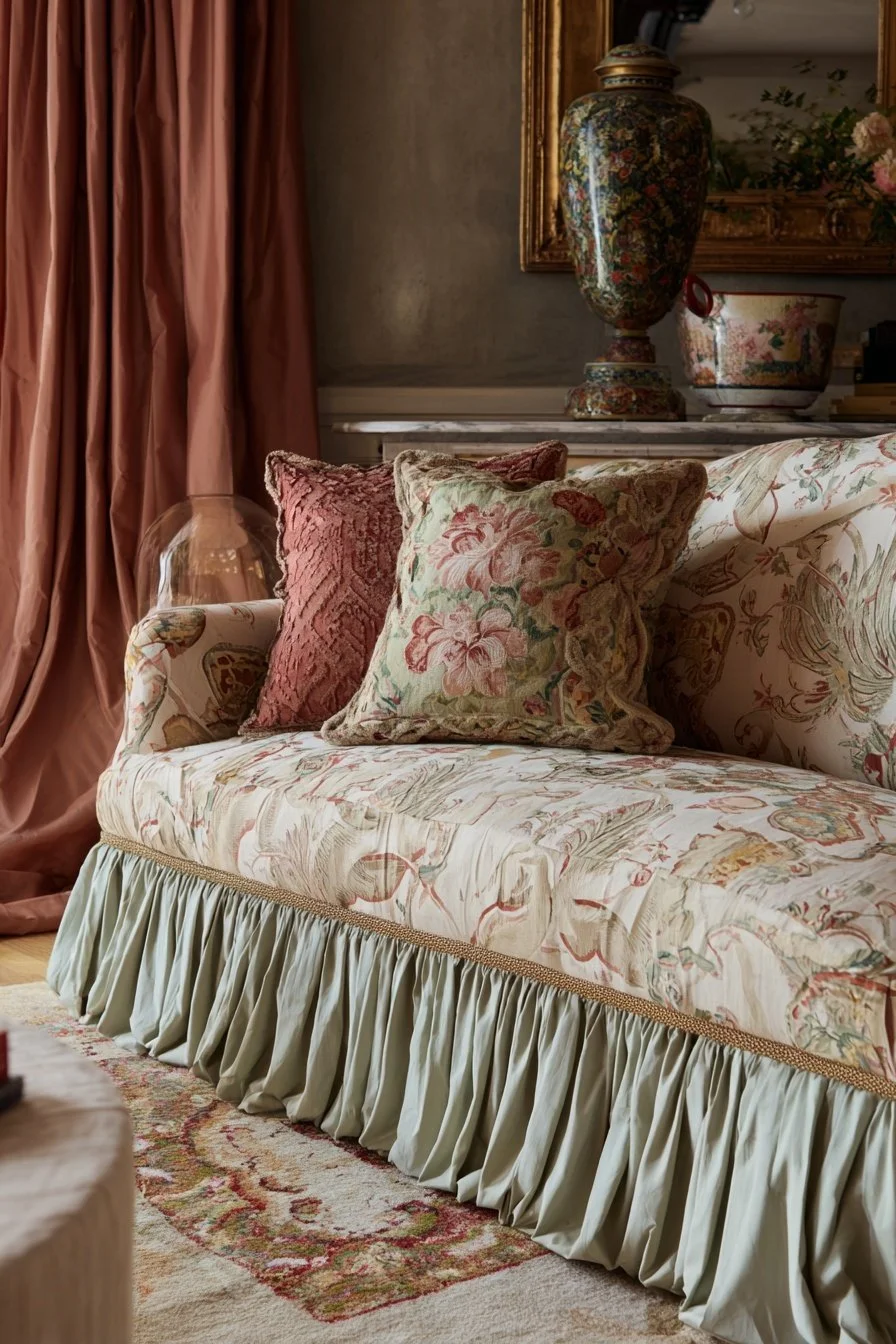
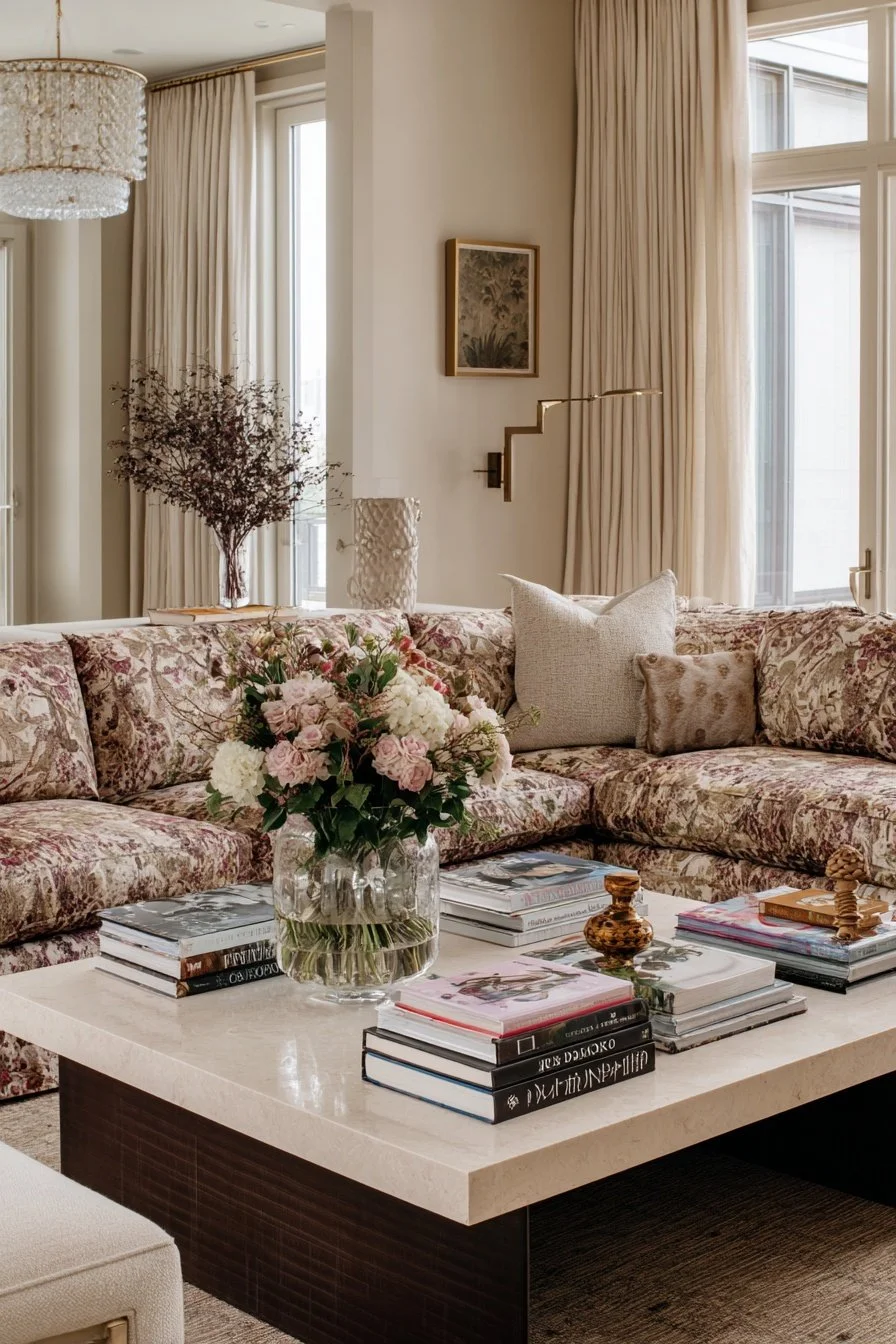
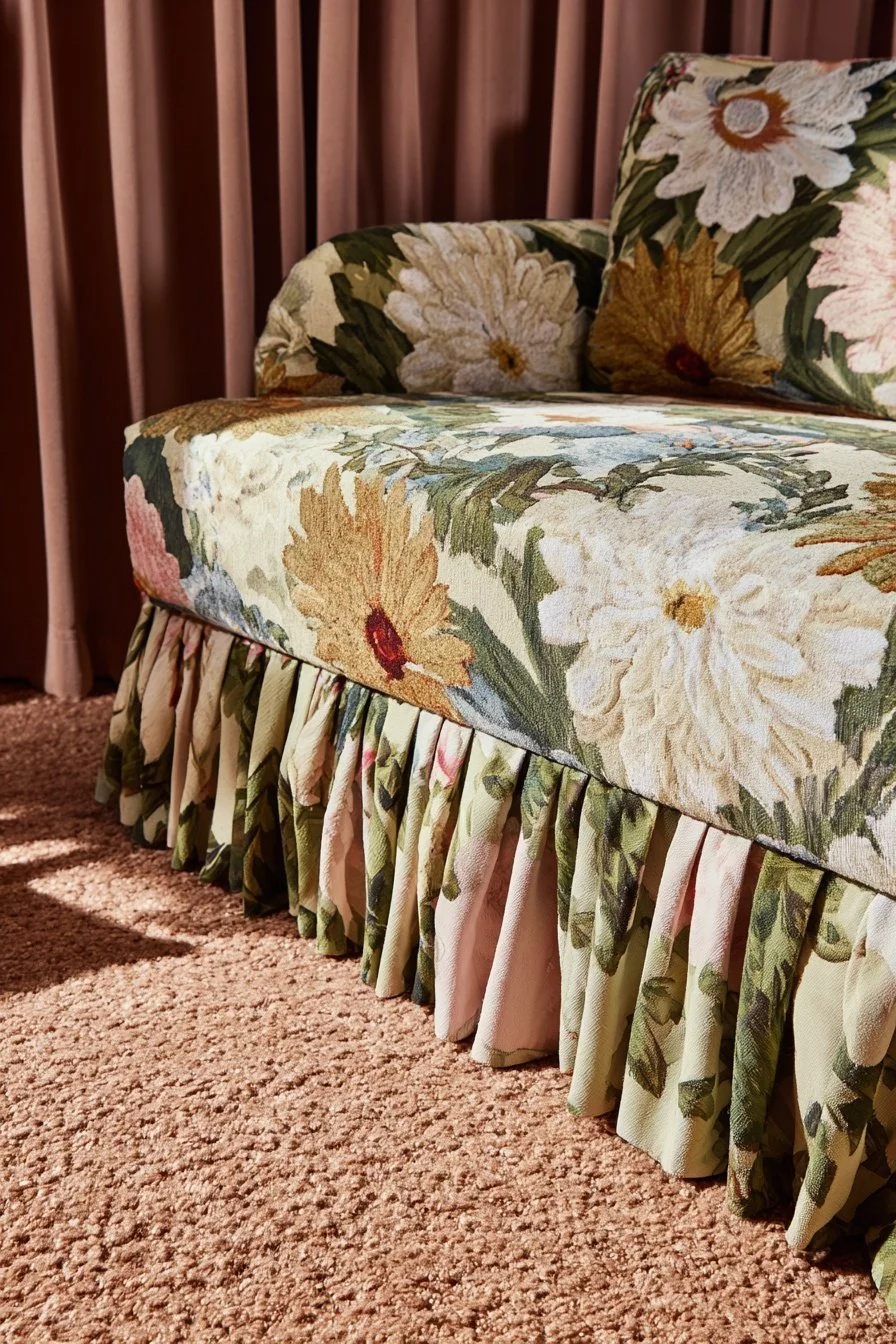
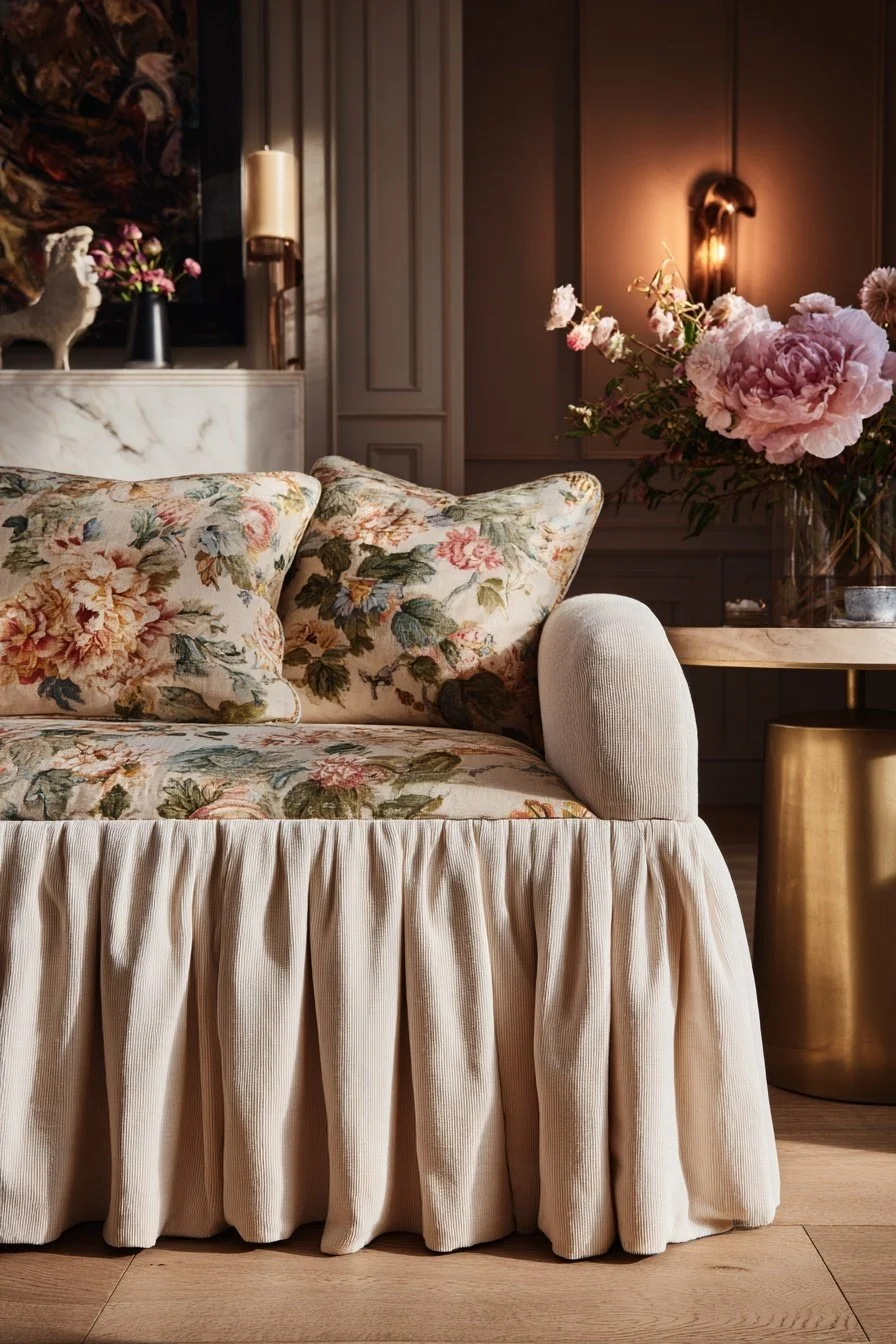
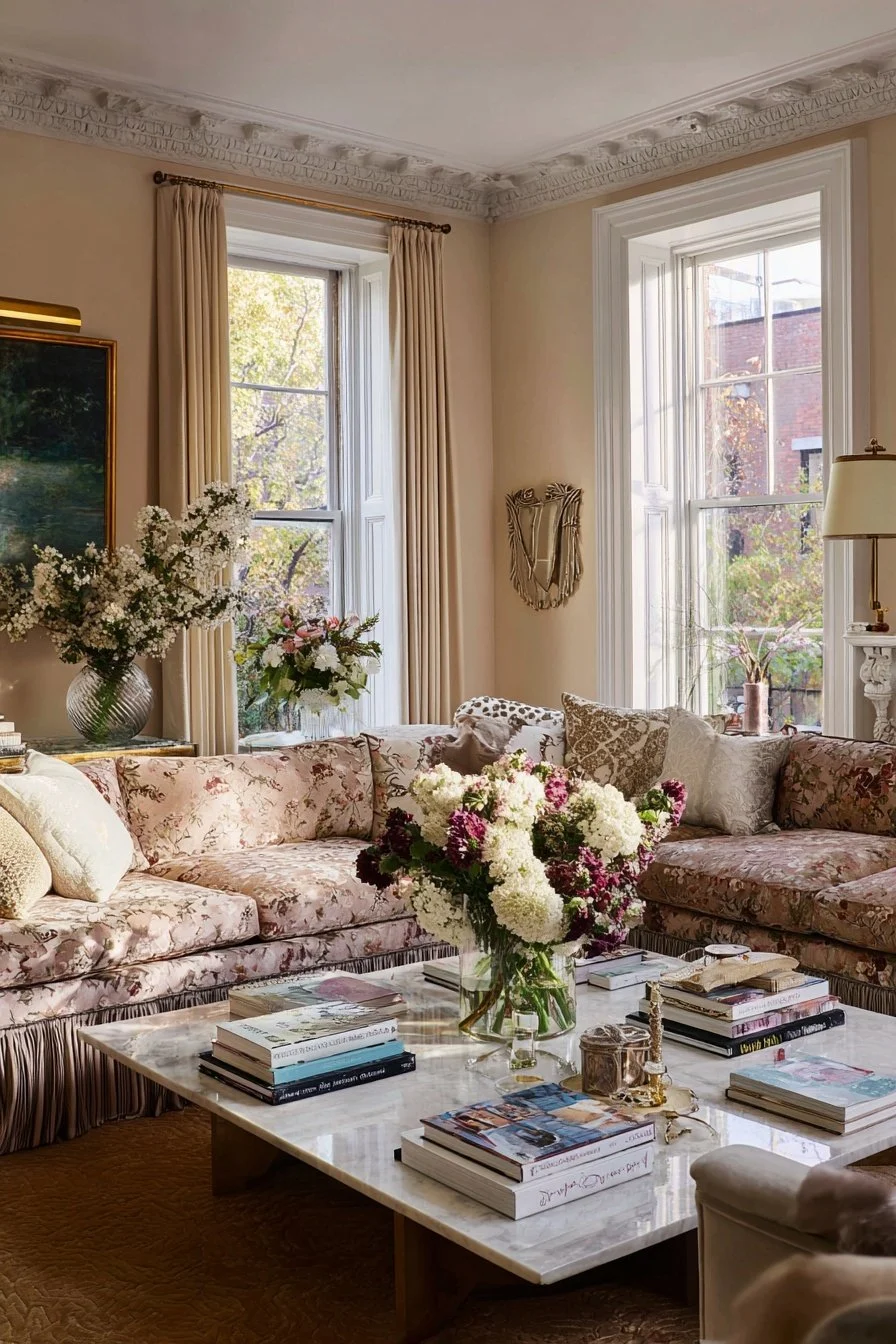
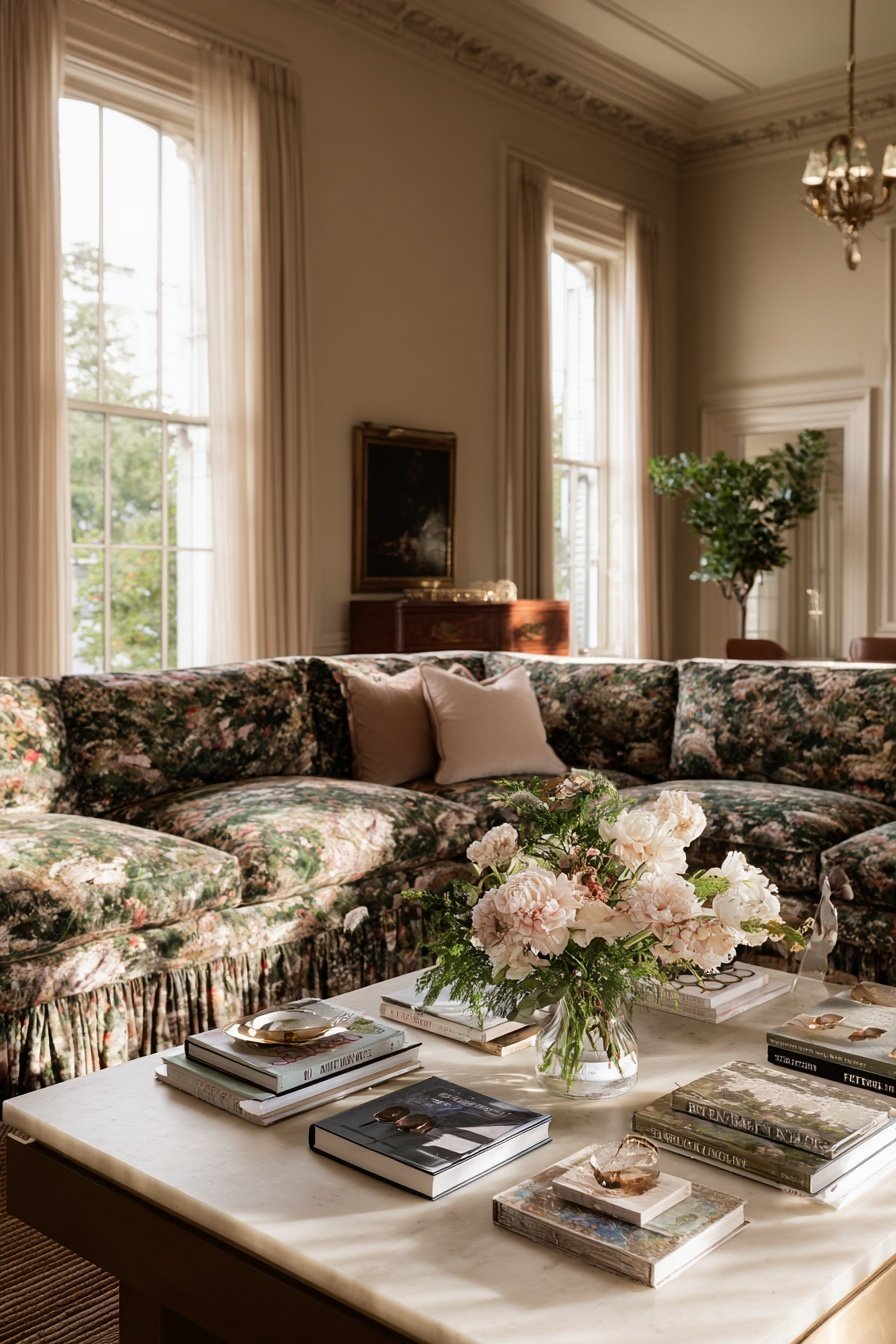
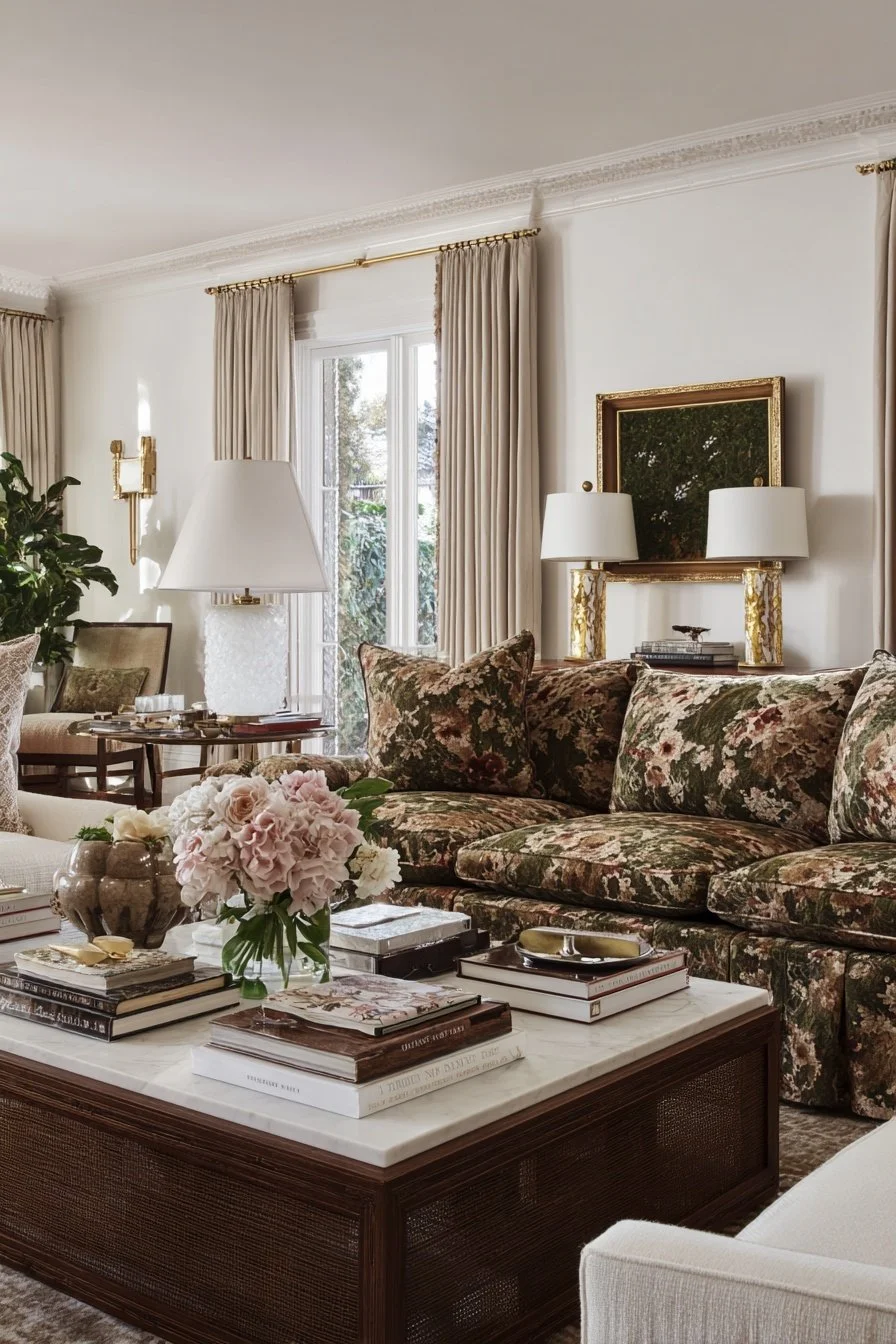
The specifics: botanical tapestries and verdure fabrics
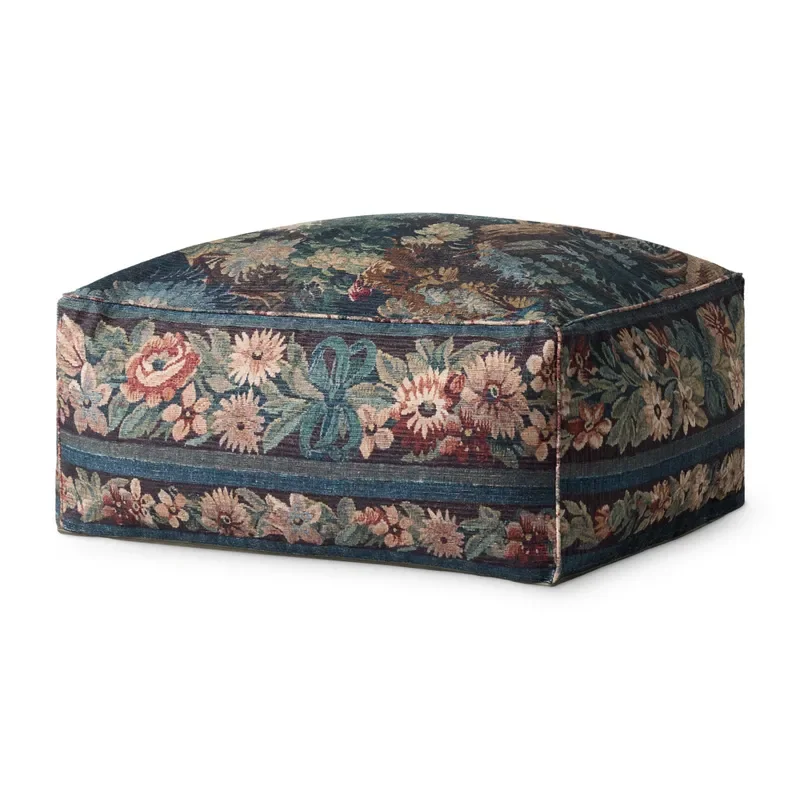
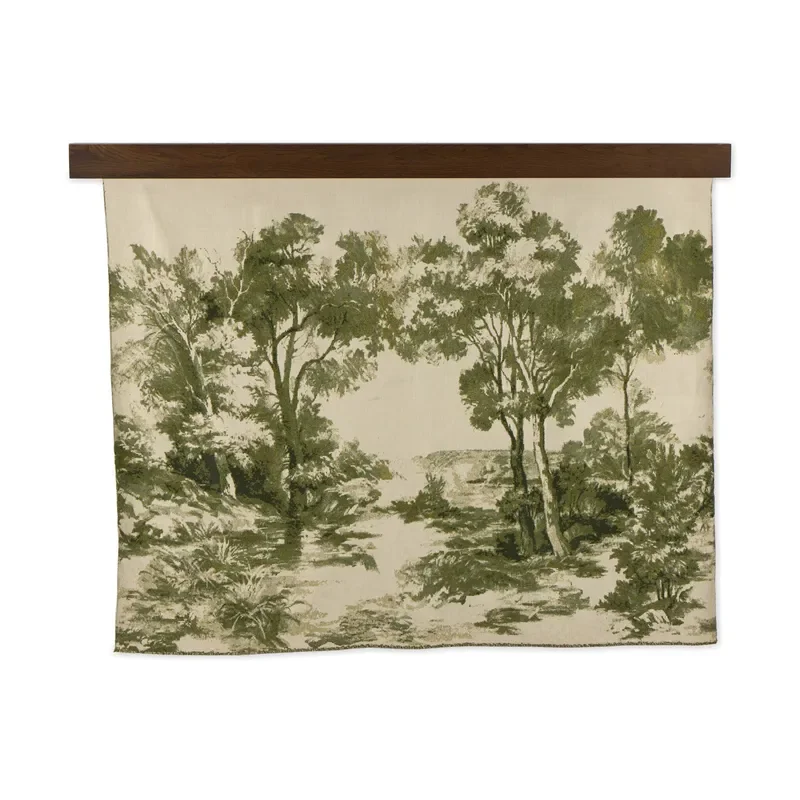
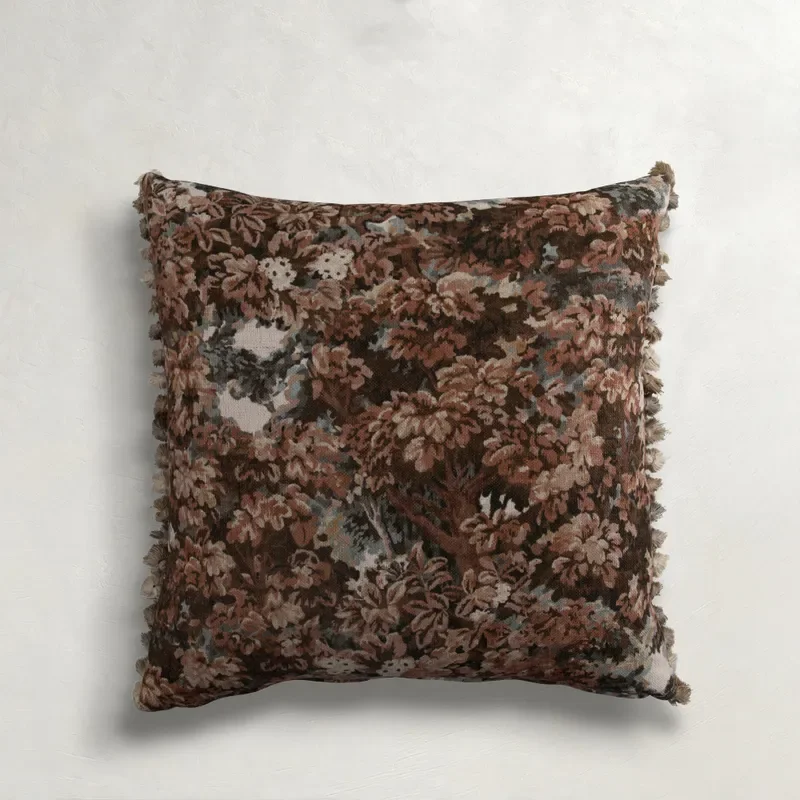
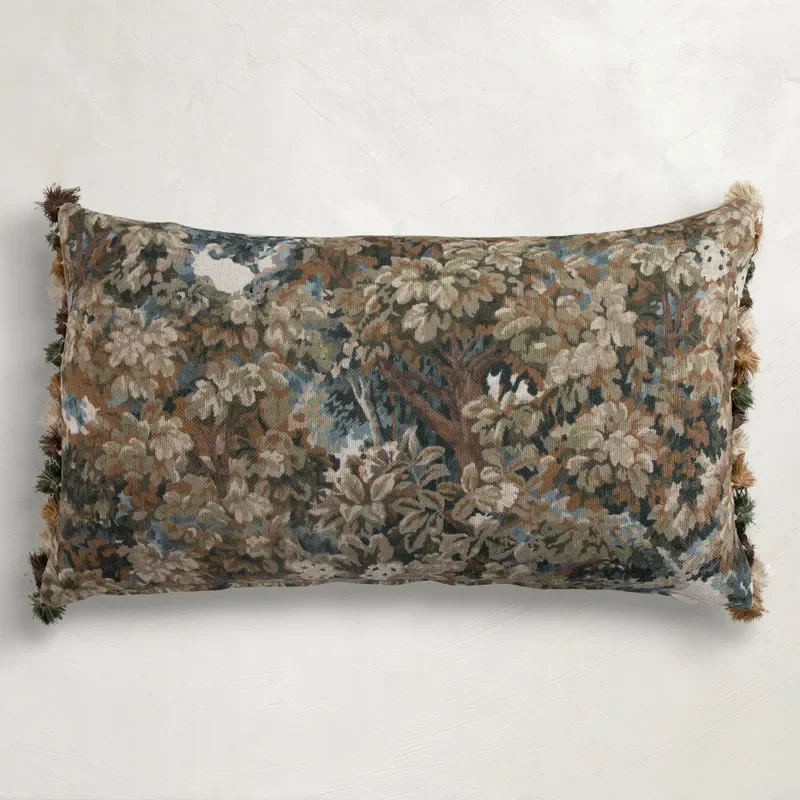
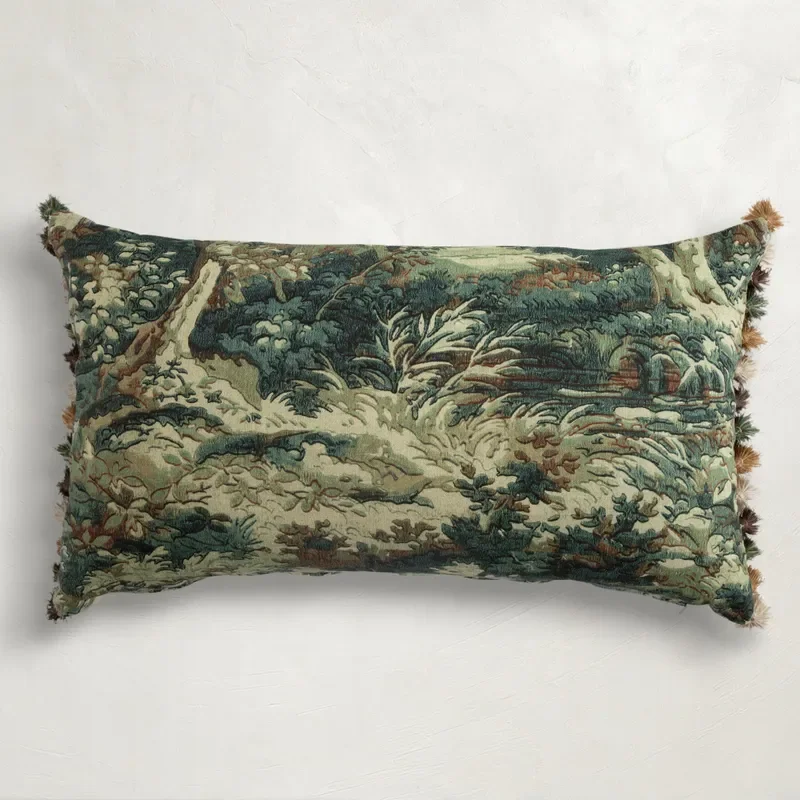
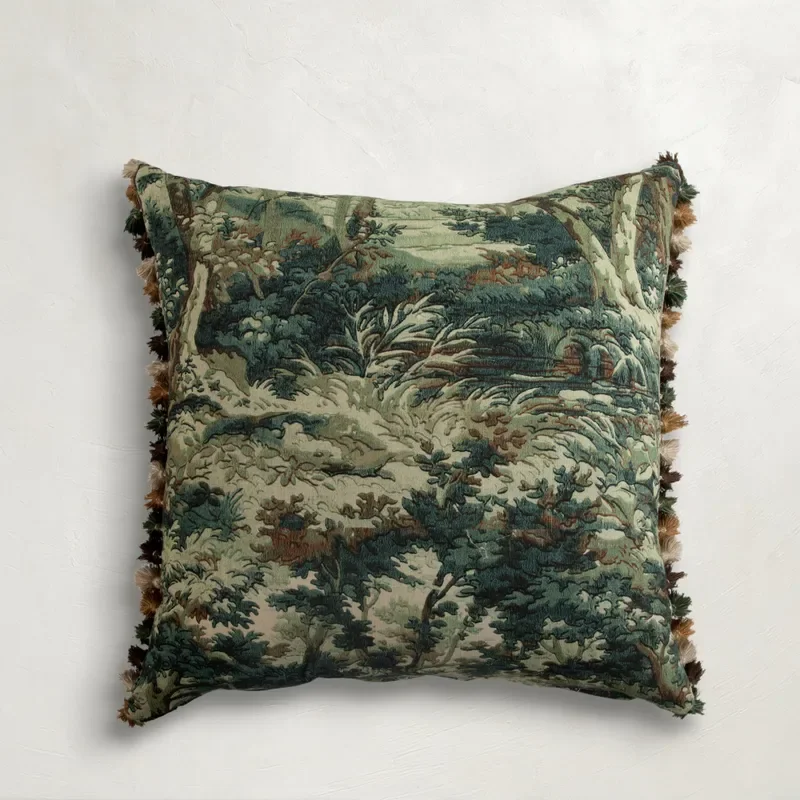
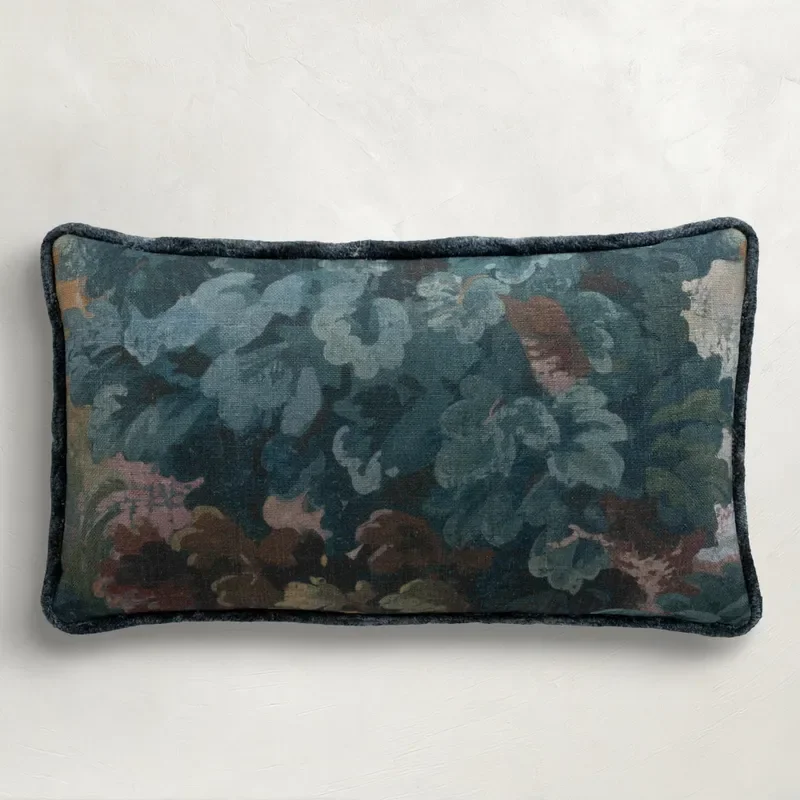
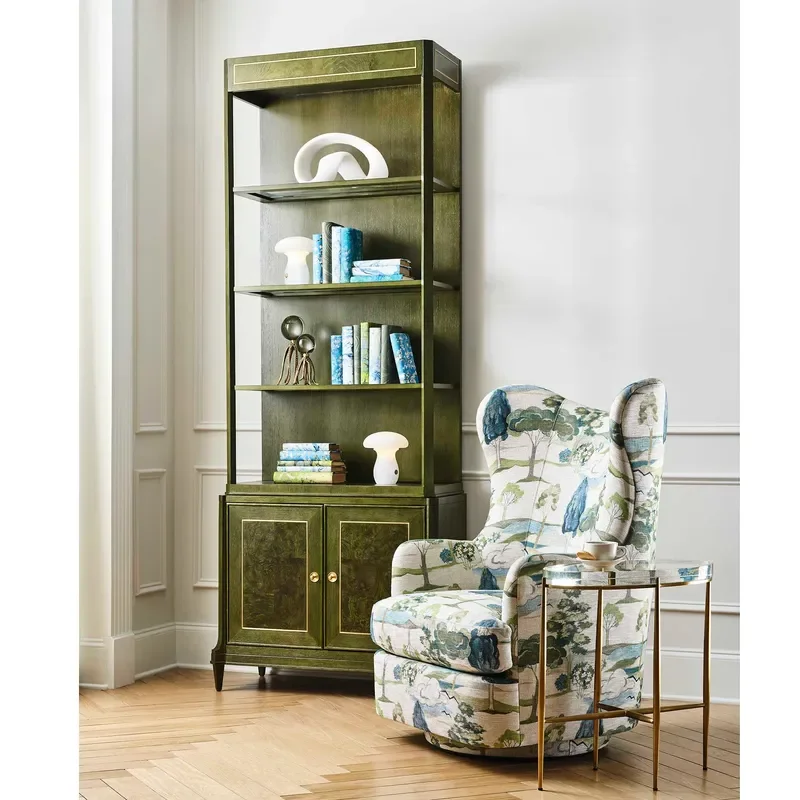
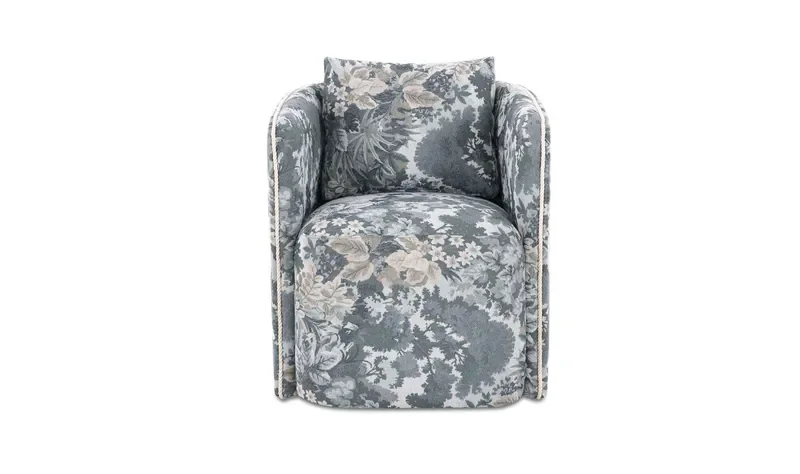
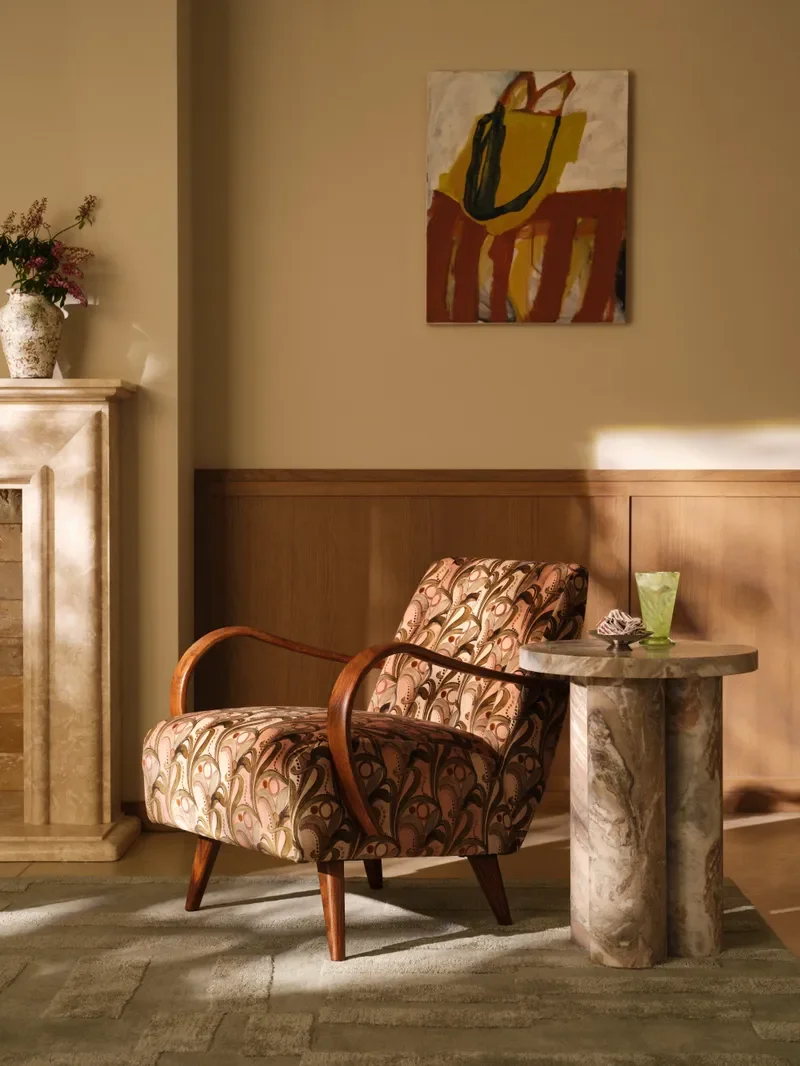
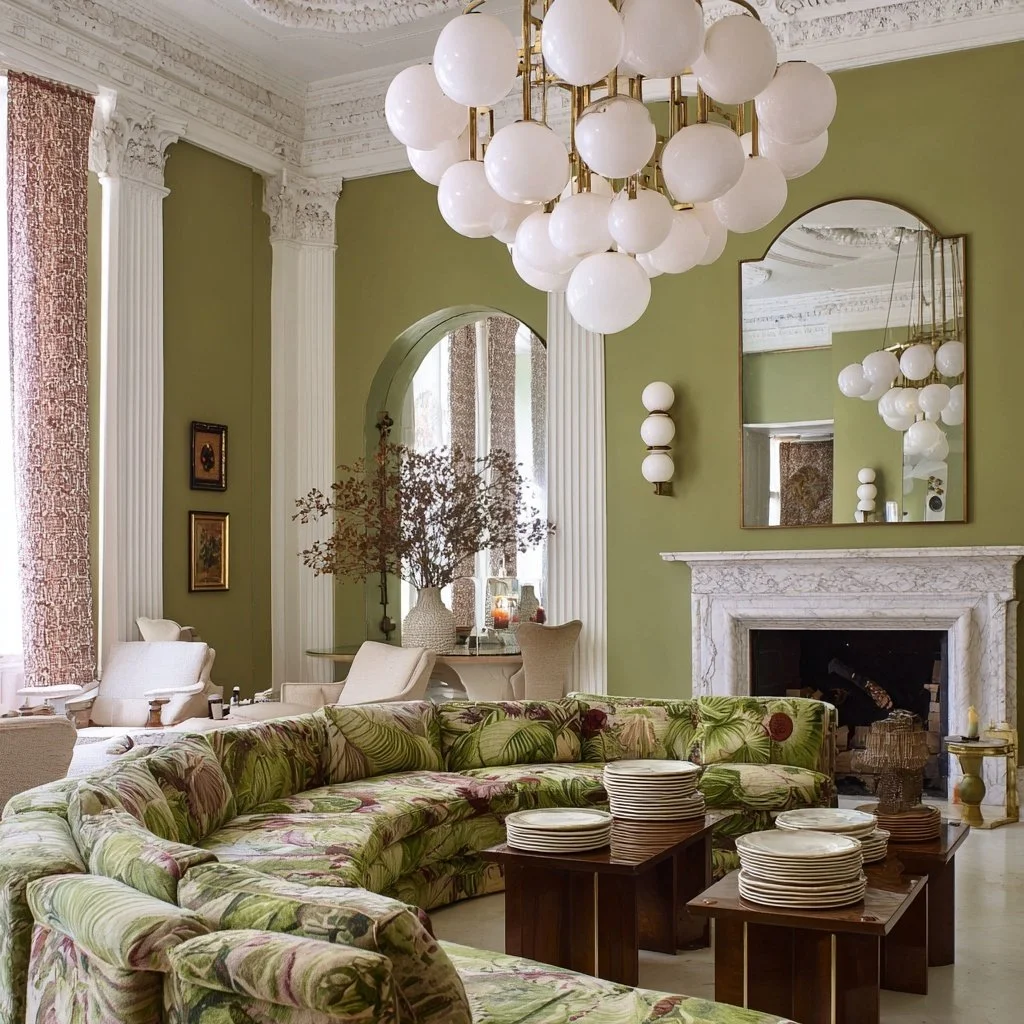
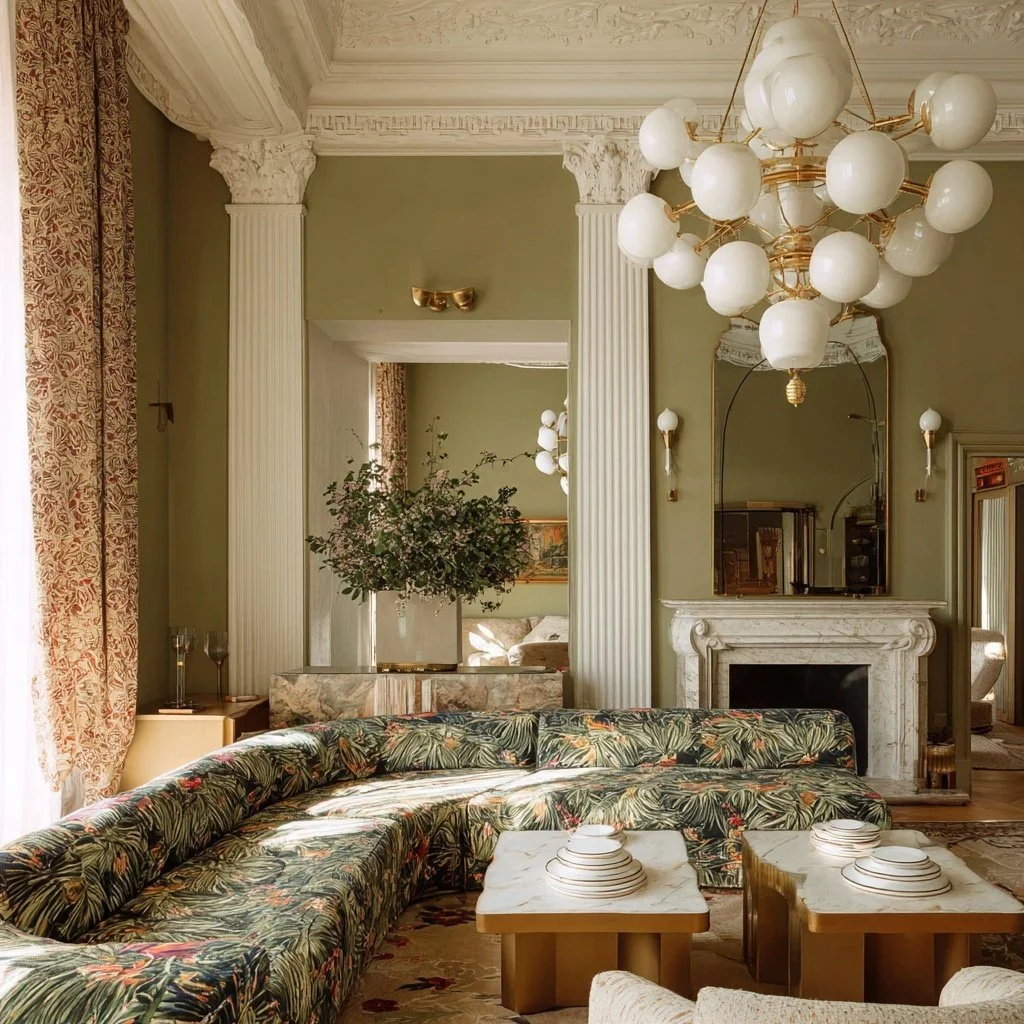
The predominant patterns borrow from verdure tapestries – woven textiles depicting foliage and forest scenes. Apartment Therapy notes that vintage textile enthusiasts are gravitating toward “Verdure style fabrics” and Chinese Art Deco rugs. These patterns typically feature stylised leaves, vines and flowers in muted greens, blues and burgundies. They recall 17th‑century European tapestries but are rendered on modern upholstery weight fabrics.
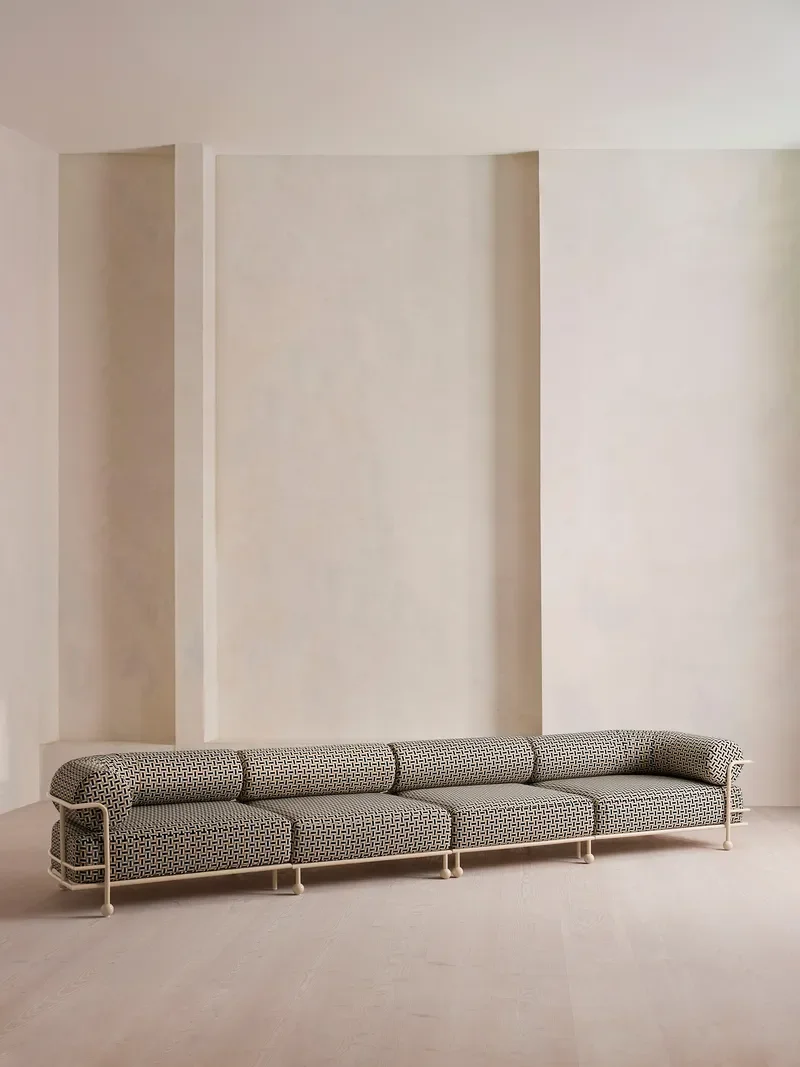
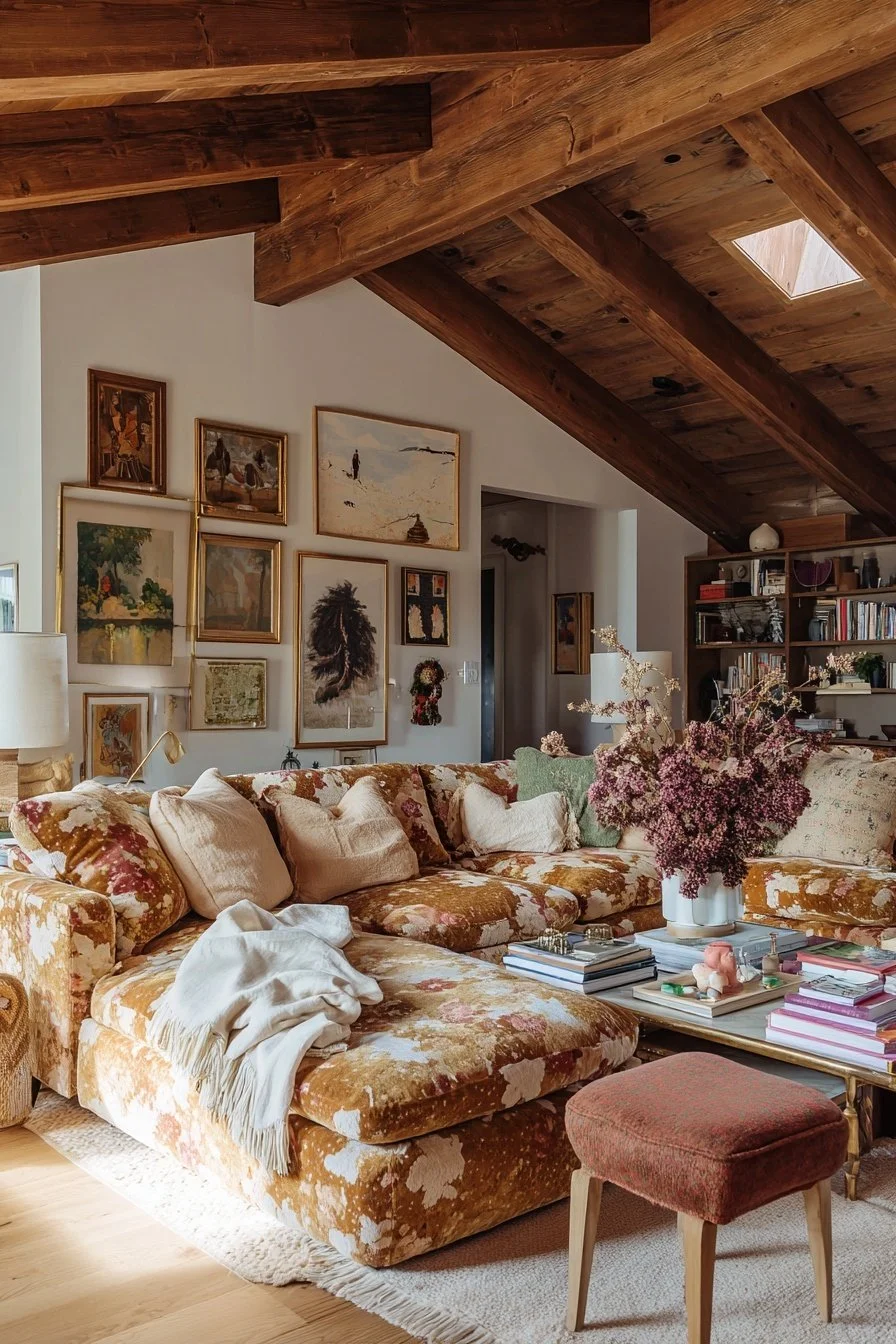
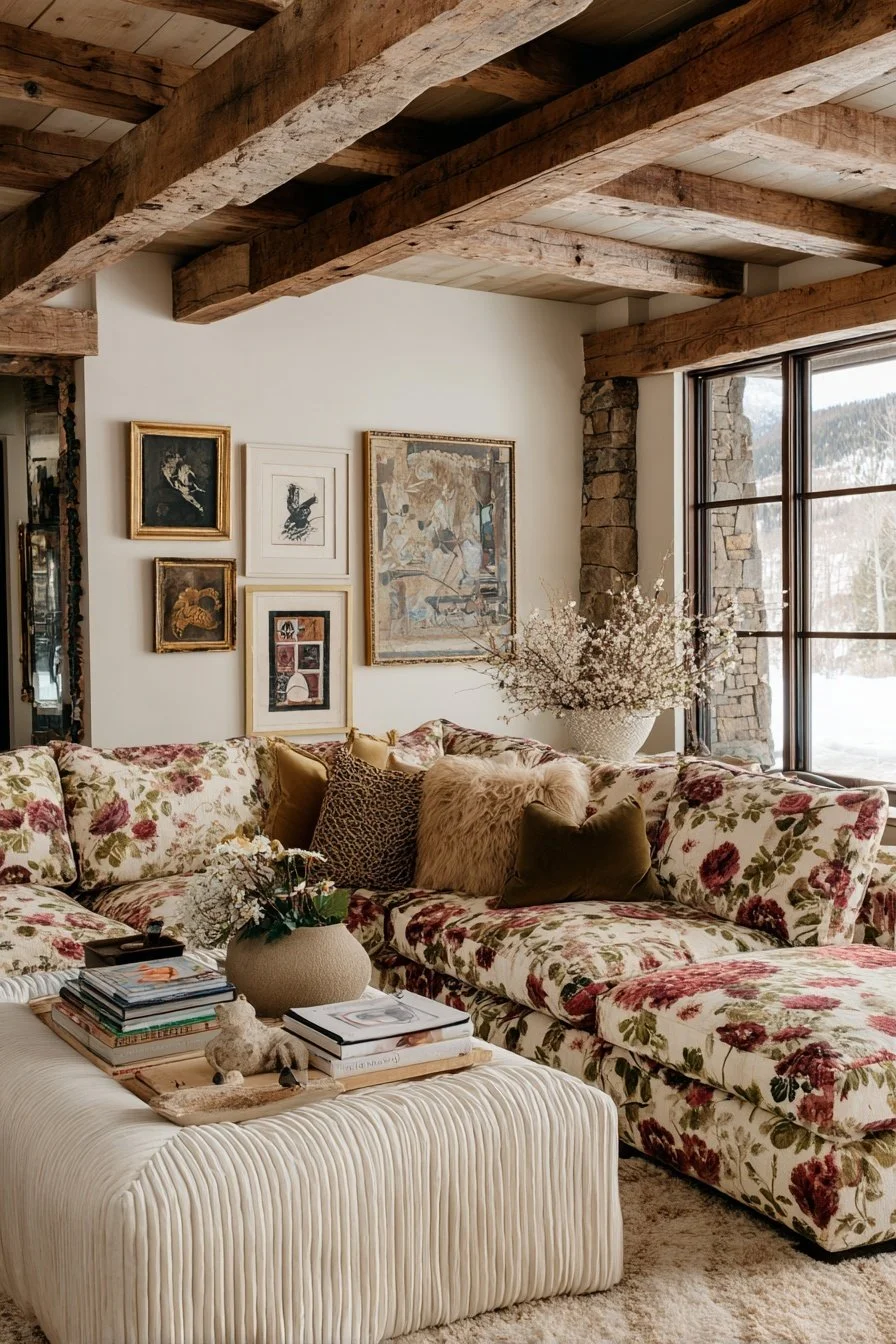
At High Point Market, many of the sectionals used large‑scale botanical prints with a slightly faded colour palette, lending them an heirloom quality. The motifs feel traditional yet pair well with modern silhouettes – boxy modular sectionals, deep chaises and clean‑lined sofas. This juxtaposition between old and new speaks to the “grand‑millennial” ethos: honouring heritage textiles while updating them for contemporary living.
How to use the trend
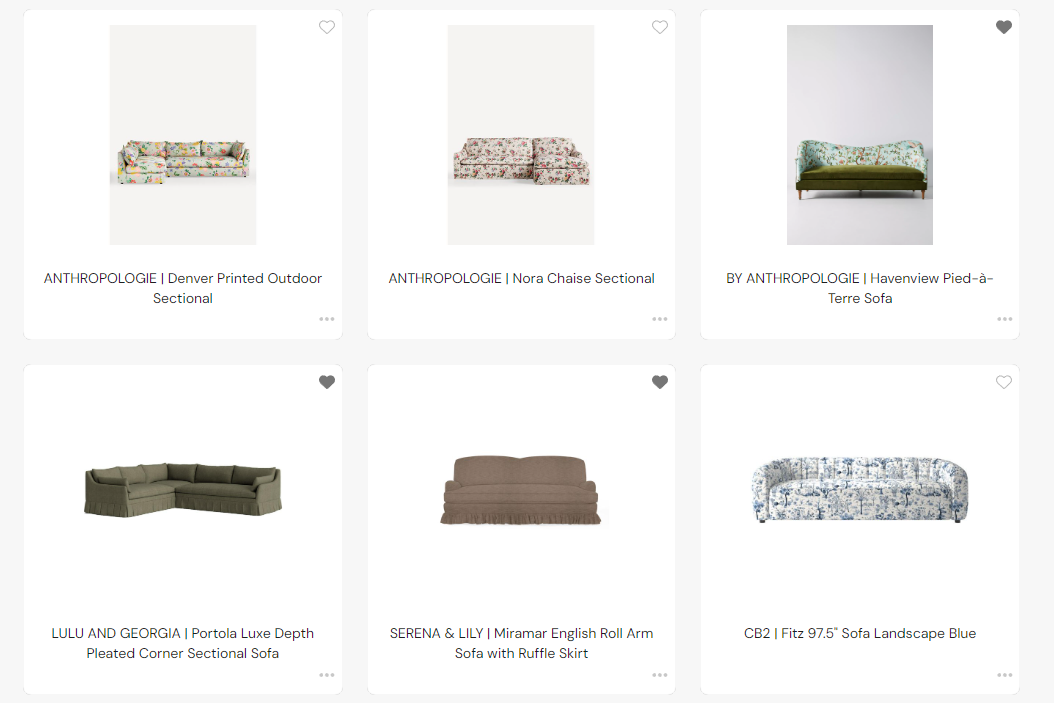
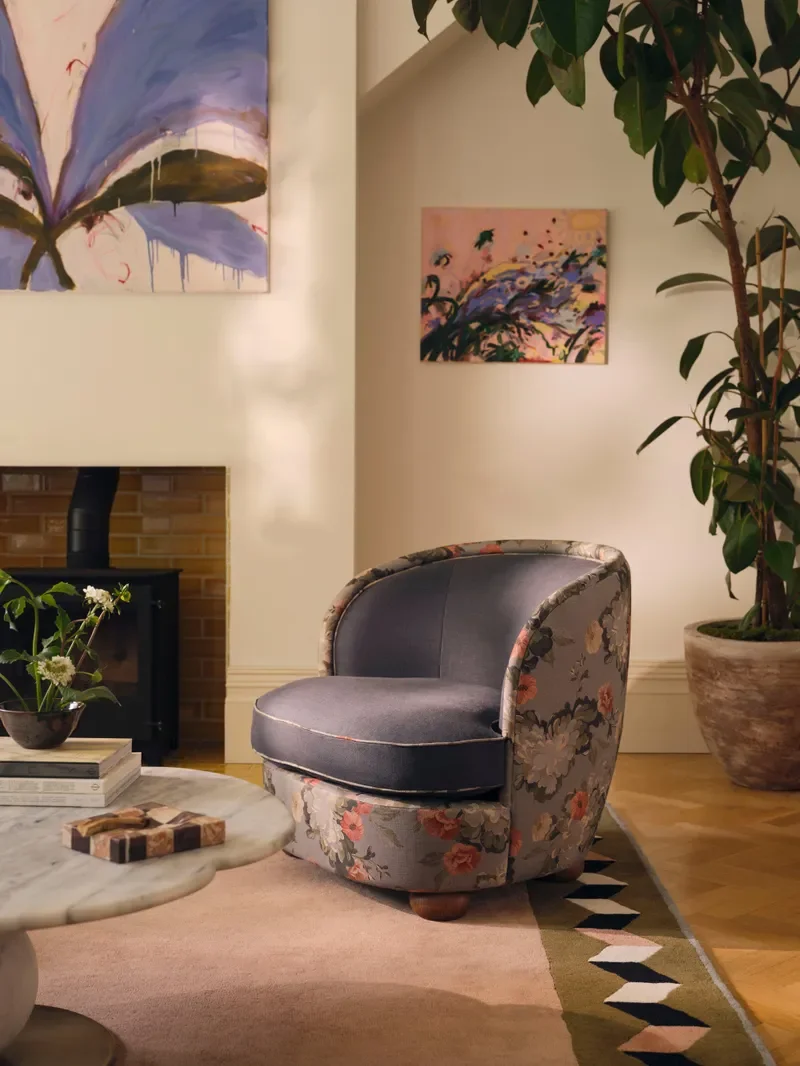
Patterned sofas can overwhelm a room if not balanced properly. Designers suggest treating the sofa as the anchor and then layering complementary patterns around it. Pattern drenching encourages mixing florals with stripes, pairing antique rugs with patterned upholstery and using textiles that “speak to each other rather than match perfectly”. For example, a botanical tapestry sofa could sit on a vintage oriental rug with a different scale of floral motif, while pillows in coordinating hues tie the look together.
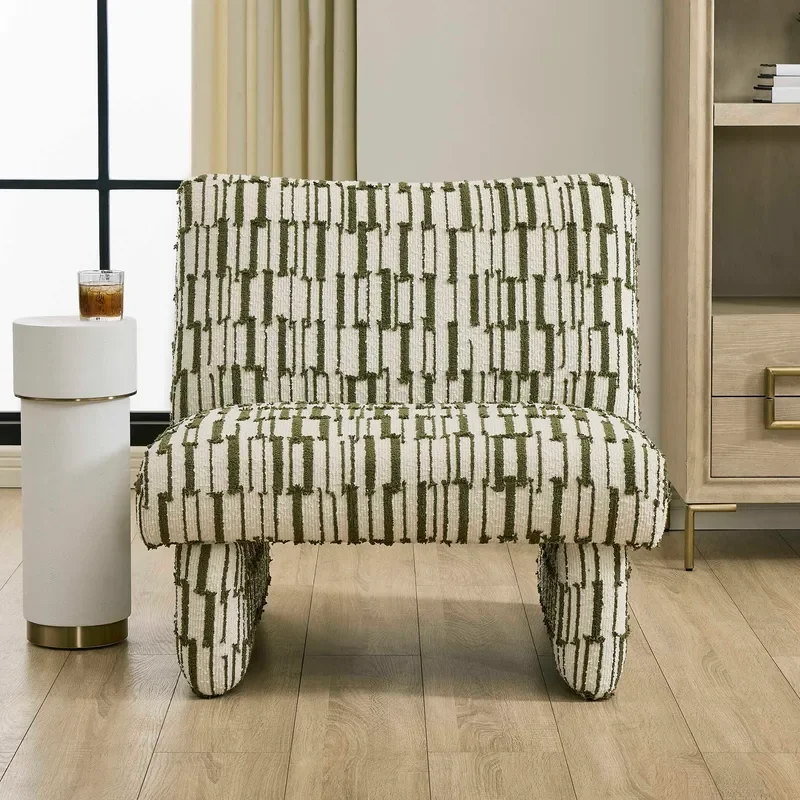
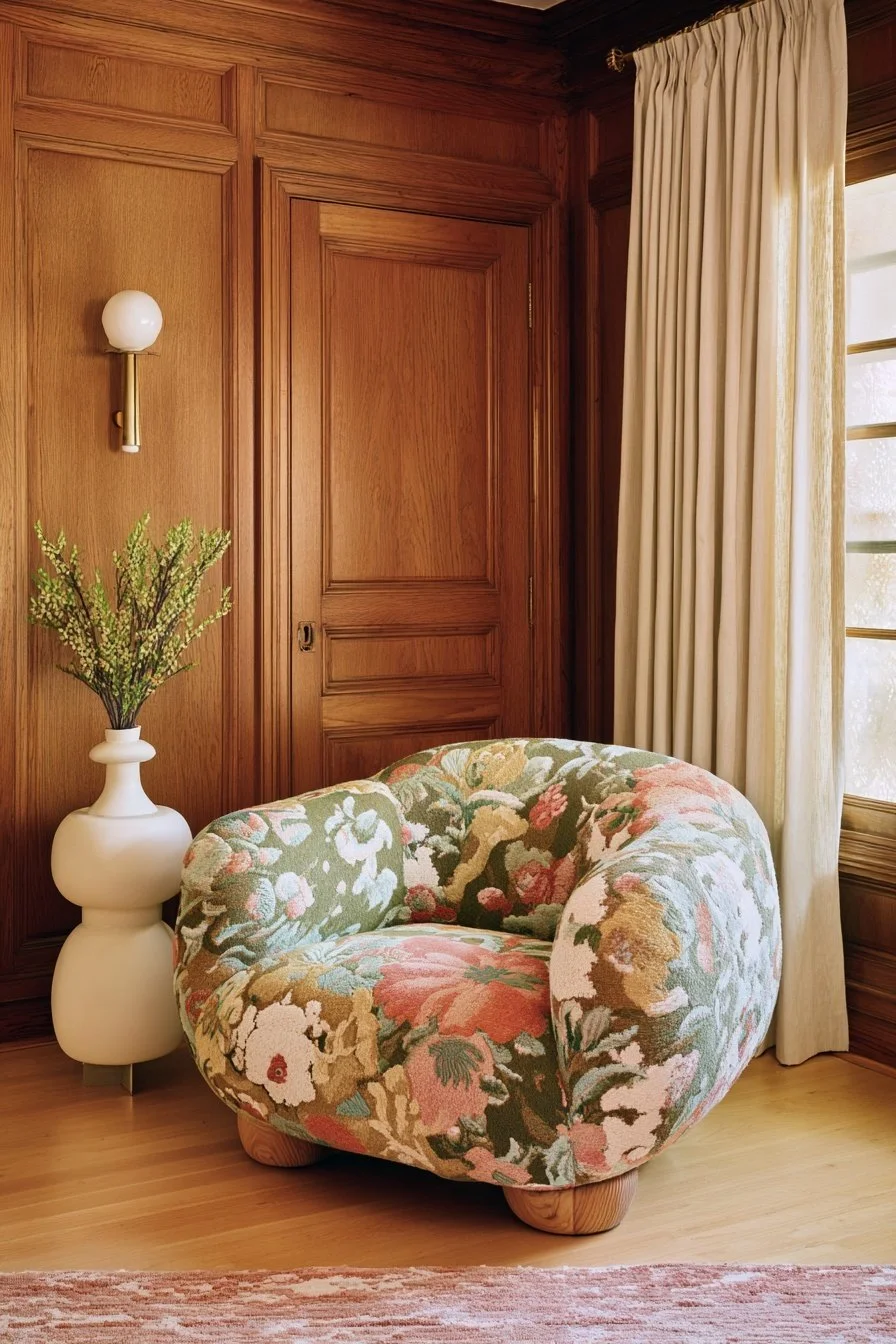
If fully upholstered sofas feel intimidating, you can ease into the trend by reupholstering an accent chair, bench or ottoman. Small‑scale patterns work well on pillows and curtain borders, while bold prints add drama to larger pieces. Who What Wear suggests using heavily printed furniture like pouffes or adding an accent wall of floor‑to‑ceiling patterned wallpaper as alternative ways to embrace chintz. The key is to balance patterned elements with solids and natural textures so the room feels layered rather than chaotic.
The Return of the Skirted Sofa (and Why It Matters Just as Much)
Alongside the rise of patterned upholstery, another detail kept repeating across showrooms: full skirted bases on sofas, ottomans, and lounge seating.
This wasn’t subtle.
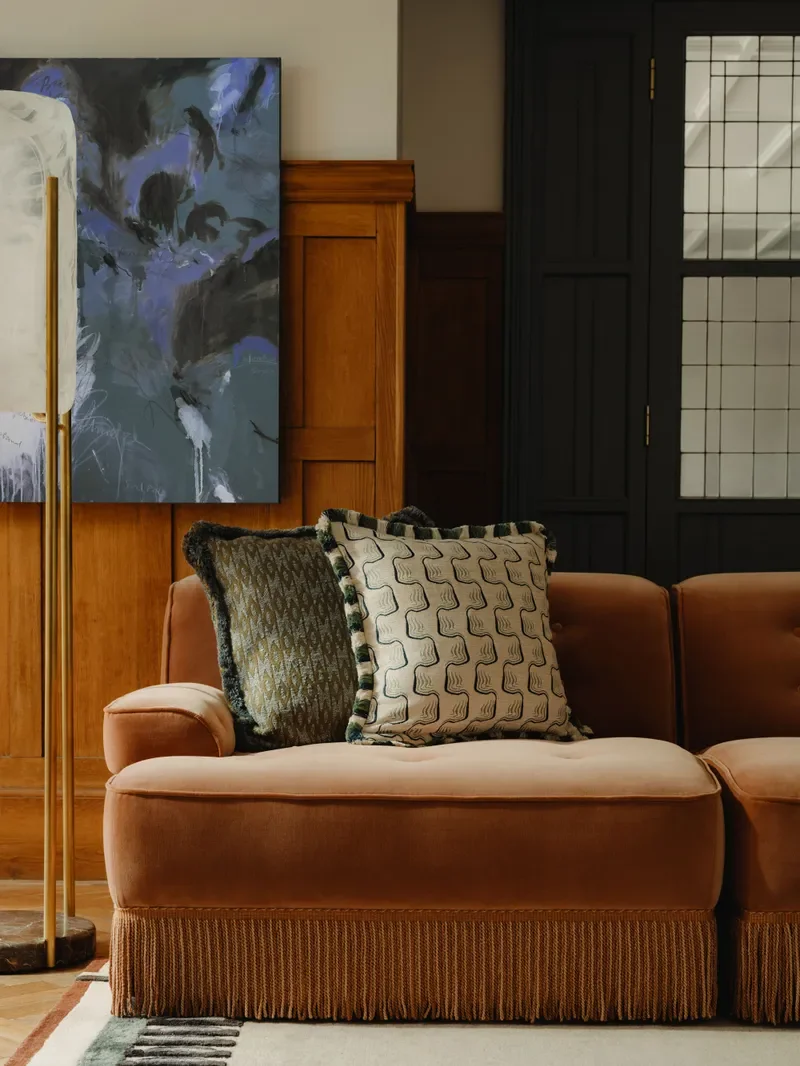
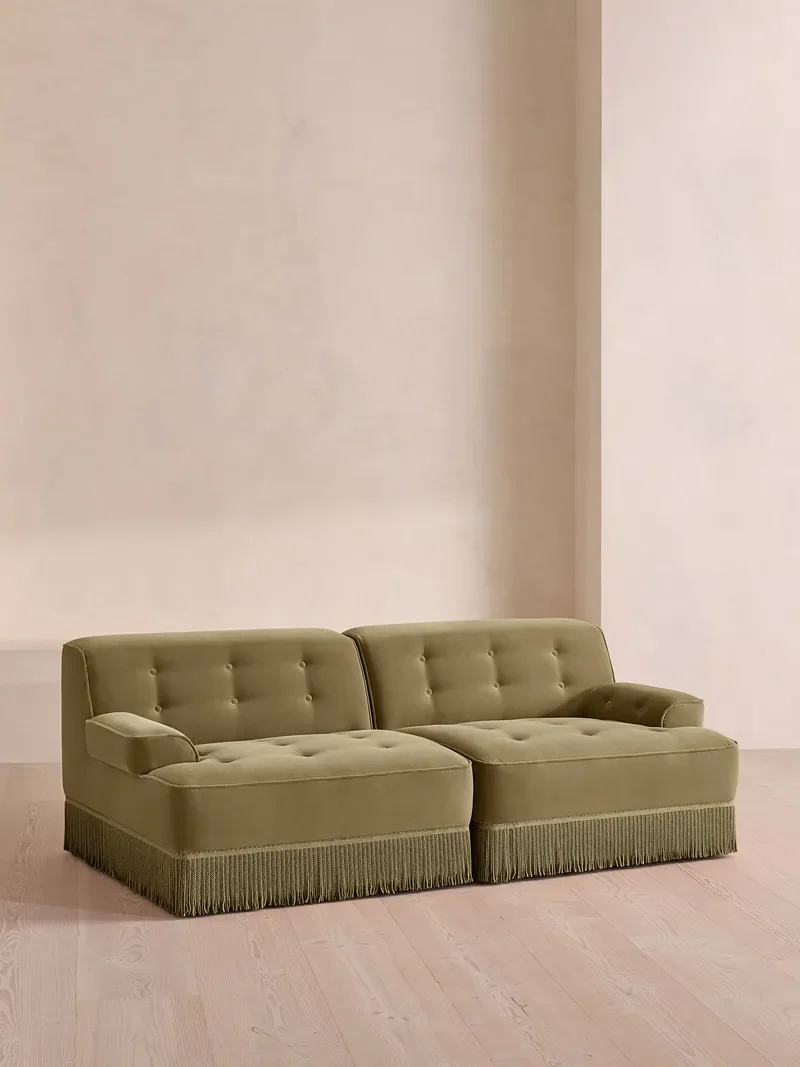
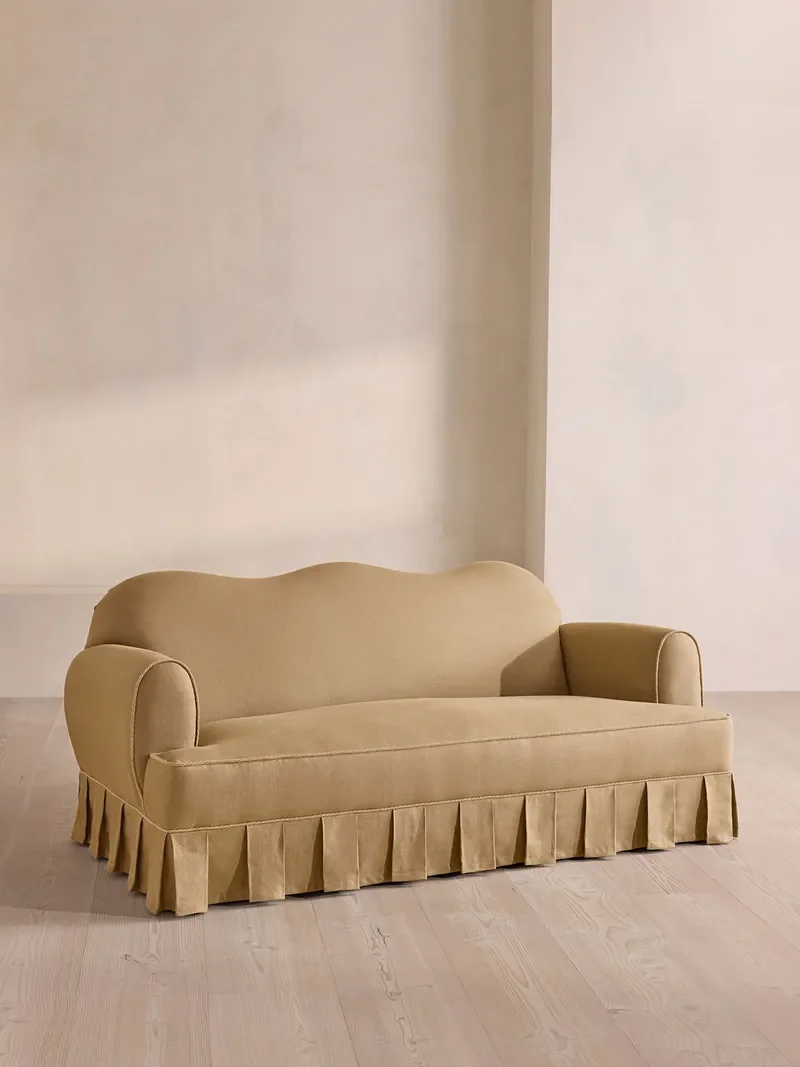
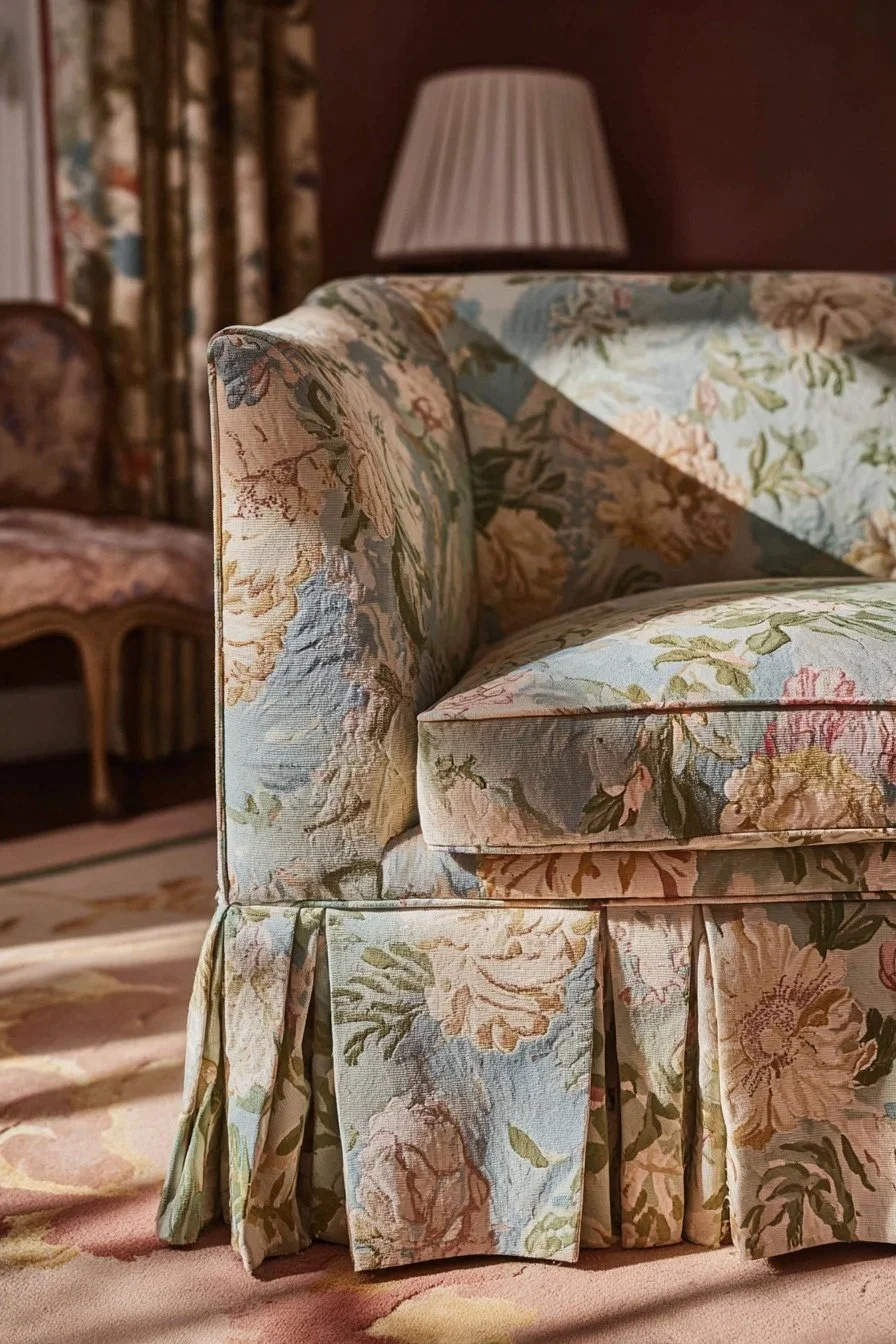
Instead of exposed legs or floating silhouettes, many pieces were grounded with fabric-draped skirts that extended all the way to the floor, often in the same botanical or tapestry pattern as the upholstery.
It instantly changed the feeling of the furniture.
Where modern sofas tend to feel architectural and elevated, skirted seating feels:
softer
more relaxed
more “room-oriented” instead of object-oriented
And that shift is intentional.
Historically, skirted furniture was associated with traditional interiors, English country homes, and 1980s layered decorating. It softened the room, hid structure, and created a sense of fullness and comfort.
Now, in 2026, it’s coming back — but not in the way we remember.
What’s different now
At High Point Market, skirted seating wasn’t paired with overly traditional spaces.
Instead, it was styled with:
cleaner architectural backdrops
modern lighting
minimal accessories
That contrast is what makes it feel current.
The skirt is no longer about hiding something.
It’s about adding volume, movement, and softness back into furniture design.
Why it’s happening now
The return of the skirt aligns perfectly with everything happening in interiors right now:
Cocooning & comfort: People want furniture that feels grounded and enveloping
Anti-minimalism: Clean-lined, leggy furniture can feel cold and exposed
Visual weight: Skirted pieces anchor a room and make it feel complete
Textile focus: More fabric = more opportunity for pattern, texture, and storytelling
And when you combine skirted silhouettes + tapestry patterns, you get something even more powerful:
A piece that doesn’t just sit in a room —
it becomes the room.
Why now?
Several cultural and economic factors have converged to make patterned sofas feel relevant in 2026:
A reaction against minimalism: Years of grey and beige interiors have left many craving colour, pattern and personality.
Nostalgia and comfort: Vintage textiles evoke memories of cosy, lived‑in spaces; they are associated with “grandma hobbies” and craft traditions.
Sustainability: Upcycling vintage fabrics and investing in heirloom‑quality upholstery align with eco‑conscious values.
Cultural influence: High‑profile homes like Kendall Jenner’s pattern‑rich retreat normalise bold florals in contemporary spaces.
Design innovation: Pattern drenching and maximalism empower homeowners to mix prints confidently.
Conclusion
Patterned sofas are not a fleeting fad; they are the embodiment of a broader shift toward maximalism, sustainability and personal expression. The trend reaches back to centuries‑old textile traditions and the exuberance of the 1980s while feeling fresh and modern when paired with clean‑lined furniture. If you’re ready to move beyond neutrals, a botanical tapestry sofa or chair can act as the statement piece that transforms your living room into a warm, character‑filled sanctuary.
Contact me at info@livingbrightinteriors.com to order any of these trade only pieces found at market.